Chinchilla vs. Guinea Pig: Which Small Pet Actually Fits Your Routine
On This Page▾

Both are popular "bigger than a hamster" small pets with devoted followings, and both get chosen by people who haven't fully clocked how differently they live day to day. The differences come down to how much handling each one tolerates, a dust bath versus a daily vitamin requirement, and how each one copes with a warm room.
The Comparison
| Chinchilla | Guinea Pig | |
|---|---|---|
| Activity pattern | Crepuscular (dawn/dusk active) | Awake through the day |
| Handling tolerance | Low - prefers not to be held | Good once settled |
| Signature care routine | Dust bath 2-3x/week | Daily fresh vitamin C source |
| Housing | Solo or same-sex pairs, either works | Pairs or groups, strongly recommended |
| Heat tolerance | Poor - risk above ~80°F | Moderate, comfortable at normal room temp |
| Lifespan | 10-20 years | 4-8 years |
| Cage style | Tall, multi-level, metal | Floor space, solid-bottom, C&C style |
| Noise level | Quiet | Vocal - wheeks, purrs, popcorning |
Handling Tolerance Is the First Real Difference
This is the difference that most disappoints new owners. Guinea pigs are ground-dwelling, food-motivated, and generally settle into being picked up and held once they trust you. Chinchillas are quicker, jumpier, and most don't particularly enjoy being restrained in your hands at all, they'd rather you interact with them on their own terms. Chinchillas can also perform "fur slip," releasing a patch of fur defensively if grabbed too firmly, a startling but harmless self-defense trait guinea pigs don't share.
A chinchilla's fur is the densest of any land mammal, with up to 80 hairs growing from a single follicle compared to 2 to 3 for a human, which is exactly why water is such a problem for it: that density traps moisture against the skin instead of letting it evaporate.
Dust Baths vs. Daily Vitamin C
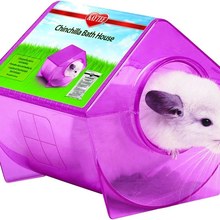
Each species has one signature care ritual the other doesn't share. A chinchilla needs a dust bath two to three times a week, since its fur is too dense to dry properly if it ever gets wet with water. A guinea pig can't synthesize its own vitamin C and needs a reliable daily source, whether from fortified pellets, vitamin-C-rich vegetables, or a direct supplement, or it risks scurvy. Neither routine is difficult once it's a habit, but skipping either one has real consequences.

A Guinea Pig is the better fit if you want a sociable, handle-friendly pet and can commit to a bonded pair. Stay on top of the daily vitamin C requirement though, guinea pigs can't make their own, and deficiency symptoms can show up within a few weeks of a gap in the diet.
Social Needs Run in Opposite Directions
Guinea pigs are herd animals that genuinely need company, most rescues will only rehome them in pairs, and a solo guinea pig is a measurably lonelier animal. Chinchillas are far more flexible: plenty do perfectly well living alone, and same-sex pairs are a bonus rather than a requirement. If your household can only realistically manage one animal without a built-in companion, that points toward a chinchilla.
Temperature Sensitivity Matters More Than People Expect
Guinea pigs are comfortable in a normal home's temperature range and only start struggling in genuine heat. Chinchillas are a different story, their dense, heat-trapping coat that handles cold Andean nights so well becomes a real liability above about 80°F, with heatstroke a genuine risk. If your home runs warm in summer without dependable air conditioning, that's a meaningful strike against a chinchilla specifically.
The Lifespan Gap Is Bigger Than It Looks
A guinea pig's 4 to 8 year lifespan is a serious multi-year commitment on its own. A chinchilla's 10 to 20 years is unusually long for a rodent, closer to a cat's typical lifespan than a hamster's, and it's easy to underestimate that gap when both animals start out roughly hamster-adjacent in size.
Choose a Chinchilla if you have a reliably cool home and don't need a cuddly, handle-friendly pet. You get one of the longest-lived small rodents you can keep, in exchange for a dust bath routine instead of water and real heatstroke risk once the room climbs past about 80°F.
Bottom Line
Pick a guinea pig if you want a more sociable, handle-friendly pet for a household that runs warm and can commit to a pair. Pick a chinchilla if you have a consistently cool home, don't need a cuddly lap pet, and are ready for a decade-plus commitment in exchange for a strikingly soft, low-odor pet. Neither is objectively easier, they just ask for different things from your routine. The chinchilla and guinea pig encyclopedia profiles cover the Andean origins both share.
Sources & Further Reading
❓ Frequently Asked Questions
Which is better for a child, a chinchilla or a guinea pig?
Guinea pigs, generally. They're awake and social during normal daytime hours, tolerate gentle handling well, and are vocal in a way kids find engaging. Chinchillas are more skittish, are naturally most active at dawn and dusk, and generally don't enjoy being picked up or cuddled the way a guinea pig can learn to, which tends to disappoint a child expecting a lap pet.
Can I bathe my chinchilla in water like a guinea pig?
No, and this is one of the most important differences between the two. Chinchillas need a dust bath, not water, since their extremely dense fur traps moisture against the skin and can lead to fungal infections if it gets wet. Guinea pigs can be bathed in water occasionally, though it's not a routine requirement the way dust bathing is for a chinchilla.
Which lives longer, a chinchilla or a guinea pig?
Chinchillas, by a wide margin. A well-kept chinchilla commonly lives 10 to 20 years, unusually long for a rodent. A guinea pig typically lives 4 to 8 years. If you want the longer-term companion, a chinchilla is the bigger commitment on paper, even though it's often perceived as the lower-maintenance option of the two.
Do guinea pigs or chinchillas need a cage mate?
Guinea pigs are herd animals and do best in bonded pairs, a solo guinea pig is a lonelier animal than most new owners expect. Chinchillas are more flexible, many do perfectly well housed alone, though same-sex pairs introduced properly can also work well if you want two.
Which is more affordable to keep, a chinchilla or a guinea pig?
They land in a similar range, but the ongoing costs come from different places. A chinchilla's dust and dust bath house are a small recurring cost unique to the species, while a guinea pig's need for daily fresh vegetables and a same-sex partner (nearly always recommended) tends to push its ongoing costs up. Both share timothy hay as a major shared expense.
Are chinchillas or guinea pigs better for a warm home?
Guinea pigs handle a normal home's temperature range comfortably. Chinchillas are fragile in heat, thanks to that same dense fur that keeps them warm in the cold Andes, and are at real risk of heatstroke above roughly 80°F. A home that runs warm in summer without reliable air conditioning is a much better fit for a guinea pig than a chinchilla.
🐭 How Much Does a Chinchilla Really Cost?
🐹 How Much Does a Guinea Pig Really Cost?
🐭 How to Handle a Chinchilla (And What Fur Slip Actually Means)
🐹 How to Handle a Guinea Pig Without Scaring It
🐭 Common Chinchilla Health Issues (Heat Is the Hidden Danger)
🐹 Common Guinea Pig Health Issues (And Why Vitamin C Matters So Much)
🐭 Chinchilla Housing: Dust Baths, Not Water, and a Cool Room
🐹 Guinea Pig Housing and Diet: Why Vitamin C Is Non-Negotiable
🐹 Chinchilla Feeding: Schedule, Diet, and Why They Stop Eating
🐹 Guinea Pig Feeding: Schedule, Diet, and Why They Stop Eating
🐭 Chinchilla Enrichment: Fur Chewing Dropped With the Right Floor
🐹 Guinea Pig Enrichment: Hideouts, Foraging, and Floor Time
🐭 Is It Legal to Own a Chinchilla? State-by-State Guide
🐹 Is It Legal to Own a Guinea Pig? The Short Answer
🐹 Guinea Pig Scurvy: Why Vitamin C Isn't Optional
🛒 Recommended Gear
As an Amazon Associate, we earn from qualifying purchases through the links above - at no extra cost to you.
Written by Michael Ryan
Mike grew up with guinea pigs.
Mike keeps two rescued bearded dragons, Dex and Cera, and writes the care guides on BeastlyFacts from his own research and mistakes. He is not a veterinarian.
More about Michael Ryan →Comments
No comments yet - be the first!