Leopard Gecko vs. Crested Gecko: Which Beginner Gecko Fits You Better
On This Page▾

Both are near the very top of every "best first reptile" list, and for good reason, but the actual day-to-day care looks quite different between them. The real differences come down to whether you're willing to keep live insects, what shape of enclosure you have room for, and how much you can commit to gentle handling.
The Comparison
| Leopard Gecko | Crested Gecko | |
|---|---|---|
| Diet | Live insects only | Powdered fruit diet + occasional insects |
| Enclosure shape | Wide, ground-level (terrestrial) | Tall, vertical (arboreal) |
| Heat | Belly heat mat, warm hide floor 88-92°F | Usually none: 72-78°F room; small bulb only if cooler, never above 85°F |
| Adult size | 6-9 inches, 45-90 g | 7-9 inches including tail |
| Minimum enclosure | 36x18x18 in, floor space | 18x18x24 in, height |
| Lifespan | 10-20 years | 10-20 years |
| Cost to start | Gecko $20 to $45, equipment $215 to $640, then $25 to $70 a month | Gecko $50 to $100 for a normal, more for a morph; equipment $395 to $660, then $35 to $50 a month |
| Tail regrowth if dropped | Yes, regrows (duller) | No, permanent |
| Jumping/escape risk | Lower: ground-dwelling, can still dart | High: agile jumper, sticky toe pads |
| Climbing ability | Cannot climb glass | Climbs glass easily |
| Handling caution needed | Moderate | Higher: tail-drop is permanent |
| Live feeders | Required | Optional |
Diet Is the Biggest Practical Difference
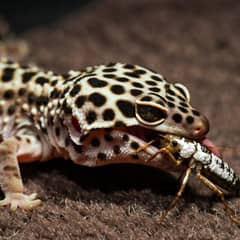
Leopard geckos are strict insectivores: crickets, mealworms, or dubia roaches are the actual diet, not a supplement to something else, which means committing to keeping a feeder insect colony or making regular pet store runs indefinitely. Crested geckos are the rare reptile that can thrive almost entirely on a commercial powdered diet mixed with water, with insects offered only now and then for enrichment; how much to mix and how often, by age, is set in the Crested Gecko feeding guide. That is what makes the crested gecko the easier of the two to feed. For anyone who doesn't want live bugs in the house at all, this single fact usually settles the decision on its own.
Crested geckos were believed extinct after their last confirmed sighting in the late 1800s, until a small wild population was rediscovered in New Caledonia in 1994, meaning the crested gecko now living happily on a fruit-mix diet in millions of homes worldwide was, for most of the 20th century, thought to be gone for good.
Heating Requirements Point Opposite Directions
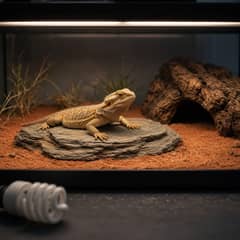
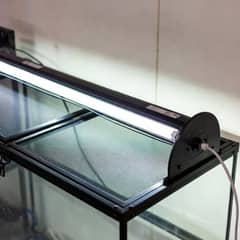
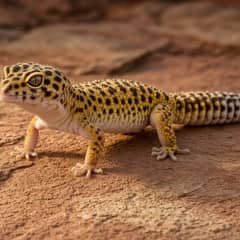
Leopard geckos need a genuine warm zone, typically from an under-tank heat mat running around 88 to 92°F, since they're ground-dwelling and thermoregulate against warm ground in the wild. Crested geckos usually need no heat at all: they do best around 72 to 78°F, which many homes already hold, and a low-wattage bulb on a thermostat is only for a room that runs cooler. Either way, a thermometer in the enclosure is the safety check, and the Crested Gecko tank setup guide sets where to put it. The danger runs the other way for them: long stretches above 80°F are already too warm, and past 85 they overheat. If you want the lighter heating setup, that favors a crested gecko.
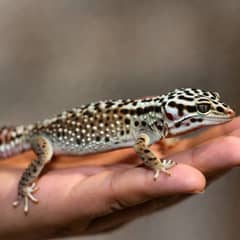
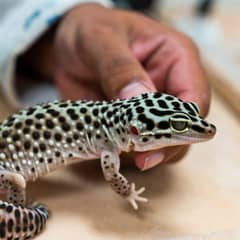
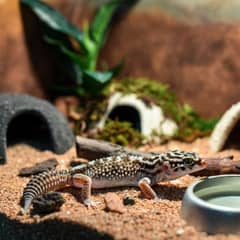
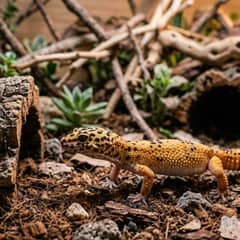
Choose a leopard gecko if you're comfortable keeping live feeder insects and want a calmer, ground-dwelling pet. You'll need to run a belly-heat mat year-round, but as a tradeoff, a dropped tail grows back.
Enclosure Shape Isn't Interchangeable
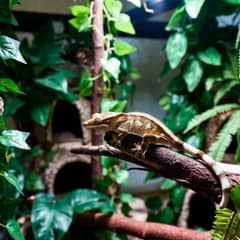
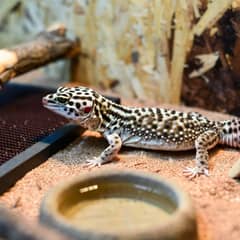
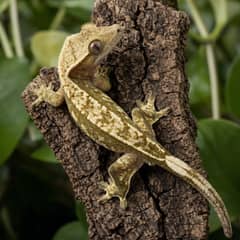
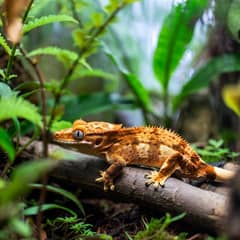
A leopard gecko is a ground-dweller and needs floor space more than height, with minimal climbing decor required. A crested gecko is arboreal: it lives in the trees in the wild, and needs a tall enclosure with branches, vines, and plants to climb through. A leftover wide, short tank suits a leopard gecko fine and would waste most of a crested gecko's usable space, and vice versa.
Tail Loss Isn't Equally Forgiving
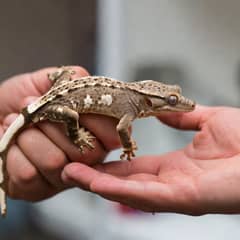
Both species can drop their tails defensively if grabbed or badly startled. A leopard gecko's tail grows back, usually shorter and less detailed than the original but functional. A crested gecko's tail does not regrow at all. It's gone permanently, and most keepers consider a "frog butt" (tail-less) crested gecko just as good a pet, but it does mean handling a crested gecko calls for a bit more care and patience, especially early on.
A crested gecko is the better fit if you'd rather skip live insects and skip the belly-heat mat, since most homes keep one warm enough without any heat. The tradeoff is handling: its tail loss is permanent, and it jumps.
Bottom Line
The crested gecko is the easier of the two to feed and heat; the leopard gecko is the easier one to hold. Pick a leopard gecko if you don't mind keeping live feeder insects and want a calmer, ground-dwelling pet that tolerates handling well. Pick a crested gecko if you'd rather skip live insects entirely, want a pet that usually needs no heating at all, and have room for a tall, planted enclosure. Just handle it gently, since a dropped tail won't come back. The leopard gecko and crested gecko encyclopedia profiles cover the arid and forest origins behind those differences.
Sources & Further Reading
Last reviewed 9 Jul 2026 · 5 sources
- Rhacodactylus ciliatus (Crested Gecko), Animal Diversity Web (University of Michigan)
- Chromosome-level genome assembly and annotation of the crested gecko, Correlophus ciliatus, a lizard incapable of tail regeneration, GigaByte 2024:gigabyte140 (Gumangan, Pan, and Lozito, 2024)
- Leopard Gecko Information and Care Recommendations, MedVet
- Crested Gecko: Care and Husbandry, Warren Woods Veterinary Hospital
- Chicago Exotics Animal Hospital: Crested Gecko Care
Frequently Asked Questions
Do I have to keep live insects for a crested gecko?
No, and this is the single biggest reason people choose a crested gecko over a leopard gecko. Crested geckos thrive on a commercial powdered fruit-based diet mixed with water, with insects offered only occasionally as enrichment. Leopard geckos are strict insectivores and need live feeder insects as their actual diet, no substitute.
Which gecko needs supplemental heating, leopard or crested?
Leopard geckos do. They need a warm belly-heat zone around 88 to 92°F, usually from an under-tank heat mat. Crested geckos usually need none: they do best around 72 to 78°F, which many homes already hold. A low-wattage bulb on a thermostat is only for a room that runs cooler than that, and they should never sit above 85°F, where they quickly overheat.
Can a crested gecko regrow its tail if it drops it?
No, and this is permanent. A crested gecko's dropped tail does not grow back, unlike many other lizards. A leopard gecko's tail does regenerate, though the regrown version is usually shorter and duller than the original. This makes gentle, low-stress handling more important with a crested gecko specifically.
Which is more likely to jump or escape during handling, leopard or crested gecko?
Crested geckos, by a lot. They're arboreal and startlingly good jumpers with sticky toe pads that let them stick to glass, so a startled crested gecko can go from your hand to across the room in an instant. Leopard geckos are ground-dwelling and calmer to hold, though they can still dart or hop unexpectedly, so handle them low over a soft surface.
Which enclosure is easier to set up, leopard or crested gecko?
Neither is objectively easier, but they're shaped completely differently. Leopard geckos need a wide, ground-level floor space with minimal climbing decor. Crested geckos need a tall, vertically oriented enclosure with branches and plants to climb, since they live in the trees rather than on the ground.
Which is bigger, a leopard gecko or a crested gecko?
The leopard gecko, by weight. Both land in a similar 6 to 9 inch length, but a leopard gecko is a stocky, ground-dwelling lizard at 45 to 90 grams, while a crested gecko's 7 to 9 inches includes a long tail on a much lighter body. Side by side the leopard gecko looks noticeably heavier, and the crested gecko looks longer and leaner.



Recommended Gear
As an Amazon Associate I earn from qualifying purchases through the links above, at no extra cost to you.

Written by Michael Ryan
Mike keeps two rescued bearded dragons, Dex and Cera, and writes the care guides on BeastlyFacts from his own research and mistakes. He is not a veterinarian.
More about Michael Ryan →You May Also Like


Subscribe - it's free
An occasional email when something new is worth your time. No spam.
Deep Dive
Health and More