Guinea Pig Enrichment: Hideouts, Foraging, and Floor Time
On This Page▾

A guinea pig is a prey animal first. Enrichment that ignores that, novelty for its own sake, misses what actually lowers stress and keeps them active: reliable cover and food that takes some work to find.
Hiding places aren't a decoration, they're what lets a prey animal feel safe enough to relax, explore, and forage in the first place. A guinea pig with nowhere to retreat stays on alert even in a completely calm room.
Hideouts and Cover
Constant access to a secure hiding place is close to a baseline need and not an extra. PVC pipes, hide huts, and fleece tunnels all work, and a seagrass hideout or tunnel adds a chewable option in the same footprint. In a cage with more than one guinea pig, provide multiple hides so a lower-ranking animal always has somewhere to go, a single hide in a shared space tends to become something one animal guards rather than something everyone can use.
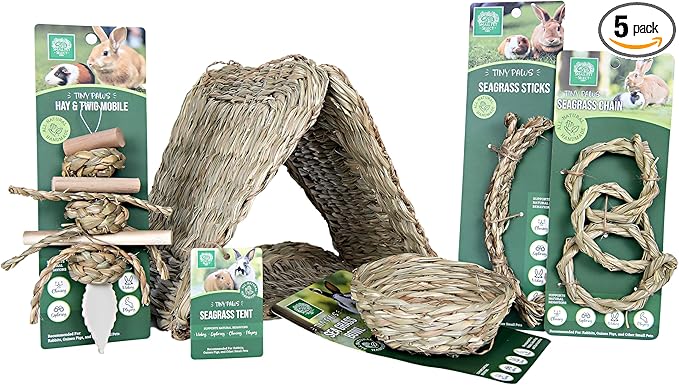
Foraging Comes First
Wild guinea pigs can spend up to 80% of the day foraging and feeding, most actively in the morning and evening. That behavior is one of the most restricted in a pet guinea pig fed from a single bowl. Scatter hay across the enclosure instead of piling it in one corner, and hide small amounts of chopped vegetables in a foraging mat, a wooden foraging puzzle or a tunnel rather than placing them in a dish. Since hay should already be unlimited and fresh in the diet, spreading it out does double duty as both nutrition and enrichment.
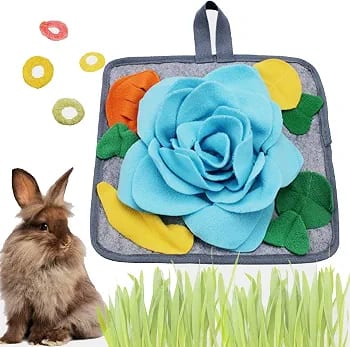
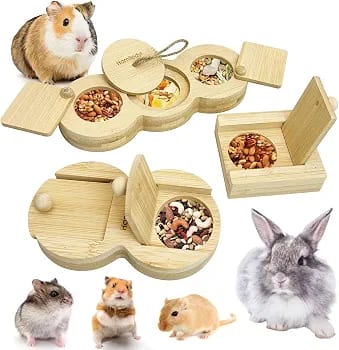
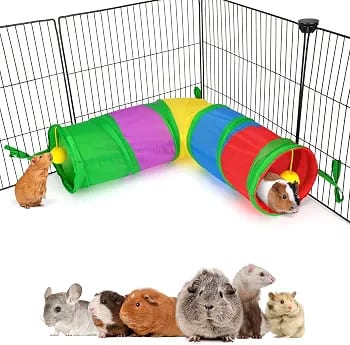
Hiding places for retreat aren't just about physical safety, research on captive guinea pig welfare links secure hiding options directly to reduced stress indicators, on top of whatever protection they offer from an actual threat.
Chew and Gnaw Items
Guinea pig teeth grow continuously, so gnawing is both a physical need and a natural behavior worth supporting directly. Untreated wood chews, hay-based chew sticks, and cardboard tunnels all hold up to regular use. Rotate a few options instead of relying on one, guinea pigs vary in what they'll actually engage with.
Supervised Floor Time
Even a large cage can't fully replace open floor space. Supervised time in a guinea-pig-proofed room or playpen lets them run, popcorn, and investigate new smells and textures, all real enrichment beyond what the enclosure itself offers. Keep the space free of cords, gaps they could squeeze into, and anything toxic, and always supervise directly, never leaving them unattended outside the cage.
Reading the Warning Signs
A guinea pig that stays hidden constantly, shows little interest in food or its surroundings, or develops repetitive bar-chewing is signaling that something in the current setup isn't working, whether that's a missing hide, not enough foraging opportunity, or an underlying health issue. Since illness can produce some of the same withdrawal, a vet check is worth pairing with any enrichment changes, and the small mammal vet visit guide covers why the cage mate should travel along.
Sources & Further Reading
Last reviewed 31 Aug 2026 · 3 sources
❓ Frequently Asked Questions
Why do guinea pigs need hideouts specifically?
Guinea pigs are a prey species and stay alert to anything that might be a threat. Constant access to a secure hiding place, a pipe, hut, or fleece tunnel, lets them retreat and feel safe, which lowers baseline stress even when nothing is wrong.
How much of a guinea pig's day is spent foraging naturally?
Wild guinea pigs can spend up to 80% of their day foraging and feeding, concentrated in the morning and evening. That behavior is one of the most restricted in companion guinea pigs kept with a single food bowl, which is why foraging-based enrichment has an outsized effect.
What counts as foraging enrichment for a pet guinea pig?
Scattering hay across the enclosure instead of piling it in one spot, hiding small amounts of vegetables in a foraging mat or tunnel, and offering hay in different textures and locations all replicate natural search behavior. Hay itself, unlimited and fresh, also doubles as both diet and enrichment.
Do guinea pigs need more than one hideout?
Multiple hideouts are worth it, especially in a multi-guinea-pig setup, so a lower-ranking animal always has somewhere to retreat without being blocked. One hide in a shared cage can become a resource that gets guarded.
Is floor time outside the cage necessary?
Yes, for exercise and exploration that a cage, even a large one, can't fully provide. Supervised time in a guinea-pig-proofed space, floor or a playpen, lets them run, popcorn, and explore new smells and textures, all real enrichment on top of what the enclosure itself offers.
📰 More on the Guinea Pig
📘 Guinea Pig care guide
🐹 How Much Does a Guinea Pig Really Cost?
🐹 How to Handle a Guinea Pig Without Scaring It
🐹 Common Guinea Pig Health Issues (And Why Vitamin C Matters So Much)
🐹 Guinea Pig Housing and Diet: Why Vitamin C Is Non-Negotiable
🐹 Guinea Pig Feeding: Schedule, Diet, and Why They Stop Eating
🛒 Recommended Gear
As an Amazon Associate, we earn from qualifying purchases through the links above - at no extra cost to you.
Written by Michael Ryan
Mike grew up with guinea pigs.
Mike keeps two rescued bearded dragons, Dex and Cera, and writes the care guides on BeastlyFacts from his own research and mistakes. He is not a veterinarian.
More about Michael Ryan →Comments
No comments yet - be the first!