How to Handle a Guinea Pig Without Scaring It
On This Page▾

Guinea pigs are prey animals, and being lifted off the ground is, to their instincts, what a predator attack looks like. They can still become comfortable with handling. The approach just matters more than it would with a less nervous pet.
The Correct Way to Pick One Up
Approach from the front, where it can see you, and talk to it and stroke its head before you lift. Slide one hand under the chest, just behind the front legs, and use your other hand to scoop and support the hindquarters at the same time. Once you have a secure hold on both ends, bring the guinea pig in against your chest so nothing dangles. To put it back, lower it all the way to the floor or the cage base with both hands still in place, and let go only once all four feet are down.
Stay low. Sit on the floor or a bed when you handle a guinea pig. A fall from even a modest height can be fatal for an animal this size.
Never lift a guinea pig by its limbs, scruff, or loose fur. Never put one on its back either. To a guinea pig, lying on its back means a predator has caught it, and the position can also damage the spine.
A guinea pig's "wheek", the high-pitched squeal many owners know as the sound that greets a fridge door opening, is a learned response to anticipated food rather than a fixed instinct. It's one of several distinct vocalizations guinea pigs use, and part of why they're considered unusually expressive for a small rodent.
How Often, and for How Long
Daily handling builds trust. Keep sessions short at first and let them grow as your guinea pig relaxes. Many guinea pigs come to enjoy long spells of lap time, but only after weeks of short, calm ones. Between sessions each guinea pig needs a hide of its own in the cage, so it always has somewhere to retreat.
The First Days Home
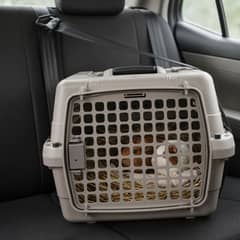
Bring a new guinea pig home in a secure carrier with some hay inside, and with its cage mate if it has one. Have the cage set up and stocked before it arrives, then put it in and leave it to settle for a day or two, with no lifting beyond what the move needs. Sit by the cage and talk to it, and offer a piece of vegetable from your fingers. Start the short daily sessions once it comes forward for food, and book a vet check in the first week, which is also the time to confirm its sex. It should be eating hay and passing droppings on the first day; if it is not, call the vet the same day.
Reading It During a Session
Most guinea pigs show clear stress signals well before they would nip or bite. Put it down when you see any of these:
- Freezing in place
- Trying to hide or burrow away from you
- High-pitched squeaking
- Struggling to get free
A relaxed, loose body and soft chirping or purring mean it is content, and the session can go on.
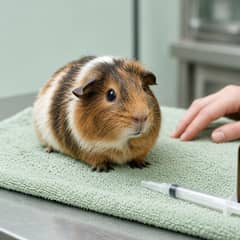
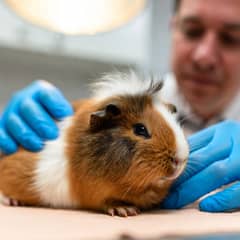
Carrying is an adult's job. A child holds a guinea pig only while sitting on the floor, with an adult beside them. A squirming animal in unsteady hands is a common way falls happen. Most guinea pigs need only light restraint for a vet exam or a nail trim, held the same two-handed way. Nails need a trim roughly every 6 to 8 weeks, with styptic powder within reach.
Pairs, and Introducing a New Guinea Pig
Guinea pigs should live with at least one other friendly guinea pig, and it has to be a guinea pig: a rabbit that looks healthy can carry bacteria such as Bordetella that make a guinea pig ill. The combinations that work best are two females, a neutered male with one or more females, or brothers raised together. Unrelated adult males can be paired, but it can take several attempts to find a match. Neutering is what makes a male safe to house with females. It does not change his behavior or reliably stop fighting between males, which get along best when they are introduced young. Personality decides a pairing more than sex does.
A new guinea pig goes into quarantine behind a closed door for 2 to 3 weeks before it meets anyone, so it cannot carry mites or illness into the herd. Then the introduction happens on neutral ground, never in the resident's cage, where a newcomer is treated as an invader:
- Pick a room neither pig lives in, bigger than the cage and with no furniture to hide behind. A bathroom or hallway works.
- Set it up bare. Towels on the floor, water bottles, and two large piles of hay, but no houses and no pellet bowls, both of which start fights.
- Put them in and sit still. Keep hands off and stay quiet for at least an hour, counted from when they settle, not from when they go in.
- Prepare the cage meanwhile. Clean it out completely so it smells of no one, and give every pig its own hide with two exits, plus enough bottles, bowls and hay for all.
- Move them in together once they are calm and tired, and watch for another hour or two.
Most of what an introduction looks like is normal and should be left alone: mounting, loud chattering, chasing, pulling tufts of hair, rumblestrutting with the fur puffed up, raising noses at each other, and wide yawns that show the teeth. The warning sign is two pigs rearing up on their hind legs at the same time. A locked, rolling fight means drop a towel over them and separate them with the towel, never bare hands, since a fighting guinea pig bites hard enough to reach bone. Any deliberately drawn blood ends the introduction for the day.
Expect chasing and rumbling to carry on through the first week. By about two weeks, the new order has usually settled.
Sounds and Body Language
Guinea pigs are most active around dawn and dusk, though many adjust to their owner's day, and they are far more vocal than most small pets. A loud, rising wheek is the call for food or excitement. Purring and soft gurgling mean contentment, and chutting, a gentle rhythmic call, goes with calm exploring. Rumbling, a deep vibrating sound often paired with a swaying walk, is normal during an introduction. Teeth chattering or clacking is a warning to keep your distance, and squealing, whining or a sharp shriek can mean fear or pain, so check on the animal. Popcorning, repeated bouncing hops, is a sign of excitement and a comfortable guinea pig.
Wheezing, clicking, coughing and labored breathing are not communication. They are signs of illness and call for a vet.
Choosing a Healthy Guinea Pig
Look at where the animals live first: it should be clean, have little odor, and not be overcrowded. A healthy guinea pig looks well fed and alert, with bright, clean eyes free of crusting or cloudiness, a clean nose and ears, formed droppings, a clean dry back end, a coat with no bald patches, and clean, unstained teeth with the top front teeth overlapping the bottom. It should stand with equal weight on all four feet and show no sores on the soles. A nervous animal is normal, but it should calm down and respond to gentle stroking.
Shelters and rescue groups are the first place to look, and they often have pairs. Whoever the seller is, ask where the guinea pigs came from, whether a vet has checked them and what they are used to eating, and ask whether the seller will take one back if a vet finds it sick or pregnant. A young female kept in with males may already be pregnant, since sows can conceive from 4 weeks old, though 8 weeks is more common.
Sexing, and the Breeding Deadline
Mistaking the sexes is easy, and it is how a pair of females turns into a litter. Hold the guinea pig upright against your chest with its hindquarters supported, and press gently just above the genital opening. In a boar the penis can be eased out and the testicles show as two scrotal sacs, and the area looks like a dotted letter i. In a sow nothing comes out, and the opening is a Y-shaped slit. A newborn female can look swollen and a young male's testicles are small, so inexperienced sellers and owners often get young animals wrong. If you are not sure, have a vet check at the first visit.
The timing is what makes a mistake costly. Sows can conceive from 4 weeks old, though 8 weeks is more common, and boars become fertile at about 8 to 10 weeks. A sow can conceive again within hours of giving birth, so the boar is removed before the birth or straight after it. Pups are weaned at 14 to 28 days, and the young move into same-sex groups at about 3 weeks, before the females can breed. Gestation runs 59 to 72 days, about 68 on average, and a litter is usually 2 to 4 pups, born furred and soon eating solid food.
The deadline falls on the sow. Her pelvic bones separate to let the pups out, but if she has not had a litter by about 7 months they may already have fused, and a first litter after that can end in obstructed labor. That, along with the risks of pregnancy itself, is why a boar is neutered before he lives with a sow. A neutered boar can still father young for some weeks after surgery, so he stays apart from sows until the vet says it is safe.
When a Companion Dies
A guinea pig that loses its partner can become depressed. It often goes quieter, more nervous and less active, since guinea pigs are less vocal without company.
- Watch the survivor's eating and drinking closely. If it stops eating or drinking, or turns lethargic, take it to a vet as soon as possible.
- Spend more time with it every day. Your company helps, but it cannot replace another guinea pig around the clock.
- Have the survivor checked by a vet before a new introduction, since meeting a stranger is stressful.
- Find a new companion when you are ready, ideally one of a similar age. There is no fixed waiting time.
Older Guinea Pigs
A guinea pig counts as older from about three years of age. Watch for changes in how it moves, grooms, eats and behaves, and for weight loss. A guinea pig in pain is stiff, reluctant to get around and eats less.
The most important change is to the housing:
- Keep the cage warm and dry.
- Take out raised levels and steep ramps.
- Give soft fleece or vet bedding to lie on.
See a vet early about any change. Getting help early keeps an older guinea pig comfortable for longer.
When You Go Away
Find someone who will look after the guinea pigs in their own familiar home and meet all their needs. They need checking for illness or injury every day, so make sure the sitter does it. If they have to be boarded, keep the group together and send along familiar items such as their hides and tunnels.
Let It Set the Pace
A guinea pig that is lifted the same way every time, kept low and put down at its first stress signal learns that hands are safe. Short daily sessions build that faster than long ones.
Sources & Further Reading
Last reviewed 16 Jul 2026 · 6 sources
- Merck Veterinary Manual: the guinea pig pages on restraint and physical examination, selecting a guinea pig, and anatomy, physiology and behavior
- RSPCA Knowledgebase: the guinea pig pages on handling, socializing a new guinea pig, where to get guinea pigs, desexing, and how they breed and are sexed
- RSPCA: Guinea Pig Company; How to Take Care of Your Guinea Pigs (booklet)
- Wood Green: What to Do When One Guinea Pig Dies; Caring for Older Guinea Pigs
- NC3Rs: Housing and Husbandry, Guinea Pig, for same-sex groups at weaning
- Lafeber: Care of the Pet Guinea Pig (PDF), Care of the Pregnant Guinea Pig (PDF), and Do You Know About Guinea Pig Sounds?
Frequently Asked Questions
What's the correct way to pick up a guinea pig?
With both hands, after it has seen you coming: one under the chest and one under the rump, lifted together and held against your body.
Why does staying low to the ground matter so much when handling a guinea pig?
Because a guinea pig that squirms free drops hard, and a fall from standing height can kill it. Close to the floor, the worst case is a short hop.
What are the signs a guinea pig is stressed during handling?
Freezing, trying to burrow away, squeaking or struggling. Put it down at the first one rather than waiting for the next.
Can young children handle a guinea pig on their own?
Not unsupervised. A child can pet a guinea pig sitting on the floor with an adult beside them, but carrying one is an adult's job.



Written by Michael Ryan
Mike grew up with guinea pigs.
Mike keeps two rescued bearded dragons, Dex and Cera, and writes the care guides on BeastlyFacts from his own research and mistakes. He is not a veterinarian.
More about Michael Ryan →You May Also Like


Subscribe - it's free
An occasional email when something new is worth your time. No spam.
Health and More