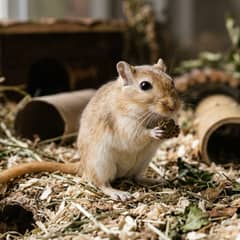
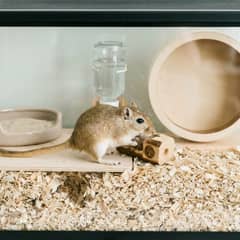
Hamster vs. Guinea Pig: Which Small Pet Is Actually Right for You
On This Page▾

Both get recommended as "easy first pets," and both get returned or rehomed at a fairly high rate by people who picked based on which one looked cuter in the store rather than which one fit their life. The differences come down to a handful of things: how much space you have, whether you can commit to a pair instead of one animal, and whether your schedule matches a nocturnal or a daytime animal.
The Comparison
| Hamster | Guinea Pig | |
|---|---|---|
| Minimum space | 700-775 sq in (Syrian), 600 sq in (dwarf) | 7.5 sq ft (10.5 sq ft for a pair) |
| Housing | Solo (Syrians) | Pairs or groups, almost always |
| Active period | Nocturnal/crepuscular | Awake through the day |
| Lifespan | 2-3 years | 4-8 years |
| Diet complexity | Simple - pellets + occasional veggies | Needs daily vitamin C (bell pepper, greens) |
| Handling tolerance | Moderate, can nip if startled | Generally good once settled |
| Noise level | Quiet | Vocal - wheeks, purrs, rumbles |
| Good first pet for kids? | Better for older kids/teens | Better for younger kids |
Space Is the First Real Difference
A hamster's whole world can fit in 600 to 775-plus square inches - a large bin cage on a dresser. A guinea pig needs 7.5 square feet of floor space at minimum for one, and 10.5 square feet for a pair, since guinea pigs should almost never be kept alone. If you're working with a small apartment or a shared kids' room, a hamster is the realistic option. If you have floor space for a proper C&C cage, a guinea pig setup opens up.
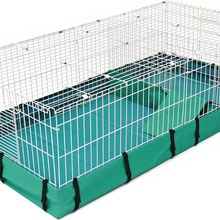
A guinea pig's minimum recommended cage footprint, 7.5 square feet (1,080 square inches) even for a single guinea pig, is only around 1.4 to 1.5 times larger than a Syrian hamster's 700 to 775 square inches, even though an adult guinea pig weighs roughly 5 to 6 times as much as a Syrian hamster. Most of the real space gap between the two setups comes from guinea pigs almost always being housed in pairs, not from the animal itself being dramatically bigger.
Social Needs Are Not a Minor Detail
This is the difference people most often get wrong. Guinea pigs are herd animals and do best in bonded pairs - a solo guinea pig is a genuinely lonelier animal than most new owners expect, and reputable guinea pig sources will often only rehome them in pairs. Syrian hamsters are the opposite: they're strictly solitary and will fight, sometimes fatally, if housed together as adults. Buying "two hamsters so they have a friend" is one of the most common and preventable hamster-owner mistakes there is.
Choose a Hamster if you have limited space and can work around a nocturnal schedule. Just don't buy a second one for company, Syrian hamsters are strictly solitary as adults and will fight, sometimes fatally, if housed together.
Handling and Temperament
Guinea pigs are generally easier for a nervous first-time handler. They're ground-dwelling, don't jump or bolt as dramatically, and are less likely to deliver a startled defensive nip. Hamsters can absolutely become comfortable, hand-tame pets, but they're small, fast, and easy to accidentally frighten - especially if handled during the day when they'd naturally be asleep. Evening handling sessions go far better with a hamster than daytime ones.
The Lifespan Difference
A hamster's 2 to 3 year lifespan is short enough that it's worth stating plainly before you commit, not after. For some households that's actually a feature - a shorter, lower-stakes way to introduce a child to pet responsibility. A guinea pig's 4 to 8 years is a more serious multi-year commitment, closer in scale to a rabbit or cat in terms of the relationship you're signing up for.
A Guinea Pig is the better fit if you have the floor space for a proper pair setup and want a daytime-active, social pet. Budget for two from the start, a solo guinea pig is a lonelier animal than most new owners expect.
Bottom Line
Pick a hamster if you have limited space, want a lower up-front and annual cost, and can work around a nocturnal schedule. Pick a guinea pig if you have the floor space for a proper pair setup, want a more consistently social and daytime-active pet, and are ready for a multi-year commitment with a bit more daily diet management. Neither is "the easy one" - they're just easy in different ways. The hamster and guinea pig encyclopedia profiles cover the desert-burrow and Andean-grassland origins behind those schedule and space differences.
Sources & Further Reading
❓ Frequently Asked Questions
Which is better for a young child, a hamster or a guinea pig?
Guinea pigs, generally. They're awake more during normal daytime hours, tolerate gentle handling better, and rarely bite defensively the way a startled hamster can. Hamsters are nocturnal and are often asleep exactly when a child wants to play with them, which leads to grumpy, defensive animals and disappointed kids.
Which is cheaper to keep, a hamster or a guinea pig?
Hamsters cost less up front and less per year - smaller cage, less food, no mandatory companion to buy. A guinea pig's ongoing costs run higher mainly because of daily fresh vegetables (for vitamin C) and because they should be kept in pairs, effectively doubling most recurring costs.
Can I keep a hamster and a guinea pig in the same cage?
No. They have different dietary needs (guinea pigs require daily vitamin C, hamsters don't), different size requirements, and guinea pigs can seriously injure a hamster even without meaning to just by being much larger. They should always be housed separately.
Which lives longer, a hamster or a guinea pig?
Guinea pigs, by a wide margin. A hamster typically lives 2 to 3 years; a guinea pig typically lives 4 to 8 years. If a shorter-term commitment is what you want (for example, easing a child into pet ownership), that cuts the other way - it isn't automatically a downside.
Is a guinea pig or a hamster more social with its owner?
Guinea pigs, generally. They're highly vocal, food-motivated, and often visibly excited ("popcorning") when their owner approaches. Hamsters can become comfortable with handling but are naturally solitary and less inclined to seek out interaction the way a guinea pig does.
🐹 How Much Does a Guinea Pig Really Cost?
🌰 How Much Does a Hamster Really Cost?
🐹 How to Handle a Guinea Pig Without Scaring It
🌰 How to Handle a Hamster (And Why the Species Matters More Than You'd Think)
🐹 Common Guinea Pig Health Issues (And Why Vitamin C Matters So Much)
🌰 Common Hamster Health Issues (Wet Tail Is the One to Know)
🐹 Guinea Pig Housing and Diet: Why Vitamin C Is Non-Negotiable
🌰 Hamster Enclosure Setup: Bigger and Deeper Than the Starter Kit Suggests
🐹 Guinea Pig Feeding: Schedule, Diet, and Why They Stop Eating
🐹 Hamster Feeding: Schedule, Diet, and Why They Stop Eating
🐹 Guinea Pig Scurvy: Why Vitamin C Isn't Optional
🐹 Guinea Pig Enrichment: Hideouts, Foraging, and Floor Time
🐹 Hamster Enrichment: The Bedding Depth Study Everyone Should Know
🐹 Is It Legal to Own a Guinea Pig? The Short Answer
🐹 Are Hamsters Legal? The One State That Says No
🛒 Recommended Gear
As an Amazon Associate, we earn from qualifying purchases through the links above - at no extra cost to you.

Written by Michael Ryan
Mike grew up with guinea pigs.
Mike keeps two rescued bearded dragons, Dex and Cera, and writes the care guides on BeastlyFacts from his own research and mistakes. He is not a veterinarian.
More about Michael Ryan →Comments
No comments yet - be the first!