Guinea Pig
Cavia porcellus
On This Page▾
🌍 Overview
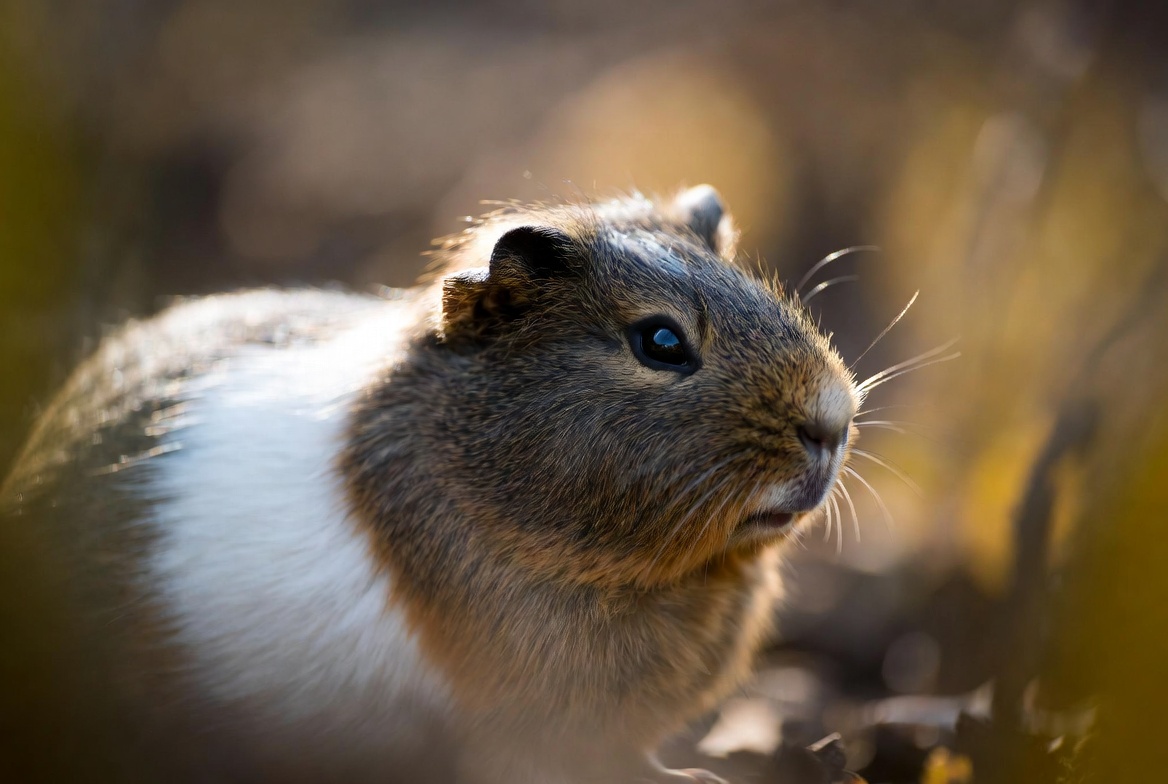
Guinea pigs (cavies) have never been found in the wild - they are a fully domesticated species descended from South American wild cavies, selectively bred by Andean peoples for over 3,000 years as a food source and in religious ceremonies. Today they are one of the world's most popular small pet animals, valued for their vocal, social nature and gentle temperament. They use over 11 distinct vocalizations to communicate.
📋 Quick Facts
Native Range
Domesticated from wild cavies of the Andes (Peru, Bolivia, Ecuador)
Natural Habitat
Fully domesticated; no wild population
Adult Size
8-12 inches (20-30 cm); 1.5-2.6 lbs
Wild Diet
Grasses, hay, leafy plants, and vegetables
Wild Lifespan
4-8 years
Conservation Status
Not assessed (fully domesticated species)
📜 History
Guinea pigs crossed the Atlantic soon after the first European contact with South America, and the oldest known European remains are sixteenth century: a skeleton from Mons in Belgium dated between 1550 and 1640, and bones from Hill Hall Manor in Essex dated to 1574 or 1575. Genetic work points to Peru as the likely source of the animals shipped out. They arrived in Europe as luxuries, kept first by the upper classes and only later reaching everyone else. By the eighteenth century medical researchers had begun using them as laboratory subjects.
⚖️ Compare
Guinea Pig
Human
Adult Size
8-12 inches (20-30 cm); 1.5-2.6 lbs
5-6 feet (150-185 cm); ~135-200 lbs
Wild Lifespan
4-8 years
~73 years (global average)
Wild Diet
Grasses, hay, leafy plants, and vegetables
Omnivorous - eats just about anything
Native Range
Domesticated from wild cavies of the Andes (Peru, Bolivia, Ecuador)
Global - originated in Africa roughly 300,000 years ago
Natural Habitat
Fully domesticated; no wild population
Everywhere from arctic tundra to tropical megacities
Conservation Status
Not assessed (fully domesticated species)
Least Concern (8+ billion and counting)
🧠 Test Yourself
What's the Guinea Pig's native range?
🤩 Fun Facts
🐹 Guinea Pigs Are Social
Guinea pigs are highly social and should ideally be kept in pairs or small groups. A lone guinea pig can become lonely, anxious, and even depressed.
🐹 The Vitamin C Shortage
Guinea pigs 'popcorn,' leaping straight up and twisting mid-air, when they're overjoyed. Like humans, they can't produce their own Vitamin C, so their diet needs a daily dose of fresh veggies or they risk getting scurvy!
📖 Care Guide
Guinea Pig Care Guide
The vocal, social little veggie lover that needs a friend!
⚖️ Where it is legal
1 US jurisdictions restrict this species, from outright bans to permits. Every one quotes the rule it comes from.
⚖️ Legal Guide
Subscribe - it's free
New animal facts and care guides straight to your inbox. No spam. 🐾
📰 Deep Dive
🐹 How Much Does a Guinea Pig Really Cost?
🐹 How to Handle a Guinea Pig Without Scaring It
🐹 Common Guinea Pig Health Issues (And Why Vitamin C Matters So Much)
🐹 Guinea Pig Housing and Diet: Why Vitamin C Is Non-Negotiable
🐹 Guinea Pig Feeding: Schedule, Diet, and Why They Stop Eating
🐹 Guinea Pig Enrichment: Hideouts, Foraging, and Floor Time
🩺 Health and More
💊 Antibiotic-Associated Enterotoxemia: The Small Mammal Danger Most Vets Don't Warn You About
🌡️ Heat Stress and Cold in Small Mammals: Temperature Ranges and Emergency Signs
🩺 Getting a Small Mammal to the Vet: Carriers, Car Travel, and Anesthesia
✂️ Grooming, Nails, and Molting in Small Mammals
🔑 Four Pets With One Rule Each Worth Knowing First
🐹 Gerbil vs. Guinea Pig: Which Small Pet Actually Fits Your Space
🤓 Did You Know?
Guinea pigs have over 11 different vocalizations. They 'wheek' when excited about food and 'purr' when content (similar to cats but much louder)!
Explore More