Chinchilla
Chinchilla lanigera
On This Page▾
🌍 Overview
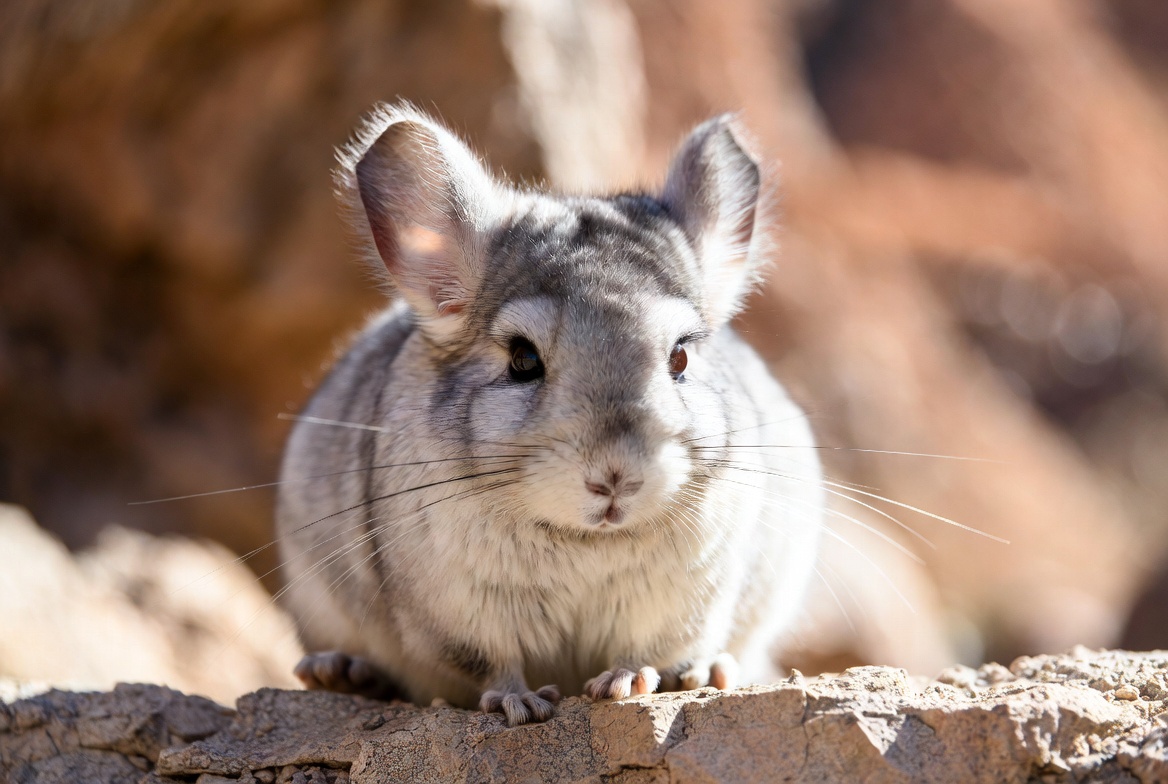
Chinchillas are native to the high-altitude Andes mountains of South America, where they inhabit rocky terrain at elevations up to 14,000 feet. In the wild they are critically endangered - their extraordinarily dense fur (up to 80 hairs per follicle, versus 2-3 for humans) has been prized for centuries and nearly led to their extinction. Most pet chinchillas descend from a founding population of just 13 animals brought to the United States in 1927.
📋 Quick Facts
Native Range
Andes mountains of Chile (formerly also Bolivia, Peru, Argentina)
Natural Habitat
Rocky, arid Andean mountains at high altitude
Adult Size
9-15 inches (23-38 cm); 1-2 lbs
Wild Diet
Grasses, seeds, leaves, bark, and insects
Wild Lifespan
Not documented (the widely quoted 10-20 years is a captive range; wild longevity for this species has not been studied)
Conservation Status
Critically Endangered (IUCN)
📜 History
Around 1900 Chile was shipping an estimated 500,000 chinchilla skins a year, a rate that stripped the mountains within a generation. Breeders had begun keeping the animals in captivity at the end of the nineteenth century, and commercial ranching started in 1920, which is when the supply shifted from hunters to farms. It grew quickly: by 1946 Life magazine reported roughly 200,000 chinchillas being raised on farms across the United States. The pet is a byproduct of that industry, since ranch-raised animals were the only chinchillas anyone could obtain.
⚖️ Compare
Chinchilla
Human
Adult Size
9-15 inches (23-38 cm); 1-2 lbs
5-6 feet (150-185 cm); ~135-200 lbs
Wild Lifespan
Not documented (the widely quoted 10-20 years is a captive range; wild longevity for this species has not been studied)
~73 years (global average)
Wild Diet
Grasses, seeds, leaves, bark, and insects
Omnivorous - eats just about anything
Native Range
Andes mountains of Chile (formerly also Bolivia, Peru, Argentina)
Global - originated in Africa roughly 300,000 years ago
Natural Habitat
Rocky, arid Andean mountains at high altitude
Everywhere from arctic tundra to tropical megacities
Conservation Status
Critically Endangered (IUCN)
Least Concern (8+ billion and counting)
🧠 Test Yourself
What's the Chinchilla's native range?
📖 Care Guide
Chinchilla Care Guide
The incredibly soft, high-jumping rodent that needs dust baths!
⚖️ Where it is legal
3 US jurisdictions restrict this species, from outright bans to permits. Every one quotes the rule it comes from.
⚖️ Legal Guide
Subscribe - it's free
New animal facts and care guides straight to your inbox. No spam. 🐾
📰 Deep Dive
🐭 How Much Does a Chinchilla Really Cost?
🐭 How to Handle a Chinchilla (And What Fur Slip Actually Means)
🐭 Common Chinchilla Health Issues (Heat Is the Hidden Danger)
🐭 Chinchilla Housing: Dust Baths, Not Water, and a Cool Room
🐹 Chinchilla Feeding: Schedule, Diet, and Why They Stop Eating
🐭 Chinchilla Enrichment: Fur Chewing Dropped With the Right Floor
🩺 Health and More
💊 Antibiotic-Associated Enterotoxemia: The Small Mammal Danger Most Vets Don't Warn You About
🌡️ Heat Stress and Cold in Small Mammals: Temperature Ranges and Emergency Signs
🩺 Getting a Small Mammal to the Vet: Carriers, Car Travel, and Anesthesia
✂️ Grooming, Nails, and Molting in Small Mammals
🐾 Four Pets That Break the Usual Mold
🐹 Chinchilla vs. Hamster: Which Small Pet Fits Your Commitment Level
🤓 Did You Know?
Chinchillas can jump up to 6 feet high and can rotate their ears 180 degrees! Their fur is so dense they can have up to 80 hairs per follicle, versus 2 to 3 for humans.
Explore More