Koi vs. Goldfish: Which Pond Fish Actually Fits Your Space
On This Page▾

Both are colorful, popular ornamental carp relatives that get grouped together constantly, sometimes even assumed to be the same fish in different colors. They aren't, and the differences, species, adult size, and whether a pond is required, matter a lot more than which one looks prettier in a display tank.
The Comparison
| Koi | Goldfish | |
|---|---|---|
| Species | Cyprinus rubrofuscus (Amur carp) | Carassius auratus (Prussian carp) |
| Adult size | 24-25 in, up to 3 ft | 4-8 in, some larger pond varieties |
| Housing | Outdoor pond, ~250 gal per fish | Aquarium or pond, more flexible |
| Lifespan | 25-50 years, some to 100 | 10-15 years, documented to 43 |
| Starting cost | High, pond + filtration required | Low to moderate |
| Can interbreed with the other? | No | No |
| Origin | Japan, bred from Amur carp | China, bred from Prussian carp |
| Cold hardiness | Overwinters in outdoor ponds | Overwinters in outdoor ponds |
They Aren't the Same Fish, Just Related Ones
This is worth clearing up first because the confusion is so common. Koi and goldfish are genuinely different species in different genera, koi descend from the Amur carp, goldfish from the Prussian carp, and despite both being members of the minnow family and both selectively bred for color over centuries, they can't interbreed to produce viable offspring. It's a case of two separate domestication stories, one in Japan and one in China, that happened to converge on similarly bright, patterned ornamental fish.
Choose Goldfish if you want to start in an aquarium rather than build a pond first. You get a flexible fish, at home in a large tank or an outdoor pond, without koi's demand for hundreds of gallons per fish from day one.
Adult Size Determines Everything Else
A typical adult koi reaches 24 to 25 inches, with well-kept individuals in a spacious pond approaching 3 feet. Most goldfish stay considerably smaller, 4 to 8 inches for most varieties, though pond-raised common and comet goldfish can grow larger than the compact fancy varieties bred for aquarium life. That size gap is the reason koi essentially require an outdoor pond setup, roughly 250 gallons per fish and sized off waste volume, while goldfish can realistically live out a full life in a properly sized aquarium.
Koi and goldfish are both genuinely cold-hardy and can overwinter in an outdoor pond in most temperate climates, slowing their metabolism and settling near the bottom once water temperatures drop, rather than needing to be brought indoors the way most ornamental fish do.
Both Are a Longer Commitment Than People Expect, Just Different Scales
A goldfish's 10 to 15 year typical lifespan already surprises people used to thinking of goldfish as short-lived. A koi's is on another level entirely: 25 to 50 years typically, with some individuals reported reaching 100, a timeline that can genuinely span a person's entire adult life. Feeding either one a proper species-appropriate diet matters more than it might seem given how long you're likely to be doing it.
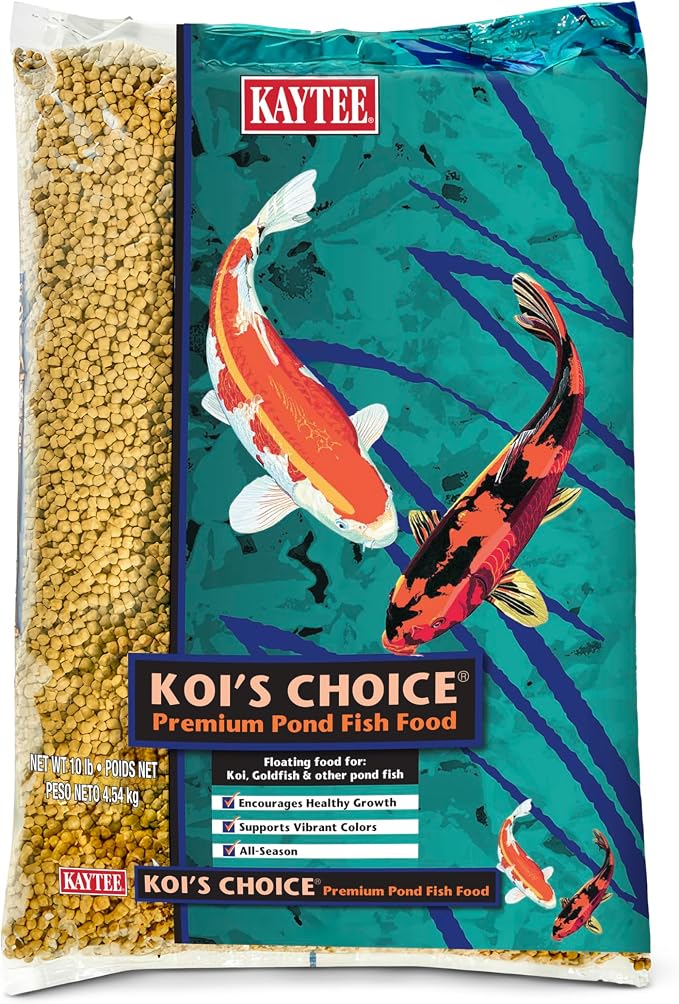
A Koi is the better fit if you have, or are ready to build, real outdoor pond space and want a fish that can become a decades-long fixture of your yard. Go in with the space and budget question settled first, this isn't a fish you can downsize into later.
Bottom Line
Pick a goldfish if you want a flexible, aquarium-or-pond-capable fish with a lower upfront cost. Pick a koi only if you have real outdoor pond space and are ready for a fish that can genuinely outlive the pond's original owner. They may get confused for each other constantly, but they're different species with very different space requirements. The koi and goldfish encyclopedia profiles cover the two separate carp lineages behind the mix-up.
Sources & Further Reading
❓ Frequently Asked Questions
Are koi and goldfish the same species?
No, and this surprises a lot of people. Koi (Cyprinus rubrofuscus) and goldfish (Carassius auratus) are different species in different genera entirely, both members of the minnow family, but not close enough to interbreed and produce viable offspring. Koi descend from the Amur carp, goldfish from the Prussian carp, two separate domestication stories that happen to have produced similarly colorful ornamental fish.
Do I need a pond for koi, or can I keep them in an aquarium?
You need a real pond. Koi grow far too large for aquarium life long-term, a typical adult needs around 250 gallons of space, and most keepers provide that through an outdoor pond rather than any indoor tank. Goldfish are more flexible: fancy varieties do fine in a large aquarium, while common and comet goldfish also thrive in outdoor ponds if you have one.
Which gets bigger, a koi or a goldfish?
Koi, by a wide margin. A typical adult koi reaches 24 to 25 inches, with some approaching 3 feet in ideal conditions. Most goldfish stay in the 4 to 8 inch range, though pond-raised common and comet goldfish can grow larger than the fancy varieties bred for aquariums.
Which lives longer, a koi or a goldfish?
Koi, often considerably. Koi typically live 25 to 50 years, with some individuals reported reaching 100. Goldfish commonly live 10 to 15 years, though well-documented individuals have lived past 40, the record-holding pet goldfish lived to 43.
Which is cheaper to get started with, koi or goldfish?
Goldfish, by a wide margin, mainly because of the housing difference. A goldfish can start in a modest, properly sized aquarium. Koi realistically require building or maintaining an actual outdoor pond with filtration sized for a large, waste-producing fish, a far bigger upfront investment before you even buy the fish.
🐟 How Much Does a Goldfish Really Cost?
🎏 How Much Does Koi Fish Ownership Really Cost?
🐟 How to "Handle" a Goldfish (Net and Cup, Not Hands)
🎏 How to "Handle" Koi (Mostly, You Don't)
🐟 Common Goldfish Health Issues (And What Actually Prevents Them)
🎏 Common Koi Health Issues (Water Quality Is the Root of Almost Everything)
🐟 Goldfish Tank Setup: Bigger Than You Think, Filtered More Than You'd Guess
🎏 Koi Pond Setup: Built for Waste Volume, Not Just Water Volume
🐠 Goldfish Feeding: Schedule, Diet, and Why They Stop Eating
🎏 Koi Feeding: Schedule, Diet, and Why They Stop Eating
🐠 Goldfish Enrichment: Space, Plants, and Foraging Done Right
🐟 Koi Enrichment: Volume, Depth, and Somewhere to Overwinter
🐟 The Goldfish Bowl Myth: What the Research Actually Shows
🛒 Recommended Gear
As an Amazon Associate, we earn from qualifying purchases through the links above - at no extra cost to you.
Written by Michael Ryan
Mike keeps two rescued bearded dragons, Dex and Cera, and writes the care guides on BeastlyFacts from his own research and mistakes. He is not a veterinarian.
More about Michael Ryan →Comments
No comments yet - be the first!