The Complete Leopard Gecko Temperature Guide
On This Page▾

A leopard gecko cannot make its own heat. Everything it does, from digesting a cricket to fighting off an infection, runs on the warmth it borrows from the enclosure floor, and a gecko kept a few degrees too cool goes off food long before it looks sick. Getting the numbers right is the whole job.
The Thermal Gradient, Zone by Zone
Leopard geckos need a range of temperatures so they can thermoregulate by moving between warm and cool zones. The warm hide floor is the number to build everything else around.
| Zone | Target |
|---|---|
| Warm hide floor (belly heat) | 88 to 92°F (31 to 33°C) |
| Warm side, ambient air | 80 to 84°F (27 to 29°C) |
| Cool side | 70 to 77°F (21 to 25°C) |
| Night, whole enclosure | The 70s°F (21 to 26°C); 65°F (18°C) is the floor |
The sources do not all agree with each other, let alone with this table: LafeberVet gives a 70 to 80°F gradient with a warm area reaching 90°F, and Zen Habitats' heating guide puts the warm hide at 90 to 92°F over a 70 to 77°F cool zone. The Merck Veterinary Manual's general rule for reptiles is that basking surfaces run about 5°C above the air gradient and nights fall about 5°C below it, which is why the floor number sits above the ambient one here.
Under-Tank or Overhead
Under-tank heaters (UTHs) connected to a thermostat are the gold standard for belly heat. Never run a UTH without a thermostat. They can reach dangerous temperatures and cause burns. Overhead heat panels work too, but belly heat is preferred for this species.
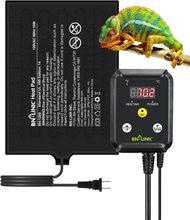
The two methods trade different things. A mat makes a small, steady warm patch under one hide, uses little power, and can run all night without light. Its weaknesses are coverage, and the fact that a mat or heat tape can fail into a hot spot away from the thermostat probe, which a thermostat will not catch. That is why the mat goes under an inch of substrate and gets checked with an IR gun rather than trusted. Overhead heat, a halogen or a deep heat projector on a dimming thermostat, warms a wider area and reads more like sun to a lizard that in the wild burrows down to cool off rather than up to warm up. It also dries the air and can burn a gecko that climbs too close to the fixture. Many keepers run both: overhead by day for the gradient, a thermostat-controlled mat under the warm hide for the floor. Glass is a poor insulator, so the same mat runs a warmer floor inside a PVC or wood enclosure; verify with the IR gun whenever the enclosure changes.
The Thermostat Rule
Merck's husbandry guidance is one sentence: heaters should be thermostat controlled, screened from the animal, and placed at one end of the enclosure to make a gradient. In practice that means a mat on an on/off probe thermostat, and a halogen or deep heat projector on a proportional or dimming thermostat, which is the split Zen Habitats' heating guide draws. Put the probe inside the warm hide, on the floor where the gecko lies, so the thermostat regulates the surface that matters rather than the air above it.
What NOT to Do
- Hot rocks: uneven heat distribution causes burns
- Coil CHE (ceramic heat emitter) without thermostat: fire risk
- No cool side: prevents thermoregulation and causes chronic stress
Measuring Temperatures
Use an infrared (IR) temperature gun to check surface temps, especially on the warm hide floor. Digital thermometers with probes work for ambient air temps. Check temps at different times of day. Leopard geckos are crepuscular, active at dusk and dawn, so night temps matter too.
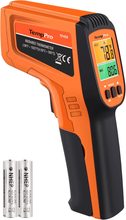
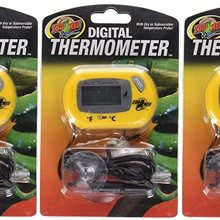
Measure the surface the gecko lies on, not the glass or the air at the top of the tank: the IR gun for the warm hide floor, a probe for each zone's air. A thermostat set to 90 does not mean the floor is 90; the IR gun is how you find out.
Night Temperatures
Temperatures can safely drop to 65°F at night, mimicking natural desert conditions. If your home drops below this, use a ceramic heat emitter (no light, just heat) on a thermostat.
The sources do not agree on the floor. LafeberVet says to drop nights into the 70s, Zen Habitats' heating guide allows 60°F, and Merck's rule of thumb is 5°C below the daytime air gradient. This guide keeps 65°F as the floor: warmer than Zen's number, cooler than LafeberVet's, and one a room thermostat can hold. If you want the conservative choice, hold the low 70s.
Signs the Temperatures Are Wrong
Too cold shows up slowly, as appetite and movement rather than anything you can see on the animal. Unfavorable environmental temperatures are one of the causes the Merck Veterinary Manual lists for respiratory infection, so open-mouth breathing, discharge from the nose, or difficulty breathing in a cool enclosure is a vet visit, not a heating tweak.
Too hot is louder. Glass surfing or pacing the walls away from the warm side, gaping or panting, refusing the warm hide, flattening into the coolest substrate, and a gecko that is either sluggish or oddly restless all point to heat the animal cannot escape. Darkened skin, wobbliness, or limpness is an emergency: move the gecko to a cooler spot, shut the heater off, and call a reptile vet.
Either way, the first step is the same. Read the floor with the IR gun, read the cool side with a probe, and fix the number before you change anything else.
Nail your temperatures and your leopard gecko will be a healthy, active, long-lived companion. Correct temperatures also directly support healthy sheds, and a stuck shed is one of the first signs the reptile shedding guide points back at the gradient.
Sources & Further Reading
Last reviewed 7 Sep 2026 · 6 sources
- LafeberVet: Basic Information Sheet, Leopard Gecko
- Merck Veterinary Manual: Management and Husbandry of Reptiles
- Merck Veterinary Manual: Disorders and Diseases of Reptiles
- Zen Habitats: Leopard Gecko Complete Lighting and Heating Guide
- Zen Habitats: Overhead Heating vs. Under Tank Heating for Leopard Geckos
- Zen Habitats: Signs Your Reptile Is Overheating
❓ Frequently Asked Questions
Does enclosure material (glass vs. PVC) change how I should set up heating?
Somewhat. A PVC or wood enclosure keeps heat that a glass tank loses, so a thermostat setting carried over from glass lands hotter. Read the warm hide floor with the IR gun after any enclosure change and set the thermostat from that.
Why does my leopard gecko need a cool side if it likes the warm hide?
Moving between warm and cool is how a gecko manages digestion and activity through the day. A uniformly warm tank takes that choice away and stresses the animal over time.
Is an infrared temperature gun necessary, or will a stick-on thermometer work?
A stick-on dial reads the air at the glass, not the floor the gecko lies on. An IR gun reads that floor, which is the number that matters.
Do leopard gecko temperature needs change at night?
Yes. LafeberVet puts nights in the 70s, and this guide keeps 65°F as the floor. Below that, a ceramic heat emitter on a thermostat gives heat without light and leaves the evening schedule alone.
What's the biggest temperature mistake new keepers make?
Running a heat source with no thermostat. A bare mat or ceramic emitter keeps climbing, and unregulated heat is one of the most common causes of thermal burns in captive leopard geckos.
📰 More on the Leopard Gecko
🛒 Recommended Gear
As an Amazon Associate, we earn from qualifying purchases through the links above - at no extra cost to you.
Written by Michael Ryan
Mike keeps two rescued bearded dragons, Dex and Cera, and writes the care guides on BeastlyFacts from his own research and mistakes. He is not a veterinarian.
More about Michael Ryan →Comments
No comments yet - be the first!