Leopard Gecko Enclosure Setup: What Your Gecko Needs
On This Page▾

Leopard geckos are among the simpler reptiles to house. Two details decide whether the setup works: where the heat sits, and keeping the high humidity inside one hide.
Enclosure Size
36x18x18 inches is the current minimum for an adult, well beyond the old 20-gallon-long standard (roughly 30x12x12 inches) that a lot of older care sheets still repeat. Bigger is always fine. A hatchling can start in a 10-gallon while it is small, though buying the adult enclosure on day one saves a second purchase later. Leopard geckos are terrestrial and ground-dwelling, so floor space matters more than height. Choose a front-opening, well-ventilated enclosure with an escape-proof screen top. House your gecko alone: leopard geckos are not social and do poorly kept together.
Temperature Gradient
- Warm side/basking: 88 to 92°F at the warm hide floor, measured on the surface, since air temperature runs lower
- Warm side, air: 80 to 84°F
- Cool side: About 70 to 77°F
- Nighttime: 65 to 72°F
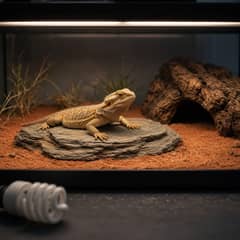
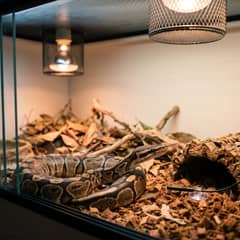
Heat comes from an under-tank heat mat placed under the warm hide, always on a thermostat. Never run a heat mat without one: an unregulated mat is a real burn and fire risk. Size the mat to cover no more than about 30% of the floor, all of it at the warm end, so the rest of the enclosure stays a gradient. A mat works under a glass floor; a PVC or wood enclosure gets overhead heat on a dimming thermostat instead. Skip colored night bulbs entirely, since they disrupt sleep, and use a ceramic heat emitter if you need supplemental night heat. Air on the warm side runs well below the hide floor, so a probe hanging in the air reads low.
UVB: Optional, But Worth Doing
Leopard geckos don't strictly require UVB the way bearded dragons do, but even brief, low-level exposure, as little as two hours a day, raises their vitamin D3 levels through the skin.
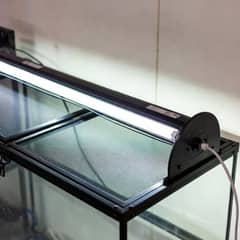
Add UVB, a low-output linear T5 tube about two-thirds the enclosure length, and keep the output low: a UVI of 0.6 to 1.4 at the basking spot for normally pigmented geckos, the Ferguson Zone 1 range, and 0.5 to 0.7 or lower for albino or other less-pigmented morphs, which burn more easily under standard output.
On a 36-inch enclosure that means a tube about 24 inches long, and the 2.5% ShadeDweller Max is the low-output tube made in that size. Don't be fooled by the 2.5%: the percentage is the share of the tube's light that is UVB, not how strong it is. Set it by its own distances, below.
Distance sets that number. A 2.5% ShadeDweller Max mounted on top of a screen lid, which blocks about 30% of the UVB, goes 8 to 14 inches above the basking spot. Mounted inside the enclosure with no mesh in the way, it goes 12 to 18 inches. For albino and other pale morphs, use 12 to 14 inches over mesh or about 20 inches inside. Any other tube uses its maker's distance chart. Measure to the gecko's back, not the floor, check the result with a UV index meter if you have one, and replace the tube every 6 to 12 months, on the maker's schedule, to keep its output where it should be.
Humidity: The Detail People Get Wrong
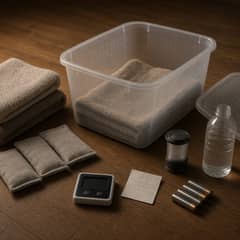
Keep the general enclosure at 30 to 40% humidity. Separately, provide a dedicated humid hide at 70 to 80% humidity on the cool or middle side of the enclosure. This one feature prevents the majority of shedding problems in this species. Line it with damp sphagnum moss, and replace the moss often so it doesn't mold. Don't raise humidity across the whole enclosure to hit that number: that just creates a respiratory infection risk instead.
Substrate
Paper towel or tile are the safest choices, especially for anyone newer to the hobby, since they take loose substrate out of the impaction risk. More experienced keepers sometimes move to bioactive sand or soil setups, but that comes with more nuance to get right. Whatever you use, never use calcium sand or fine loose sand. Skip corncob and crushed walnut shell bedding too: both get swallowed and can block the intestines, and walnut shell is abrasive on a gecko's skin.
Replace paper towel whenever it is soiled. On any substrate, remove droppings and uneaten insects daily. The weekly wipe-down and the monthly strip-and-disinfect follow the same cleaning schedule every reptile enclosure runs on.
Furnishings
You need three hides, not one:
- A warm, dry hide
- A cool, dry hide
- A humid hide lined with damp sphagnum moss, placed on the cool or middle side
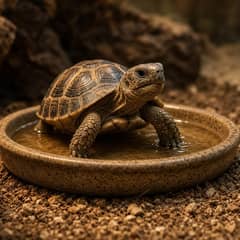
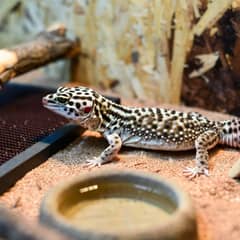
Add a shallow water dish your gecko can climb in and out of easily, and refresh it daily. Add some rock or wood for nail filing and light climbing. If you run UVB, put it on a timer for 14 hours a day in summer and 12 in winter, which keeps a normal day and night rhythm and marks the change of season. Without UVB, the room's own daylight does that job, and the gecko needs no light at night.
Setting It Up, in Order
- Pick a spot away from windows and direct sun.
- Fit the heat mat under the glass beneath the warm hide, and connect it to the thermostat with the probe on the floor directly over the mat.
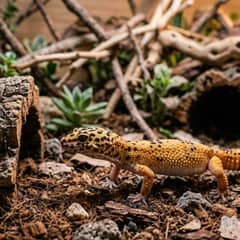
- Lay the substrate, then add the three hides and the water dish.
- Fit the UVB on a timer, if you are using it.
- Run the heat until the warm hide floor holds 88 to 92°F and the cool side 70 to 77°F through a full day and night.
- Bring the gecko home in a small, ventilated container, kept warm in the car.
On the first day, put the gecko in with food and water, then leave it alone until the next day. Skip handling for the first one to two weeks so it can settle.
Build Around the Warm Hide
A leopard gecko enclosure comes down to three things: a heat mat on a thermostat under the warm hide, a humid hide the gecko can shed in, and a floor it cannot swallow. With those in place in a 36x18x18, the UVB, the decor and a bioactive floor are refinements on a setup that already works.
Sources & Further Reading
Last reviewed 6 Jul 2026 · 5 sources
- PetMD: Leopard Gecko Care Sheet
- VCA Animal Hospitals: Leopard Geckos, Care and Feeding
- Gould, A., et al. (2018). "A comparison of blood vitamin D and ionized calcium concentrations in leopard geckos exposed to UV light or dietary vitamin D." Journal of Herpetological Medicine and Surgery, 28(1-2), 34-39.
- Oonincx, D.G.A.B., et al. (2020). The nocturnal leopard gecko (Eublepharis macularius) uses UVb radiation for vitamin D3 synthesis. Comparative Biochemistry and Physiology Part B 250: 110506
- Arcadia Reptile: Arcadia Brochure 2026, UVI outputs (p. 37), LumenIZE ProT5 UVB Kit table
- Baines, F. et al. (2016). How much UVB does my reptile need? The UV-Tool, a guide to the selection of UV lighting for reptiles and amphibians in captivity. Journal of Zoo and Aquarium Research 4(1):42-63
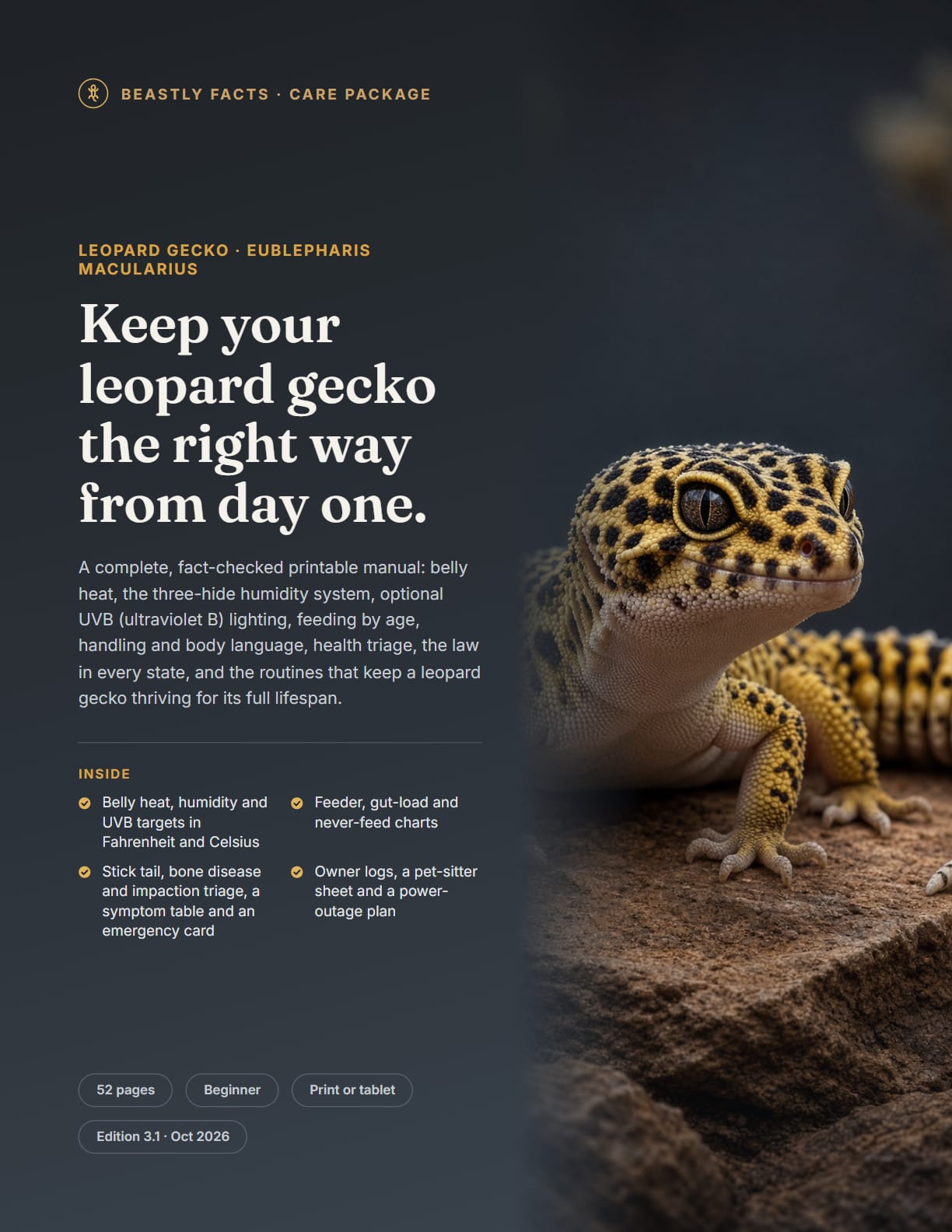
The Leopard Gecko Care Package carries this setup as a checklist with the targets to hit, in a 52-page PDF you can keep by the enclosure, $8.99. Includes the Universal Pet Kit free: a routine chart and equipment log you can fill in.
Frequently Asked Questions
What size enclosure does a leopard gecko need?
36x18x18 inches is the current adult minimum, well past the old 20-gallon-long standard a lot of care sheets still repeat. A hatchling can start in a 10-gallon while it's small. This is a terrestrial species, so floor space counts for more than height.
Do leopard geckos need a heat mat or a heat lamp?
A heat mat under the warm hide, always on a thermostat, since an unregulated mat is a burn and fire risk. Overhead heat can add to it, but belly heat is preferred for this species.
What's the one setup detail people get wrong most often?
Humidity. Keep the general enclosure at 30 to 40%, but separately provide a dedicated humid hide at 70 to 80% humidity. Raising humidity across the whole enclosure to hit that number instead just creates a respiratory infection risk.
How many hides does a leopard gecko need?
Three, not one: a warm dry hide, a cool dry hide, and a humid hide lined with damp sphagnum moss on the cool or middle side. The humid hide specifically is what prevents most shedding problems in this species.
Recommended Gear
As an Amazon Associate I earn from qualifying purchases through the links above, at no extra cost to you.

Written by Michael Ryan
Mike keeps two rescued bearded dragons, Dex and Cera, and writes the care guides on BeastlyFacts from his own research and mistakes. He is not a veterinarian.
More about Michael Ryan →You May Also Like
Subscribe - it's free
An occasional email when something new is worth your time. No spam.
Health and More