Crested Gecko Feeding: Schedule, Diet, and Why They Stop Eating
On This Page▾

A crested gecko can live its whole life on a complete powdered diet, so the common mistake is treating live insects as the main meal when the powder should be doing that job. Live insects are still worth offering for the enrichment alone.
Feeding Schedule by Age
- Hatchlings and juveniles (0 to 12 months): Commercial crested gecko diet (CGD) offered daily, with live insects added 1 to 2 times a week, mainly for enrichment and extra protein.
- Adults (12+ months): CGD every 2 to 3 days, insects about once a week.
Portion size is roughly 1/2 teaspoon of mixed CGD for a juvenile and about 1 teaspoon for an adult per feeding, adjusted based on how much actually gets eaten. Mix the powder with water to the ratio on your diet's label, since it differs by brand. Crested geckos feed at night, so offer the food in the evening and remove what is left the next morning, then wash and disinfect the food and water dishes. Insects should be no wider than the space between the gecko's eyes, and anything not eaten within 15 to 20 minutes should come back out so it doesn't stress or nip the gecko overnight.
What Crested Geckos Eat
The staple in captivity is a complete powdered crested gecko diet, a meal-replacement mixed with water to a ketchup-like consistency that supplies protein, fruit, calcium, and vitamin D3 in one product. Pangea and Repashy are the two most established brands. Rotate 2 to 3 flavors or brands, both for enrichment and because crested geckos can be picky. Watermelon is the flavor fussy eaters most often accept.
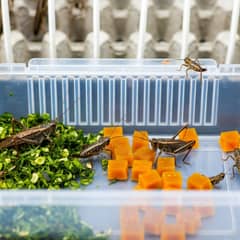
Live insects (dubia roaches, discoid roaches, crickets, and hornworms) are a supplemental protein source, not the base diet. Gut-load feeder insects 24 to 72 hours before feeding, then lightly dust with a plain reptile calcium supplement before each feeding; skipping the odd dusting is fine. Don't introduce insects before a gecko is reliably eating CGD: geckos can learn to hold out for insects and refuse the complete diet.
Not every feeder suits this species:
- Black soldier fly larvae, sold as calciworms, are a good regular feeder alongside roaches and crickets.
- Hornworms are about 87% water, which makes them a useful drink as well as a meal. Feed captive-bred ones only: wild hornworms are toxic.
- Waxworms run more than 20% fat, so they are an occasional treat, mainly for a thin gecko that needs weight.
- Mealworms and superworms are best skipped. They are hard for a crested gecko to digest and have caused impaction.
However varied the insects, adults get them about once a week at most. A gecko that starts putting on fat, with a round belly or fat at the base of the legs, gets fewer insect meals.
Fresh fruit, pureed or mashed smooth, works as a treat, but only now and then: fed too often, it can make a gecko start rejecting its nutritionally complete CGD.
Safe Treats and Foods to Avoid
Safe: pureed banana, mango, papaya, apricot, peach, melon, and berries offered with the CGD still on the menu, plus gut-loaded, calcium-dusted dubia roaches, discoid roaches, and crickets.
Keep off the menu:
- Avocado and rhubarb, both widely flagged as unsafe for pets
- Citrus fruits, whose acidity is thought to interfere with calcium absorption
- Fireflies, which are treated as toxic to reptiles generally and should never be fed
- Wild-caught insects, for the pesticide and parasite risk
- Onion, garlic, and eggplant
Raspberries appear on some high-oxalate lists, so keep them to a rare treat.
Why Crested Geckos Stop Eating
- Shedding. Shedding is tiring and uncomfortable, so appetite commonly dips for a few days before and after it, sometimes for up to about a week in total.
- Breeding season or gravidity. Females have a natural cycle spanning much of the year, typically two eggs about once a month through the season. Hormonal shifts and physical pressure from developing eggs can suppress appetite for a week or more, and gravid females often look visibly plump and less active.
- New environment or stress. A new enclosure, excessive handling, loud noise, or other pets in the household can make a crestie go off food while adjusting.
- Seasonal slowdown. Not true brumation: cresties are tropical and shouldn't be deliberately cooled. Keepers still report reduced eating and activity in winter months even with stable husbandry.
- Picky eating. A gecko may refuse one CGD flavor or texture while readily eating another. That is preference, and rotating brands solves it.
- Wrong husbandry. Heat above about 85°F risks being fatal, and humidity that stays too high or too low, or an undersized enclosure, can suppress appetite and cause lethargy.
- Illness. Mouth rot, parasites, respiratory infection, impaction from ingested substrate, and metabolic bone disease from inadequate calcium are all real medical causes of appetite loss.
- Egg binding. Distinct from a normal pre-lay dip, this is a dangerous condition requiring immediate vet care, not something to wait out.
- Dehydration. Insufficient humidity or water access shows as lethargy and wrinkled, loose-looking skin, and can suppress feeding interest on its own. Most of a crested gecko's water comes from droplets licked off leaves and glass after the evening mist, so a missed mist cuts into its drinking first.
When to Worry
A healthy, good-weight adult can typically go about 2 to 3 weeks without eating and be physically fine, but a vet consult is worth considering after the second week, especially with visible weight loss. Juveniles have far less reserve than adults, so a young gecko that goes about 5 days without food, or loses any weight, goes to a vet. The exception is a new arrival, which often eats little for its first week or two while it settles. A small gecko can eat so little that the dish barely changes, so look for lick marks in a thin layer of diet in a shallow dish, fresh droppings, and a steady weight on the gram scale.
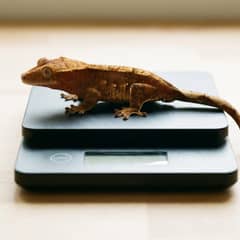
Concrete red flags regardless of duration: visible weight loss, a bony spine, hip, or tail base, sunken eyes, lethargy or loss of grip strength, and a soft or rubbery lower jaw, a metabolic bone disease sign. Water runs on a shorter clock than food: a crested gecko can only go about 3 days without it. Weighing the gecko monthly on a kitchen scale that reads in grams, or every few days during a suspected seasonal slowdown, catches a declining trend early, which one skipped meal never shows.
Read a Missed Meal Against the Calendar
A skipped meal means something different in a shedding adult, a gravid female and a young juvenile, so the date and the gecko's weight say more than the empty dish does. Log the weight monthly and a seasonal lull sorts itself from a decline without guesswork. Humidity does the rest: a gecko that cannot drink off the glass after the evening mist eats less.
Sources & Further Reading
Last reviewed 29 Jul 2026 · 5 sources
- ReptiFiles: the crested gecko food page; the feeder insect nutrition chart; Crested Gecko Shedding Tips
- PetMD: Crested Gecko Care Sheet (Maria Zayas, DVM)
- Arbor View Animal Hospital: Crested Gecko, by Catherine Love DVM (PDF, downloads)
- Animal Diversity Web, University of Michigan: Rhacodactylus ciliatus (Kristin Brusso, 2013)
- May, S., Reppert, A., Ward, A. and Coslik, A. Nutrient Analysis of Less Common Invertebrate Prey Items. AZA Nutrition Advisory Group (PDF, downloads)

The Crested Gecko Care Package puts the feeding section, an owner log and a pet-sitter sheet on paper, in a 48-page PDF you can keep by the enclosure, $8.99. Includes the Universal Pet Kit free: a routine chart and feeding log you can fill in.
Frequently Asked Questions
How often should I feed my crested gecko?
Hatchlings and juveniles get commercial crested gecko diet (CGD) daily, with live insects added once or twice a week mostly for enrichment. Adults move to CGD every 2 to 3 days, with live insects offered about once a week.
Should I feed live insects or powdered CGD?
CGD is the nutritional foundation and insects are a supplement on top of it. Introducing insects before a gecko is reliably eating CGD is a mistake: geckos can learn to hold out for insects and refuse the complete diet, risking malnutrition.
Why is my crested gecko refusing its food?
Often it's simple pickiness: cresties are fussier than most keepers expect, and may reject one flavor or texture while readily eating another. Rotating 2 to 3 CGD brands or flavors is the standard fix, and watermelon is the flavor picky eaters most often accept.
Do crested geckos brumate?
No, and they shouldn't be put through a deliberate cooling cycle the way some temperate reptiles are. That said, keepers do report cresties eating and moving less in winter months due to internal seasonal rhythms, even with stable husbandry.
How long can a crested gecko go without eating?
About 2 to 3 weeks for a healthy adult at a good weight, though a vet consult is worth considering once the second week passes, especially alongside visible weight loss. Juveniles hold far less reserve and don't get that grace period. Water runs on a shorter clock: roughly 3 days.
What foods are dangerous for crested geckos?
Avocado, citrus fruits, rhubarb, and any wild-caught insects. Fireflies are toxic and should never be fed. Onion, garlic, and eggplant are also flagged as unsafe.
More on the Crested Gecko


Recommended Gear
As an Amazon Associate I earn from qualifying purchases through the links above, at no extra cost to you.

Written by Michael Ryan
Mike keeps two rescued bearded dragons, Dex and Cera, and writes the care guides on BeastlyFacts from his own research and mistakes. He is not a veterinarian.
More about Michael Ryan →You May Also Like

Subscribe - it's free
An occasional email when something new is worth your time. No spam.
Deep Dive
Health and More