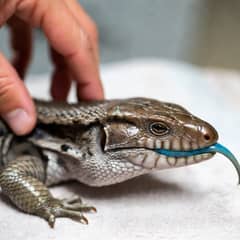
How to Handle a Crested Gecko (And Why Tail Loss Is Different Here)
On This Page▾

Crested geckos are gentle and generally easy to handle once settled, but there's one fact about this species every owner needs to know before they ever pick one up: unlike leopard geckos, a crested gecko's tail does not grow back.
Give It Time to Settle First
Don't handle a new arrival for about two weeks. Let it acclimate to its enclosure and start eating normally before any hands-on interaction. Wait until your gecko is a sub-adult or older juvenile, roughly 8 to 15 grams or about 4 to 5 inches and 6 months old, before regular handling begins. Geckos under about 10 grams are too fragile for routine handling.
How Often
Start with sessions of just 1 to 2 minutes every other day. Build up gradually to around 15 minutes once your gecko is tame and comfortable, and keep total daily handling under about 20 minutes even then. Evening tends to work best, since crested geckos are most active at dusk and after dark.
The Correct Way to Handle One
Let the gecko walk onto your hand rather than grabbing it. A technique called "treadmilling" works well: cup your free hand in front of the gecko as it reaches the edge of the one it's on, and it will hop hand to hand on its own. Stay low, over a bed, couch, or soft surface, crested geckos jump readily, and a fall onto a hard floor can cause real injury. Never grab or restrain the tail.
Signs It Wants to Be Put Back
- Tail-wagging or whipping
- Squeaking or vocalizing
- Erratic jumping
- Gaping or open-mouth behavior
- Eyes closed
- Actively trying to flee
Any of these mean the session is over. Skittish, rushed handling is also exactly what raises the risk of the next section.
Tail Loss: Read This Before You Handle Your First Crested Gecko
Like many geckos, crested geckos can voluntarily drop their tail as a defense mechanism, called autotomy. It detaches along built-in fracture points and keeps wiggling on its own to distract a predator while the gecko escapes.
Here's the critical difference from a species like the leopard gecko: a crested gecko's tail does not grow back. Once it's gone, it's gone for good.
Most adult crested geckos found in the wild are already tailless. Since the species was only rediscovered in New Caledonia in 1994, field studies since then have found tail loss to be common and largely inconsequential, it doesn't affect breeding, climbing, or overall health.
The good news is that this isn't the crisis it sounds like. A tailless crested gecko, often called a "frog butt" by keepers, lives a completely normal, healthy life. It doesn't affect breeding, climbing, or overall health, and the drop itself is thought to be painless or close to it.
Tail loss happens from fright, rough handling, being bullied by a cagemate, a fall, or a tail getting trapped in a lid or door. Since there's no regrowing it, prevention is the only real strategy: handle gently, keep sessions calm and unhurried, never grab the tail under any circumstances, and follow the housing rules on keeping crested geckos singly rather than in mismatched groups.
One More Thing
Wash your hands before and after handling. Like other reptiles, crested geckos can carry Salmonella, our reptile hygiene guide covers the rules that actually cut the risk.
Sources & Further Reading
Last reviewed 12 Jul 2026 · 2 sources
❓ Frequently Asked Questions
How soon can I handle a new crested gecko?
Two weeks after it arrives, once it has acclimated and is eating normally. Then wait for size: a sub-adult of 8 to 15 grams, roughly 4 to 5 inches at about 6 months old.
Does a crested gecko's tail grow back if it drops?
No, and this is the critical difference from species like leopard geckos. A crested gecko's tail does not grow back once dropped. The good news is a tailless gecko, often called a "frog butt" by keepers, lives a completely normal, healthy life.
What's the correct technique for picking up a crested gecko?
Let it walk onto your hand instead of reaching for it. Keepers call the trick treadmilling: cup your free hand ahead of the gecko as it reaches the edge of the other one, and it crosses over on its own.
How often can a crested gecko be handled?
One or two minutes every other day to start. Work up to around 15 minutes as the gecko gets tame, and keep the daily total under about 20 minutes.
📰 More on the Crested Gecko
📘 Crested Gecko care guide
🦎 How Much Does a Crested Gecko Really Cost?
🦎 Common Crested Gecko Health Issues and What Causes Them
🦎 Crested Gecko Tank Setup: Vertical Space, Humidity, and a Hard Temperature Ceiling
🦎 Crested Gecko Feeding: Schedule, Diet, and Why They Stop Eating
🦎 Why Humidity Is Everything for Crested Geckos
Written by Michael Ryan
Mike keeps two rescued bearded dragons, Dex and Cera, and writes the care guides on BeastlyFacts from his own research and mistakes. He is not a veterinarian.
More about Michael Ryan →Comments
No comments yet - be the first!