T5 vs Compact UVB: Which One Won't Fail Your Reptile
On This Page▾

Every reptile starter kit ships with the same little coil bulb, and every experienced keeper eventually replaces it with a tube. This article is the explanation nobody includes in the box.
UVB is not mood lighting. It is how a reptile's skin makes vitamin D3, and D3 is how the body absorbs calcium. Too little UVB for too long and you get metabolic bone disease, the most common preventable illness in captive reptiles. So the fixture that delivers UVB is the one purchase where the cheap option can quietly cost you the animal.
The two shapes, and why shape matters
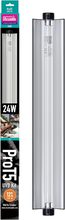
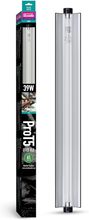
A T5 high output tube is a long fluorescent strip in a reflector fixture. Mounted along the enclosure ceiling, it lays a broad gradient of UVB across most of the floor, strongest under the basking zone and tapering toward the cool end. The animal moves through that gradient and doses itself, the same way it would move between sun and shade outdoors.
A compact coil is a small screw-in bulb, a point source. Its UVB lands in a tight cone directly beneath it and falls off steeply with distance and angle. In a tiny enclosure with a species that needs little UVB, that can be adequate. In a 4 foot desert setup it means one small hotspot of UVB in an enclosure the animal uses all of, and effectively none anywhere else.
That is the whole argument in two paragraphs: tubes light a territory, coils light a spot.
Match strength to species, not to the shelf
How much UVB a species needs tracks how it uses sun in the wild. The UV-Tool project, the reference zookeepers use, grades species by their basking behavior, from open-sun baskers down to shade dwellers, and recommends exposure ranges for each group.
In practical shopping terms:
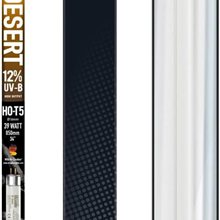
- Open-sun desert baskers (bearded dragons, uromastyx): strong desert-grade tube, positioned per your setup guide. For a 3 foot enclosure the Arcadia Desert 12% ProT5 kit ($65 to $85) is the standard; a 4 foot build takes the 36 inch LumenIZE ProT5 ($110 to $130). Placement details are in the bearded dragon tank setup guide.
- Forest and partial-shade species (crested geckos, chameleons): a gentler forest-grade tube like the Arcadia Forest 6% ProT5 kit ($95 to $115), mounted so the animal can also get fully out of the light. Specifics live in the crested gecko and veiled chameleon setup guides.
- Crepuscular ground dwellers (leopard geckos): the low end of the forest range at generous distance, always with deep shade available. The leopard gecko tank setup guide has the layout that makes this work.
The three rules that make any UVB fixture work
- Distance is part of the dose. The same tube is strong at 10 inches and weak at 20. Set the basking platform at the distance your setup guide specifies, and remember screen mesh between bulb and animal cuts output substantially.
- Replace on schedule, not on burnout. UVB output decays months before the visible light dies. A year-old bulb that "still works" is often decorative.
- The animal needs an exit. UVB, like heat, is something the reptile should regulate by moving. A shaded end is not a luxury, it is half of the system.
The honest bottom line
If your enclosure is 3 feet or longer, or your species is a sun basker, the T5 tube is not an upgrade, it is the baseline, and the coil in the starter kit is the single most worthwhile thing to leave on the shelf. We put the tube in the same buy-once category as the enclosure itself in the bearded dragon shopping list, because replacing preventable vet visits with one good fixture is the best trade in this hobby.
❓ Frequently Asked Questions
Do nocturnal reptiles like leopard geckos need UVB at all?
They survive without it when their diet is supplemented correctly, but low-level UVB is increasingly considered best practice even for crepuscular species. A gentle tube at the shaded end of the range lets the animal choose its own exposure, which is how it would manage sun in the wild.
How often does a UVB bulb need replacing?
Follow the manufacturer's rated life rather than waiting for the bulb to burn out. UVB output decays long before visible light does, so a bulb can look bright while producing too little UVB to matter. For most quality T5 tubes that means a replacement roughly once a year.
Can my reptile get UVB through a window instead?
No. Ordinary glass filters out almost all UVB, so a sunny windowsill delivers heat and visible light with none of the benefit. Unfiltered outdoor sun works, glass-filtered sun does not.
🦎 How Much Does a Bearded Dragon Really Cost?
🦎 How Much Does a Crested Gecko Really Cost?
🦎 How Much Does a Leopard Gecko Really Cost?
🦎 How Much Does a Veiled Chameleon Really Cost?
🦎 How to Handle a Bearded Dragon Without Stressing It Out
🦎 How to Handle a Crested Gecko (And Why Tail Loss Is Different Here)
🦎 How to Handle a Leopard Gecko Safely
🦎 How to Handle a Veiled Chameleon (Carefully, and Not Often)
🦎 Common Bearded Dragon Health Issues and What Causes Them
🦎 Common Crested Gecko Health Issues and What Causes Them
🦎 Common Leopard Gecko Health Issues and What to Watch For
🦎 Common Veiled Chameleon Health Issues and What Causes Them
🦎 Bearded Dragon Tank Setup: Temperature, UVB, and Everything Else
🦎 Crested Gecko Tank Setup: Vertical Space, Humidity, and a Hard Temperature Ceiling
🦎 Leopard Gecko Tank Setup: What Your Gecko Actually Needs
🦎 Veiled Chameleon Tank Setup: The Dripper Isn't Optional
🦎 Bearded Dragon Feeding: Schedule, Diet, and Why They Stop Eating
🦎 Leopard Gecko Feeding: Schedule, Diet, and Why They Stop Eating
🦎 10 Surprising Bearded Dragon Facts
🦎 10 Surprising Leopard Gecko Facts
🦎 Bearded Dragon Brumation: Triggers, the Routine, and When to Worry
Written by Michael Ryan
Mike keeps two rescued bearded dragons, Dex and Cera, and writes the care guides on BeastlyFacts from his own research and mistakes. He is not a veterinarian.
More about Michael Ryan →Comments
No comments yet - be the first!