Leopard Gecko
Eublepharis macularius
On This Page▾
🌍 Overview
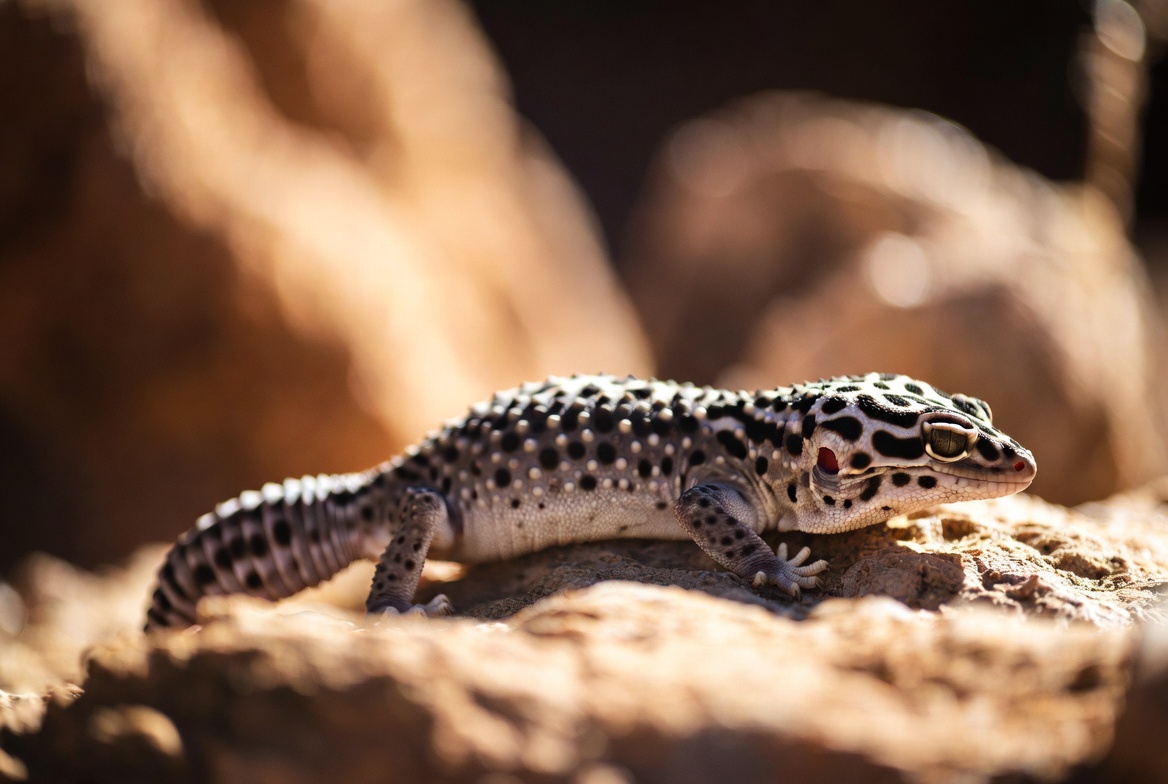
Found across arid regions from Pakistan to northwestern India, leopard geckos are ground-dwelling lizards that shelter in rocky outcrops and dry grasslands by day. Unlike most geckos, they have true eyelids and lack toe pads, making them unable to climb glass. They are among the most widely kept reptile pets in the world, with over 100 recognized color morphs in captivity.
📋 Quick Facts
Native Range
Pakistan, Afghanistan, Iran, India, Nepal
Natural Habitat
Rocky desert, arid grassland, and dry scrubland
Adult Size
7-11 inches (18-28 cm)
Wild Diet
Insects, scorpions, small lizards, and worms
Wild Lifespan
6-8 years (predation, parasites, and harsh conditions cut wild lifespans well short of the 15-20+ years typical in captivity)
Conservation Status
Least Concern (IUCN)
📜 History
Leopard geckos were imported into the United States and Europe from Pakistan, Afghanistan, and India through the 1960s and 1970s, and were being bred in the United States by the early 1970s. Large-scale breeding did not start until the late 1980s, and the color morphs followed in the 1990s through breeders including Ron Tremper, Mark and Kim Bell, and John Mack, whose lines still carry their names in the trade. The result is unusual among reptiles: essentially every leopard gecko sold today is captive-bred, with no wild-collected supply sitting behind the pet market.
⚖️ Compare
Leopard Gecko
Human
Adult Size
7-11 inches (18-28 cm)
5-6 feet (150-185 cm); ~135-200 lbs
Wild Lifespan
6-8 years (predation, parasites, and harsh conditions cut wild lifespans well short of the 15-20+ years typical in captivity)
~73 years (global average)
Wild Diet
Insects, scorpions, small lizards, and worms
Omnivorous - eats just about anything
Native Range
Pakistan, Afghanistan, Iran, India, Nepal
Global - originated in Africa roughly 300,000 years ago
Natural Habitat
Rocky desert, arid grassland, and dry scrubland
Everywhere from arctic tundra to tropical megacities
Conservation Status
Least Concern (IUCN)
Least Concern (8+ billion and counting)
🧠 Test Yourself
What's the Leopard Gecko's native range?
🤩 Fun Facts
🦎 Gecko Toe Magic
Geckos can walk on walls and ceilings thanks to millions of tiny hair-like structures on their toes called setae. Each foot has about 500,000 of them, using molecular forces to stick to surfaces!
🦎 Tail Fat Reserves
Leopard geckos store fat reserves in their thick tails. A skinny tail can signal poor health or stress. A healthy gecko should have a plump, rounded tail.
🦎 Climbing the Walls
Geckos have microscopic hairs on their feet that allow them to stick to surfaces and even run on ceilings! This amazing ability comes from van der Waals forces, making them one of nature's great climbers.
📖 Care Guide
Leopard Gecko Care Guide
The smiling gecko that's perfect for first-time reptile parents!
⚖️ Where it is legal
6 US jurisdictions restrict this species, from outright bans to permits. Every one quotes the rule it comes from.
⚖️ Legal Guide
Subscribe - it's free
New animal facts and care guides straight to your inbox. No spam. 🐾
📰 Deep Dive
🦎 How Much Does a Leopard Gecko Really Cost?
🦎 How to Handle a Leopard Gecko Safely
🦎 Common Leopard Gecko Health Issues and What to Watch For
🦎 Leopard Gecko Tank Setup: What Your Gecko Actually Needs
🦎 Leopard Gecko Feeding: Schedule, Diet, and Why They Stop Eating
🦎 Leopard Gecko Enrichment: What the Research Actually Supports
🩺 Health and More
💡 T5 vs Compact UVB: Which One Won't Fail Your Reptile
🔌 Reptile Emergency Plan: Power Outages, Travel, and Pet Sitters
💧 Reading Reptile Stool, Urates, and Hydration: A Daily Health Check
🧼 Salmonella and Reptile Hygiene: The Rules That Actually Matter
🌡️ Reptile Heating and Thermostats: Preventing Burns
🧫 Reptile Quarantine: Why New Snakes and Lizards Need Months, Not Weeks
🤓 Did You Know?
Unlike most geckos, leopard geckos have eyelids and can blink and wink at you! They also store fat in their chunky tails for energy reserves.
Explore More