How Much Does a Bearded Dragon Cost?
On This Page▾

The dragon itself is the cheap part.
A standard morph runs $40 to $100 at most pet stores. The equipment around it is where the budget goes, and it isn't optional. Bearded dragons need a specific setup to stay healthy, and cutting corners here is how expensive vet bills happen later.
A named morph costs more. Juveniles with one or two visible traits, such as a hypo (lighter colors), a leatherback (smooth scales), a translucent, or a citrus or red color line, are around $125 to $500, and the patternless zeros and witblits around $200 to $750. Rare animals such as a paradox, and the deepest red lines, run $1,000 to $2,500. The extra money buys color and scale texture, and the care and setup are the same. The one thing that changes is the lighting for hypo and translucent dragons, which burn more easily under UVB, so their basking UV index stays at 3.0 or lower.
Where the Dragon Comes From
Most bearded dragons come from breeders or pet stores, since the species breeds well in captivity and is easy to find, and a young, captive-raised dragon is the better buy. An older adult with no health history is the costly one: whatever parasites or setup problems it arrives with are yours to pay for, so the cheapest adult on offer can end up the most expensive.
Wherever it comes from, check the animal before paying:
- Alert and active, head up and watching you.
- A round, plump tail base just behind the back legs. A thin tail base, loose skin or a skinny body is a warning sign.
- Bright, open eyes, not sunken ones.
- A bright pink mouth with clear saliva. Cloudy mucus, cottage-cheese material, or red or bruised gums point to infection.
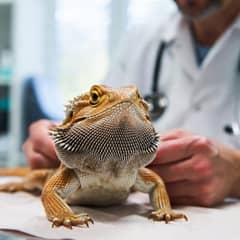
Ask the seller about a health guarantee, and book the reptile vet for the first 48 hours: that first exam and fecal test run $120 to $245 on top of the setup figure. If another reptile already lives in the house, the new dragon also needs a separate room and its own tools, and the reptile quarantine guide sets out that setup and the three to six month clock.
Upfront Setup: $620 to $1,345, or $785 to $1,625 Bioactive
Here's what a proper first-time setup actually requires:
| Item | Cost Range |
|---|---|
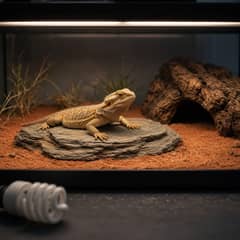
| Enclosure (4x2x2 ft, ~120 gallons; check the dimensions before you buy) | $200 - $500 |
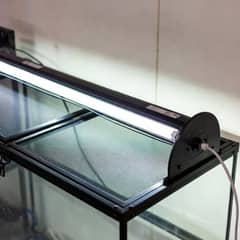
| Linear T5 HO UVB fixture about two-thirds the enclosure length (check the length against your enclosure), tube included | $110 - $130 |
| Basking bulb and dome fixture | $35 - $100 |
| Dimming thermostat with a safety shutoff | $115 - $160 |
| Two thermometer and hygrometer gauges, one for each end (sold as a 2-pack), plus an infrared temp gun | $25 - $80 |
| Plug-in timers, 2-pack, for the UVB tube and basking lamp | $10 - $15 |
| Surge power strip, so the timers and lamps share one outlet | $10 - $15 |
| Substrate (paper towel or slate tile) | $5 - $25 |
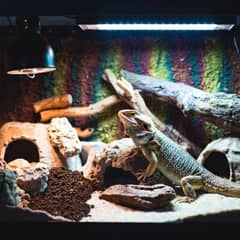
| Hides, basking platform, climbing decor | $40 - $200 |
| Hammock, optional but recommended: dragons like to climb | $10 - $20 |
| Lamp stand, recommended: holds the basking lamp for supervised time out of the enclosure, and keeps a cooled lamp away from water while you clean | $25 - $35 |
| Shallow water dish | $5 - $15 |
| Feeding tongs | $5 - $15 |
| Kitchen scale that reads in grams | $10 - $15 |
| First supply of plain calcium, calcium with D3 and a multivitamin | $15 - $20 |
| Setup total | $620 - $1,345 |
Typical price ranges across retailers.
Add it up and the setup lands at $620 to $1,345: the low end takes the budget pick in every row, the high end the premium pick, and most of the gap is the enclosure, lighting and decor. The first vet visit sits on top of that.
The enclosure is the adult minimum, not a "starter size" you'll outgrow. Buying it from day one saves you from buying twice. The UVB fixture isn't a nice-to-have either: bearded dragons need strong, specific UVB or they develop metabolic bone disease, which is both common and preventable. A T5 tube's wattage is not its length: a 24-watt tube is about 22 inches long, a 39-watt tube about 34 inches and a 54-watt tube about 46 inches, so go by the length in inches when you match it to two-thirds of the enclosure.
The thermostat is one of the bigger lines here, and it earns it. It regulates your heat source so it can't overheat and burn your dragon or start a fire, so don't skip it to save money. For thermometers, two digital gauges, one at each end, are the minimum, but an infrared temperature gun is worth the extra cost since it reads the basking surface itself, where a gauge only reads the air.
Substrate costs next to nothing: paper towels work fine and take loose substrate out of the impaction risk, which matters more than it sounds like it should.
Highly recommended, not counted in the total: a UV index meter, about $240 to $265. It is the only way to check that the UVB tube sits at the right height and that it is still putting out what it should between replacements; UV cards do not measure UVB.
Going Bioactive
Experienced keepers sometimes trade the paper towel for a living floor: a deep arid soil mix, plants, and a cleanup crew of isopods and springtails that breaks down waste. A bioactive build keeps the same lighting and heat, so the extra cost is the floor itself, priced here with a DIY soil mix of organic topsoil and play sand (bagged arid mixes cost more). The floor's raw volume overstates the bags needed: in my own dragon's 4 by 2 foot enclosure, two bags of topsoil were enough, because the hides, the climbing branches and the basking platform take up floor the mix never has to fill. It is a bigger commitment than paper towel, and an optional one.
| Item | Cost Range |
|---|---|
| Arid bioactive substrate over the 4 by 2 foot floor: a DIY mix of about two-thirds organic topsoil and one-third hardware-store play sand. Two 40 lb bags of organic topsoil and one or two 50 lb bags of play sand reach about 4 inches once the hides, climbing branches and basking platform take their share of the floor; add a bag if your layout leaves more floor open | $60 - $70 |
| Desert sand, optional: a 10 lb bag of finer sifted sand to mix into the play sand, which runs dusty | $15 - $20 |
| Excavator clay mixed in, optional but recommended so burrows and tunnels hold their shape: one or two 10 lb bags | $10 - $30 |
| Dry leaf litter for the surface | $10 - $20 |
| Isopods, one culture of 20 to 30 powder orange or powder blue | $15 - $40 |
| Arid springtails, one 8 ounce culture | $15 - $25 |
| Desert-safe live plants for a 4 foot enclosure (check every species against a reptile-safe plant list first) | $40 - $75 |
| Total | $165 - $280 |
Typical price ranges across retailers.
Ongoing Costs: $70 to $140 a Month, $840 to $1,680 a Year
| Item | Monthly Cost |
|---|---|
| Feeder insects | $30 - $60 |
| Greens and vegetables | $10 - $25 |
| Supplement top-ups | about $5 |
| Electricity for heat and lighting | $10 - $20 |
| UVB bulb replacement (amortized) | $5 - $10 |
| Annual vet wellness exam and fecal (amortized) | $10 - $20 |
| Monthly total | $70 - $140 |
Typical price ranges across retailers.
The feeder line is an adult's. A juvenile eats roughly 80% insects until about 18 months old, so expect the feeder bill to run higher than this range until the diet flips toward greens.
The UVB line is the replacement tube alone, bought every 6 to 12 months and spread across the year.
A UVB tube loses UV output with use even while it still lights up the tank, because the glass slowly stops letting UV through. T5 tubes have been measured losing about 40% of their UV index over a year of normal use, and one brand lost 64% in about three months, which is why replacement runs on the calendar, not on how the light looks.
Source: Baines et al. 2016, Journal of Zoo and Aquarium Research; VCA Animal Hospitals
For an adult, that comes to $840 to $1,680 a year in routine costs.
The Cost People Don't Budget For
A single impaction surgery runs $800 to $2,500. Metabolic bone disease treatment runs $200 to $500 or more. These are exactly the conditions that correct husbandry prevents, which is why spending properly on the thermostat and UVB upfront is cheaper in the long run than spending less now and gambling on a vet bill later.
If you're budgeting for a bearded dragon, plan for $620 to $1,345 to get set up right, then $70 to $140 a month after that, plus an emergency fund of a few hundred dollars set aside before you need it.
Spend on the Enclosure and UVB First
The budget is the equipment, so plan around it. Buy the adult enclosure, the UVB fixture and the thermostat at full spec from day one, and the monthly bills stay at feeders, greens and power. Cutting those three to save money is how the surgery bills get started.
Sources & Further Reading
Last reviewed 24 Sep 2026 · 4 sources
- VCA Animal Hospitals: Owning Bearded Dragons; Brumation in Bearded Dragons
- USDA Agricultural Marketing Service: National Fruit and Vegetable Retail Report (PDF, downloads)
- MorphMarket: Central Bearded Dragons for sale, US and Canada (morph prices)
- Zoo Med Laboratories: ReptiSun 5.0 UVB T5 HO and T5 HO ReptiSun 10.0 UVB product pages (lamp lengths and wattages)
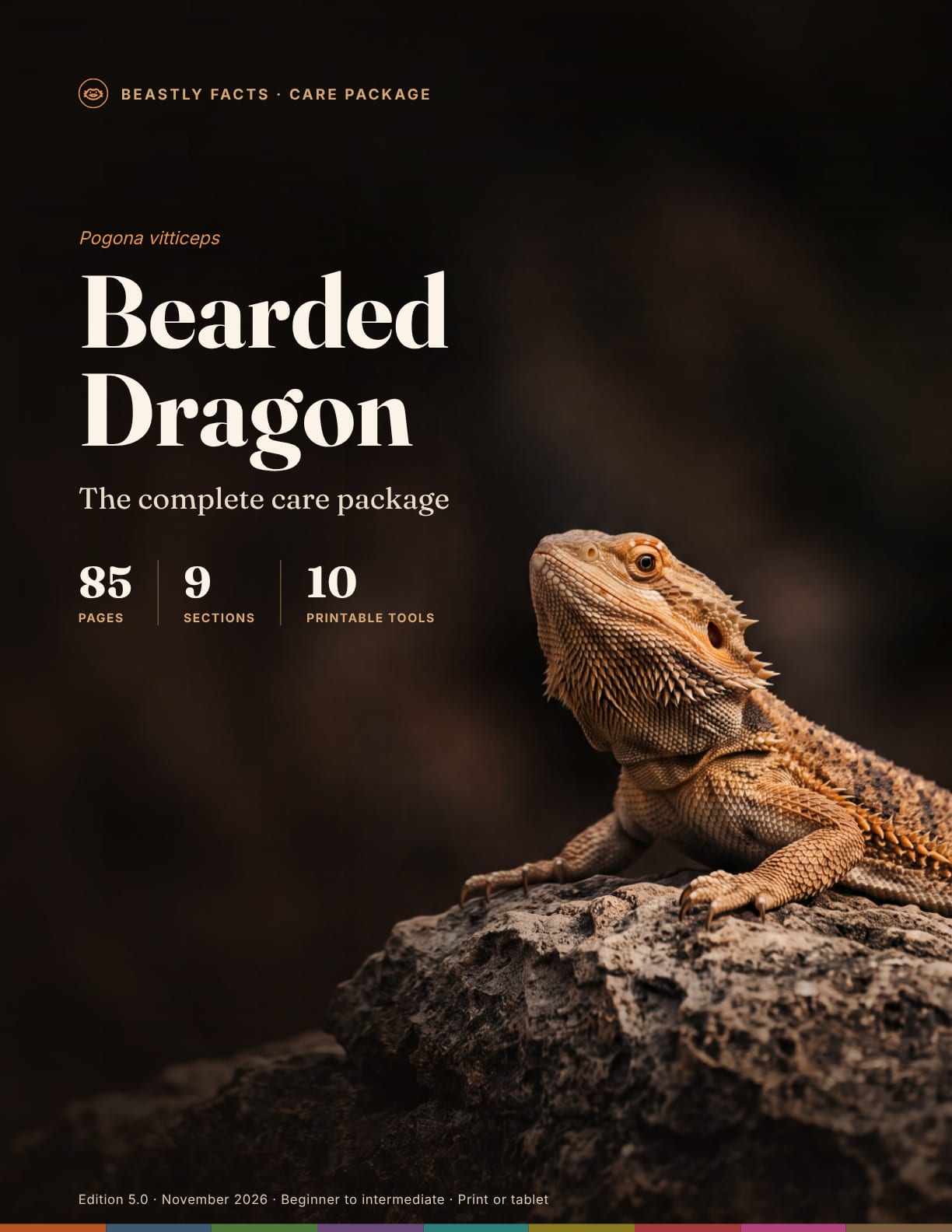
The Bearded Dragon Care Package adds one line to this budget: $8.99 for a 85-page PDF with the setup shopping list, the budget sheet and the whole care guide on paper. Includes the Universal Pet Kit free: a budget and emergency fund you can fill in.
Frequently Asked Questions
Is a bearded dragon a cheap pet to own?
The dragon itself is cheap, $40 to $100 for a standard morph and more for a named one. The equipment around it isn't optional and isn't cheap, so the animal is affordable and the correct setup for it is the expense, roughly $620 to $1,345 before the dragon even arrives.
What's the single most expensive part of bearded dragon ownership?
Upfront, it's the enclosure, $200 to $500 of the initial $620 to $1,345 budget, with the thermostat and UVB fixture next. Long term, nothing routine comes close to an unbudgeted vet emergency, and the thermostat and UVB you buy on day one are what keep one off the bill.
Can I buy a smaller starter enclosure to save money at first?
It doesn't save money. Bearded dragons reach adult size within a year or so, and a juvenile-sized enclosure gets outgrown fast. Buying the 4x2x2 ft adult minimum from day one costs the same or less than buying small now and buying again later.
How much should I set aside for a vet emergency?
A few hundred dollars is a reasonable emergency fund, but it will not cover surgery. Impaction surgery runs $800 to $2,500 and metabolic bone disease treatment runs $200 to $500 or more.
More on the Bearded Dragon
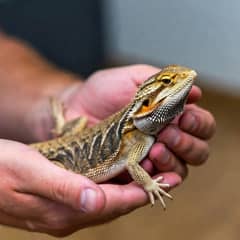

Recommended Gear
As an Amazon Associate I earn from qualifying purchases through the links above, at no extra cost to you.

Written by Michael Ryan
Written from Mike’s own two dragons, Dex and Cera.
Mike keeps two rescued bearded dragons, Dex and Cera, and writes the care guides on BeastlyFacts from his own research and mistakes. He is not a veterinarian.
More about Michael Ryan →You May Also Like
Subscribe - it's free
An occasional email when something new is worth your time. No spam.
Deep Dive
Health and More