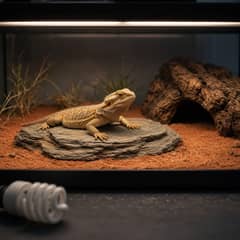
Salmonella and Reptile Hygiene: How It Spreads and What Stops It
On This Page▾

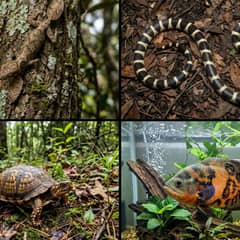
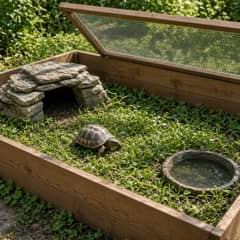
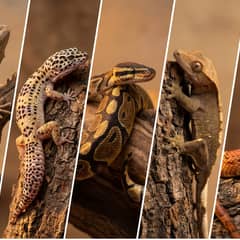
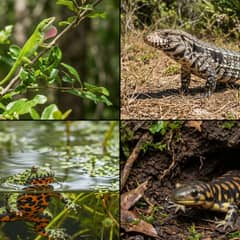
Every reptile, amphibian, and pet turtle can carry Salmonella, and it's not a footnote: it's the reason a federal rule about turtle shell size has existed since 1975. The biology and the hygiene protocol are the same across reptiles and amphibians as a group, with turtles singled out only where a specific rule or study is about turtles.
Healthy Animals Still Carry It
The single fact that makes this different from most pet hygiene concerns is that a completely healthy-looking reptile or amphibian can carry and shed Salmonella with no outward sign of illness. The bacteria usually live in the animal's intestines without causing symptoms and leave in its feces. This isn't a sick animal spreading disease. It's normal gut flora in an animal that looks, eats, and behaves as it should.
That also means testing an individual animal doesn't settle the question the way it might for other conditions. Reptiles shed these organisms in the feces continuously or on and off, and stress can increase shedding. Finding Salmonella in a cloacal swab settles nothing on its own either, since carriage at that site is common in healthy reptiles as well as sick ones. Put those together and a single negative sample is not a clean bill of health. It is one snapshot of an intermittent process. The practical answer is to treat every reptile, amphibian, or turtle as a potential carrier at all times and take precautions from the start, without waiting for symptoms or a positive test.
How Salmonella Reaches People
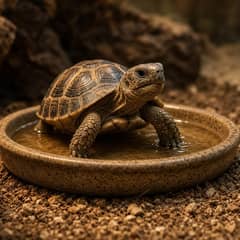
The instinct is to worry about bites, but bites aren't how this spreads. You don't have to touch a reptile or amphibian at all to get sick from the germs it carries, because the bacteria can be present in tank water and on enclosure surfaces, decor, filters, and any equipment that's touched the animal or its waste. For turtles the list runs wider still: cages, aquariums, countertops, tabletops, floors, carpeting, and the water a turtle lives or swims in.
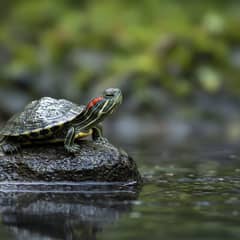
The chain of transmission is hands and surfaces to mouth. Someone touches the animal, the water, or something in the enclosure, doesn't wash thoroughly, and later touches their own mouth, food, or a surface someone else will touch. A young child is at the highest risk here for a straightforward reason: kids handle animals, then put their hands, and sometimes the animal itself, near their face far more often than adults do. With an aquatic turtle such as the red-eared slider, that makes a water change or a tank cleaning as much of an exposure as picking the turtle up.
The Four-Inch Rule and What It Was For
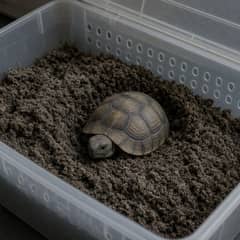
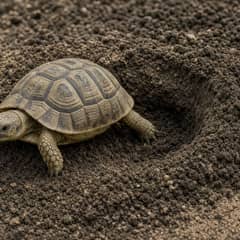
The FDA has banned the sale of turtles with a shell under four inches since 1975, and the measurement is aimed at one behavior: young children are more likely to put a small turtle in their mouth, kiss it, and skip hand washing afterward. Making the animal too large to fit in a child's mouth or hand comfortably removes a big share of that specific exposure route, even though it doesn't touch the water and surface contamination pathway at all.
The rule has never applied to keeping a turtle you already have or to buying a red-eared slider or any other turtle over four inches. What matters here is the scale of the problem the rule was written to address: the ban is credited with preventing an estimated 100,000 cases of Salmonella infection among children each year.
This Is Not Only a Turtle Problem
Because the federal rule is about turtles, it is easy to read the whole subject as a turtle subject. The outbreak record says otherwise. A federal investigation into Salmonella infections linked to pet geckos, closed in January 2026, counted 113 cases and 31 hospitalizations across 36 states, with no deaths. Geckos are among the most commonly kept pet lizards, and none of them are subject to a size rule or a sale restriction.
Those infections followed the same chain described above: touching the gecko or anything in its enclosure, then touching a mouth or food. Nothing about that is specific to geckos. It is the mechanism for every reptile and amphibian, and the outbreak is simply the version of it that got counted.
Who Is at Elevated Risk
Salmonella infection in an otherwise healthy adult is usually unpleasant but self-limiting. The risk calculation changes for three groups:
| Group | Why the risk is higher |
|---|---|
| Children under 5 | More likely to get sick, and incidence, severity, and the risk of invasive disease are all significantly higher in young children |
| Adults 65 and older | Among those at higher risk of invasive disease |
| People with weakened immune systems | Includes immunocompromised people, those with debilitating diseases, and those with impaired gastric acid production |
For the highest-risk group, children under 5, the standing recommendation goes past extra caution to avoidance: children younger than 5 should not handle or touch reptiles or amphibians or their environments. That's a stricter line than "wash hands well afterward," and it reflects a risk for young children that differs in kind as well as degree. The other two groups get a similar line: the CDC advises considering another pet if an older adult or someone with a weakened immune system lives in the household, and where a reptile is already in the house, they should not handle it or touch its enclosure.
A Hygiene Protocol That Reduces Risk
None of this means giving up a pet reptile, amphibian, or turtle. Bites and a sick-looking animal are not reliable warning signs, so the habits that work are built around the transmission route itself:
- Wash hands with soap and running water immediately after any contact with the animal, its enclosure, its water, or anything that's touched either.
- Keep reptiles, amphibians, and turtles out of the kitchen entirely. Don't let them roam on countertops or near anywhere food is prepared or eaten.
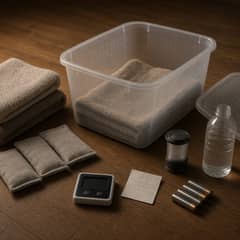
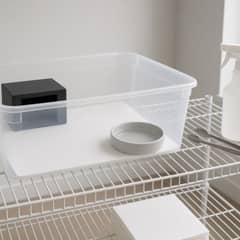
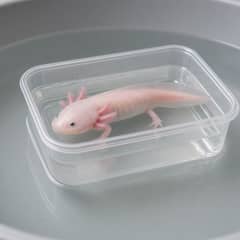
- Never clean an enclosure, water dish, or equipment in the kitchen or anywhere food is prepared. Clean outdoors where you can. If that isn't possible, a laundry sink or bathtub can be used, as long as it is cleaned and disinfected thoroughly before anyone else uses it. Soak or bathe the animal in a small plastic tub kept for animal use only, or in a bathtub you disinfect afterward.
- Don't kiss the animal or hold it close to your face.
- Supervise children around the enclosure, keep children under 5 from handling the animal or its habitat at all, and keep older adults and immunocompromised people hands-off too.
- Wash the animal's bedding, decor, tongs, scoops and dishes apart from your own dishes and anything else used in food prep, for the same cross-contamination reasons the kitchen and sink rules exist.
These habits cost almost nothing in day-to-day terms and don't require changing anything about how the animal itself is housed or fed. What they remove is the accidental hand-to-mouth step that turns ordinary contact into an infection risk, and they apply the same way to every reptile and amphibian in the house.
Enclosure Cleaning Schedule
Cleaning and disinfecting are two different jobs. Cleaning is the physical removal of feces, food and grime; disinfecting kills what is left on the surface afterward, and it only works on a surface that has already been scrubbed, because organic film shields bacteria from the disinfectant. A workable rhythm for a standard enclosure runs on three clocks:
| When | What to do |
|---|---|
| Daily | Remove feces, urates, uneaten food and shed skin as soon as you see them. Empty, wash and refill the water bowl with fresh dechlorinated water |
| Weekly | Replace soiled substrate in sections, and wipe down glass, walls and decor with a reptile-safe cleaner |
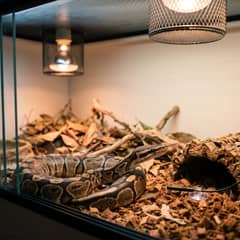
| Monthly | Move the reptile to a secure temporary enclosure. Take everything out, scrub it with detergent and hot water, disinfect the enclosure, decor and dishes, rinse, dry, and refill with all-new substrate |
Substrate sets its own interval. Paper towel or newspaper is replaced whenever it is soiled, reptile carpet is washed and dried weekly, loose sand or soil is spot cleaned daily and replaced completely once or twice a month, and bark or mulch every few weeks, sooner if it stays damp.
For the disinfecting step, household bleach at a 1:32 dilution is inexpensive and effective against bacteria and many viruses. That is half a cup of bleach per gallon of water. It needs 10 minutes of wet contact to work, so apply it to the scrubbed surface and leave it wet for the full time before rinsing. Then rinse with plenty of clean water until no bleach smell remains, and let the enclosure and every item in it dry completely and air out before the animal goes back in. Plan on a full day of airing after bleach. Do the whole job outdoors, in a tub kept for it, or in a laundry sink or bathtub you disinfect before anyone else uses it, never in the kitchen or anywhere food is prepared.
Bioactive enclosures are the exception. A planted enclosure with a cleanup crew of isopods and springtails does not get the monthly strip-down, since the substrate itself is the living part of the setup. Pick up any feces and uneaten food you can see, and let the crew handle what you miss. The handling and hand-washing rules above still apply in full.
A spotless enclosure does not make the animal a non-carrier: assume every animal might be shedding Salmonella at any given time, however healthy and well kept.
If Someone Gets Sick
The symptoms to watch for are ordinary ones: diarrhea, fever, and stomach cramps. That is why the connection to a pet gets missed. If anyone in the household develops them, mention the reptile, amphibian, or turtle to a doctor even if nobody remembers direct contact with the animal itself, since tank water and enclosure surfaces are enough on their own. That's especially worth doing for a child under 5, an adult 65 or older, or someone with a weakened immune system. The stakes differ because reptile-associated Salmonella can also cause invasive disease, including septicemia and focal infections, most often but not exclusively in those high-risk groups, and septicemia can be fatal if not treated quickly. Naming the animal and its enclosure as a possible source gives a doctor something concrete to test and treat for, instead of ruling things out one at a time.
Wash Up After Every Contact
Since a healthy-looking animal can be shedding at any time, the precautions never switch off. Soap and running water after every contact is the core of them. Keeping the gear and its cleaning out of the kitchen, and keeping the higher-risk groups hands-off, closes the rest of the hand-to-mouth chain that carries Salmonella.
Sources & Further Reading
Last reviewed 14 Sep 2026 · 5 sources
- Centers for Disease Control and Prevention: Healthy Pets, Healthy People, Reptiles and Amphibians; Salmonella Outbreak Linked to Pet Geckos, Muenchen
- FDA: Pet Turtles, A Source of Germs
- Center for Food Security and Public Health, Iowa State University College of Veterinary Medicine: Reptile- and Amphibian-Associated Salmonellosis (PDF, downloads)
- Merck Veterinary Manual: Cleaning, Disinfection, and Sanitation in Shelter Medicine
- Fullwood Animal Hospital: Reptile Habitat Cleaning
Frequently Asked Questions
Can a reptile test negative for Salmonella and be safe to handle without precautions?
No: reptiles and amphibians carry Salmonella in the gut without symptoms and shed it on and off, so one negative sample only shows a single moment. A positive cloacal swab settles nothing either, since carriage there is common in healthy animals as well as sick ones. Treat every reptile, amphibian, and turtle as a potential carrier at all times.
Do I need to worry about Salmonella if my reptile has never bitten anyone?
Yes, because bites aren't the transmission route. Tank water, enclosure surfaces and equipment can all carry the bacteria, so someone can get sick without ever touching the animal itself. The actual path is hands and surfaces to mouth, so a docile animal that's never bitten anyone poses the same hygiene question as a defensive one.
Why does the FDA ban selling small turtles instead of banning turtles as pets?
The FDA's four-inch rule, in place since 1975, restricts sale, not ownership, and it exists because young children are far more likely to put a small turtle in their mouth or kiss it than a larger one. The rule targets that specific behavior, and it is credited with preventing an estimated 100,000 Salmonella cases among children each year.
Is it safe to wash a turtle tank or reptile water dish in the kitchen sink?
No. Federal health guidance says to keep reptiles and their equipment out of the kitchen and never to clean habitats, water dishes, or other equipment where food is prepared. Clean outside the home where you can, or else in a laundry sink or bathtub that you disinfect thoroughly before anyone else uses it.
Which household members are at higher risk from reptile-associated Salmonella?
Children under 5, adults 65 and older, and people with weakened immune systems. A child under 5 should not touch a reptile, an amphibian, or anything in its enclosure at all. The CDC suggests a household with an older adult or someone immunocompromised in it consider a different pet, and if a reptile is already there, those members should not handle it or its enclosure.
What should I tell a doctor if someone in the house gets sick after we got a pet reptile?
Mention the reptile, amphibian, or turtle, its enclosure, and any recent contact with its water, even if nobody remembers touching the animal directly. Salmonella symptoms typically start 6 hours to 6 days after exposure and include diarrhea, fever, and stomach cramps, and naming the exposure gives a doctor a likely cause to test and treat for.

Written by Michael Ryan
Mike keeps two rescued bearded dragons, Dex and Cera, and writes the care guides on BeastlyFacts from his own research and mistakes. He is not a veterinarian.
More about Michael Ryan →You May Also Like
Subscribe - it's free
An occasional email when something new is worth your time. No spam.
Health and More