How to Handle a Gerbil (And Why It Needs a Companion)
On This Page▾

Gerbils are gentle, curious, and easy to tame, and like the degu, they break from the hamster in two specific ways worth understanding before you buy.
Social, Not Solitary, Unlike the Hamster
Gerbils need to live with company, same-sex pairs or small groups, and isolation genuinely causes anxious, stressed behavior in this species. This is the direct opposite of the solitary hamster, which must be housed alone. If you're introducing adult gerbils to each other instead of raising a pair from a young age, be aware that adult introductions often fail, a slow, gradual "split-cage" introduction method works considerably better than putting two unfamiliar adults together directly.
Active by Day, Unlike the Hamster
Gerbils are diurnal and crepuscular, active during the day and around dawn and dusk, rather than strictly nocturnal. If a mismatched schedule was ever a frustration with a nocturnal hamster, this species offers a genuinely better fit for daytime interaction. Our Gerbil vs. Hamster guide goes deeper into exactly how that schedule difference plays out day to day if you're still choosing between the two.
Getting Handling Right
Gerbils tame well with regular, gentle handling and are naturally curious, not defensive. Never pick one up by the tail. Like several small rodents, gerbils can experience "tail slip," where the skin and fur sloughs away under grasping pressure, sometimes losing the whole tail. This genuinely warrants a vet visit if it happens. Scoop by the body instead.
A failed adult introduction between gerbils isn't a minor squabble, it can escalate to real fighting fast. The gradual "split-cage" method, where two gerbils live in adjacent enclosures and swap bedding or scent before ever meeting directly, exists specifically because gerbils are territorial enough that skipping straight to a shared cage is a genuine risk, not just an impatient shortcut.
First-Timer Mistakes
- Keeping a single gerbil, assuming it'll do fine the way a solitary hamster would.
- Grabbing or restraining by the tail. The bare portion needs prompt amputation, so this is not a wait-and-see injury.
- Forcing two unfamiliar adult gerbils together without a gradual introduction.
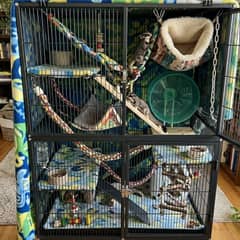
- Housing in a wire cage that can't hold the deep bedding this species genuinely needs.
The Relationship You're Building
Because gerbils are social and day-active, you'll likely see and interact with them far more naturally than with a nocturnal, solitary small pet. Watching a bonded pair dig, forage, and interact is a large part of what makes this species rewarding, so plan for two from the start instead of discovering the social requirement after the fact.
Weighed against the other social, day-active rodent, the degu handling guide is the closest comparison, and Two Pets Where You're Really Buying a Pair walks through both together.
Sources & Further Reading
Last reviewed 9 Aug 2026 · 2 sources
❓ Frequently Asked Questions
Can gerbils live alone?
No, they need company, same-sex pairs or small groups. Isolation causes anxious, stressed behavior in this species, the direct opposite of the solitary hamster, which must be housed alone.
Are gerbils nocturnal?
No. Gerbils are diurnal and crepuscular, up during the day and around dawn and dusk, which lines up with your own hours far better than a hamster's does.
Can you introduce two adult gerbils to each other?
It's risky. Adult introductions often fail, a slow, gradual 'split-cage' introduction method works considerably better than putting two unfamiliar adults together directly. Raising a pair together from a young age is far more reliable.
Can you pick a gerbil up by the tail?
Never. Grasping pressure causes tail slip, where the skin and fur come away and the whole tail can be lost. That one needs a vet. Scoop by the body.
Written by Michael Ryan
Mike keeps two rescued bearded dragons, Dex and Cera, and writes the care guides on BeastlyFacts from his own research and mistakes. He is not a veterinarian.
More about Michael Ryan →Comments
No comments yet - be the first!