Four Pets, Four Different Lessons
On This Page▾

These four don't share a category, but each one teaches something a new owner wouldn't guess going in. A cheap animal that needs an expensive setup. A lizard whose entire care plan depends on where it was born. And two frogs that are near-opposites of each other in exactly the way that matters most.
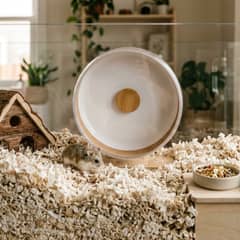
Hamster: The Starter Kit Undersells It
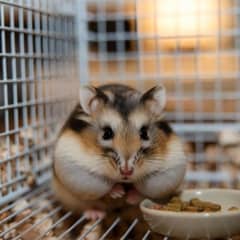
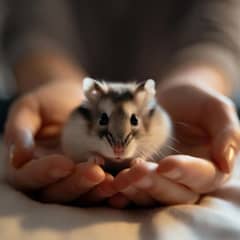
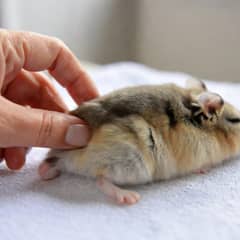
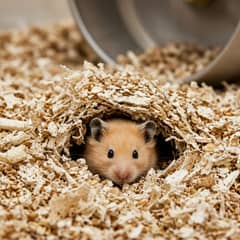
At $15 to $25, the hamster itself is one of the cheapest pets to buy. What it needs isn't: current welfare guidance calls for hundreds of square inches of floor space and six-plus inches of bedding depth, far more than the classic small wire starter kit provides. And with a median lifespan around 1.75 years, wet tail is the one emergency every owner needs to recognize immediately.
Hamster Cost · Handling · Health Issues · Enclosure Setup
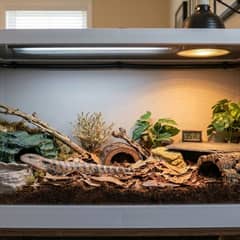
Blue-Tongued Skink: Two Pets Wearing One Name
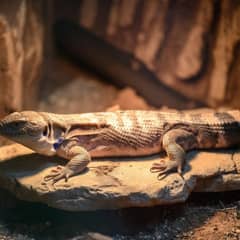
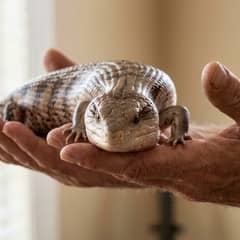
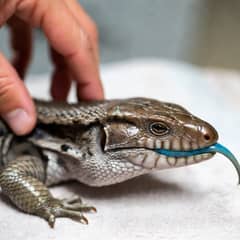
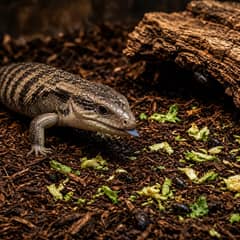
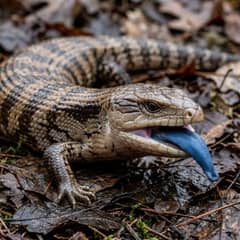
A Northern skink and an Indonesian skink are sold under the same common name but come from opposite ends of the pet trade. Northerns are captive-bred, pricier, and tamer. Indonesians are cheaper, usually wild-caught, and often carry parasites that need treating on arrival. The humidity, temperature, and price all diverge depending on which one you actually bring home.
What the two share is the animal underneath. Blue-tongued skinks come from Australia, New Guinea and Indonesia, adults reach about 17 to 22 inches, and the famous tongue is a warning, bared at anything the skink considers a threat. They are omnivores that eat mostly plants: greens make up 45 to 60% of the diet, with protein and a little fruit on top.
Blue-Tongued Skink Cost · Handling · Health Issues · Enclosure Setup
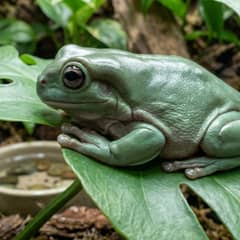
White's Tree Frog: The Amphibian You Can Hold
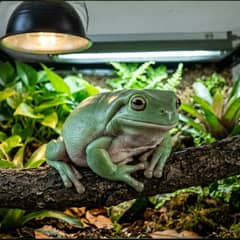
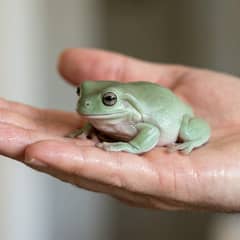
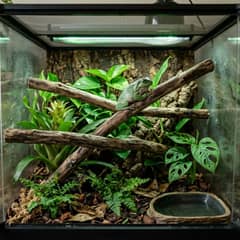
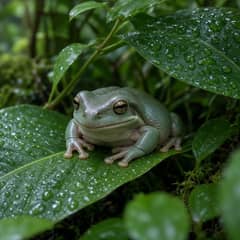
Most amphibians are strictly look-don't-touch. White's tree frogs are the exception, calm, sedentary, and genuinely tolerant of careful handling, provided you wash with plain water first or use lightly wetted gloves. Their one real risk isn't handling at all, it's obesity, they're enthusiastic eaters known for a "dumpy" build that can go too far.
Obesity matters because the frog can be around for a long time. White's tree frogs are native to Australia and southern New Guinea, they grow to a hefty 3 to 4.5 inches, and one in human care is recorded to have lived 21 years. In the dry season wild frogs coat themselves in a secreted cocoon that holds in moisture.
White's Tree Frog Cost · Handling · Health Issues · Enclosure Setup
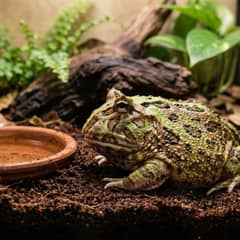
Pacman Frog: The Amphibian That Proves the Rule
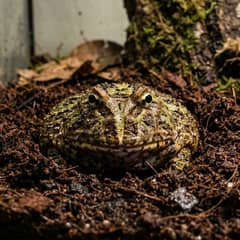
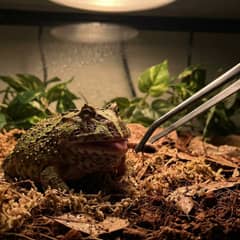
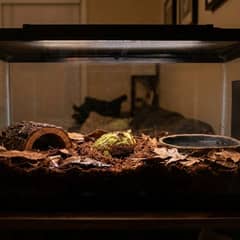
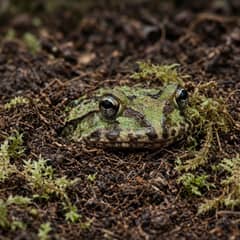
If White's tree frog is the exception, the Pacman frog is the reason the "don't handle amphibians" rule exists in the first place. Built to strike at anything that moves, with a bite that doesn't distinguish a finger from prey, this is a display pet, fed with tongs, never by hand, and never housed with another frog.
The strike comes from how the frog lives. Pacman frogs are sit-and-wait predators that spend most of their time buried with only the head showing, so the enclosure needs 3 to 4 inches of substrate to bury in and humidity held at 60 to 80%. Adults reach 4 to 7 inches, females larger, and a single frog starts in a 10 gallon terrarium. Loose substrate swallowed with prey can cause impaction, so feeding never happens over loose substrate.
Pacman Frog Cost · Handling · Health Issues · Enclosure Setup
Put the two frogs side by side and they land on opposite ends of nearly every scale that matters for a keeper: White's tree frogs are calm enough to sit contentedly on a hand, while Pacman frogs strike explosively at anything finger-shaped and are fed exclusively with tongs. Same broad label, "pet frog," genuinely opposite animals to live with.
The Common Thread
Cost, origin, and temperament all hide real complexity behind a simple sticker price or a common name. The hamster's real cost is in the enclosure, not the animal. The skink's real identity is in its origin, not its species name. And the two frogs prove that "amphibian" isn't one set of handling rules, it's two, and knowing which one you've got matters before you ever reach into the tank.
Frequently Asked Questions
Why does a hamster that costs $15 to $25 need a setup that costs so much more?
Current welfare guidance calls for hundreds of square inches of unbroken floor space and 6 or more inches of bedding depth for burrowing, far more than the small wire starter kits sold alongside most hamsters provide. The animal is cheap. Housing it correctly is where the budget goes.
What's the difference between a Northern and an Indonesian blue-tongued skink?
They're sold under the same common name but come from opposite ends of the pet trade. Northern (Australian) blue-tongued skinks are almost universally captive-bred, calmer, and pricier. Indonesian skinks are cheaper but usually wild-caught, and commonly arrive carrying parasites that need treating right after purchase, an added cost Northern buyers typically skip.
Can White's tree frogs be handled, unlike most frogs?
Yes, they're one of the few amphibian species tolerant of careful, occasional handling, provided you use clean, chemical-free, slightly damp hands or lightly wetted gloves. Amphibian skin is permeable and absorbs whatever it touches, so technique matters more here than the handling itself.
Why should you never handle a Pacman frog the way you might a White's tree frog?
Pacman frogs are ambush predators built to strike reflexively at anything that moves near their face, including fingers, and they cannot always tell a finger from prey. They're fed with tongs only, never by hand, which is the exact opposite of White's tree frog and a big part of why the general don't-handle-amphibians rule exists in the first place.


Written by Michael Ryan
Mike keeps two rescued bearded dragons, Dex and Cera, and writes the care guides on BeastlyFacts from his own research and mistakes. He is not a veterinarian.
More about Michael Ryan →You May Also Like

Subscribe - it's free
An occasional email when something new is worth your time. No spam.
Deep Dive
Health and More