Hamster Enrichment: Deep Bedding, Wheels and Foraging
On This Page▾

A pet hamster's day is short on everything its wild relatives spend the night doing: digging, running and gathering food. Enrichment puts those back, and deep bedding comes first. This guide covers the Syrian, the dwarf hamsters (winter white, Campbell's and Roborovski) and the Chinese hamster.
Give it bedding deep enough to burrow in, at least 6 inches and 10 or more where the enclosure allows; a solid wheel sized for the species; tunnels and hides to move under; food scattered and buried rather than served in a bowl; and a sand bath. Add new things one at a time.
The Wild Hamster's Night
The Syrian hamster comes from the Aleppo plateau of northern Syria and nearby Turkey, once open steppe and now mostly farmland. It lives alone in its own burrow and spends the day underground. At dusk it comes up and spends most of the night gathering seeds, grains and insects, carrying them home in its cheek pouches and caching them in the burrow, sometimes covering 8 miles in one evening. Owls, foxes, weasels and snakes hunt it, so it keeps to cover and bolts for the burrow at any alarm. Of the dwarfs, the two Russian species, Campbell's and the winter white, live in small colonies in the wild, but pet dwarfs of any species kept together often fight.
That night is the template for the enclosure: somewhere to dig, ground to cover, food to find and carry, and a place to disappear.
Depth First
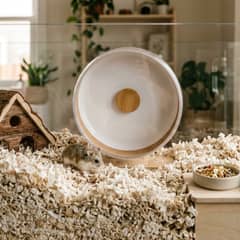
Give at least 6 inches of aspen shavings or paper bedding, and 10 inches or more where the enclosure allows, piled deepest at one end. Press paper bedding down as you fill, so tunnels hold their shape instead of collapsing. In a study of 45 male Syrians, every hamster given about 16 inches or more dug a burrow and used it, while those on about 4 inches gnawed the cage wire more and ran the wheel harder.
Depth needs walls to hold it, which is why the enclosure choice and the bedding depth are one decision. Most cages sold for hamsters cannot hold even 6 inches.
A Wheel, Read With Care
A solid-surface wheel is a must, sized so the hamster runs with a flat back rather than an arched one. That means at least 8 inches across for a dwarf or a Chinese hamster and at least 12 for a Syrian, such as a 12 inch Silent Runner. Wire and mesh wheels cause foot injuries. Heavy wheel use is not proof of a happy hamster, though: in the bedding study, the hamsters with the least bedding ran the most.
Cover, Tunnels and Hides
A hamster crosses open floor reluctantly, the way its wild cousins keep to cover. Buried tunnel sections, a multi-chamber hide and a few scattered hides let it move under cover, and they change how much of the enclosure it uses at all. A large enclosure the hamster will not cross is a small one.
Foraging and Hoarding
Scatter part of the evening's pellets across the floor and bury some in the bedding, so the hamster digs and searches for them rather than emptying a bowl in minutes. Let it carry food to its stash, and leave the stash alone when you spot-clean, since hoarding is half of a hamster's night. The daily amounts stay the same; only where the food goes changes.
Vary where the food turns up from night to night. Some evenings, sprinkle pellets in a thin trail across the surface; on others, bury a few in the deep end or tuck them inside a cardboard tube with both ends folded shut. A small pile of hay with a few seeds hidden in it gives a hamster something to sort through for a long time. Take out any fresh food within a day, including pieces carried to the stash. The dry stash stays.
Chewing
A hamster's teeth grow continuously, so it needs things to gnaw: untreated wood chews, cardboard tubes and boxes, and a little hay. A mixed set of natural chew sticks and balls shows which kinds it will use. A hamster gnawing the bars is telling you about the setup, most often the bedding, not asking for another toy.
Skip anything painted, varnished or glued, plastic toys a hamster can bite pieces from, and soft fabric that tears into strands. Wood blocks and plain cardboard do the job, and they cost little enough to replace as soon as they are chewed down or soiled.
Sand Bath and Nest
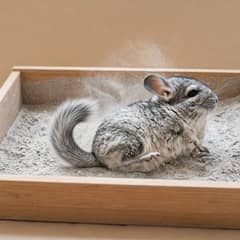
A shallow, heavy dish of dust-free bathing sand, wide enough for the hamster to roll over in, lets it roll, which is how it keeps its coat clean. Many hamsters also dig in it, and some use a corner of it as a toilet, so sift it when you spot-clean and top it up as it thins. Leave it in the enclosure all the time, in a spot away from the water bottle so it stays dry. Use bathing sand only, never chinchilla dust or any other powder.
For the nest, give plain, unscented shredded paper, tissue or paper towel. Skip cotton, synthetic and other fluffy nesting products, which can wrap around a hamster's legs.
Free Enrichment From Around the House
Plenty of hamster enrichment is already in the recycling. Cardboard toilet and paper towel tubes make tunnels to bury in the bedding. For a Syrian, slit a narrow tube lengthwise first, so it cannot get wedged inside. A small cardboard box with two holes cut in it becomes an extra hide, and the hamster will shred it into nesting material over time. Plain paper, scrunched up and pushed into the bedding with a few pellets inside, gives it something to dig out and search. An empty egg carton, torn open a little, works the same way.
Use plain cardboard and paper only, with no tape, glue, staples, glossy coating or heavy ink, and throw out anything that gets wet or soiled. Keep climbing low. Hamsters see poorly and can fall, so a single-level enclosure with low platforms and ramps serves them better than tall levels.
Time Out of the Enclosure
A supervised run in a playpen or a hamster-proofed room adds new ground to explore. Cover cables, remove plants, and stay with it the whole time. Skip exercise balls: the hamster cannot reach food, water or a hiding place inside one.
How to Tell It Is Working
A hamster whose enclosure suits it stays out of sight by day, comes up at dusk, digs, forages, runs, builds a nest and keeps a stash. Repetitive bar-chewing or other repeated movements, a hamster that stops using its nest or stash, and steady weight loss say something is wrong. Illness causes some of the same changes, so pair a setup change with a vet check when they appear.
One Change at a Time
A hamster relies on its layout staying put. Add one new item at a time, keep the nest, wheel and bowls where they were, and never strip the whole enclosure at once.
A Weekly Rotation
Rotation still works, as long as it stays small. Once a week, swap one extra, such as a tube, a chew or a cardboard box, for something the hamster has not had for a while, and leave the rest of the layout alone. The new item goes in during the evening, when the hamster is up to find it.
Priority Order
- Bedding deep enough to hold a burrow, at least 6 inches and 10 or more where it fits.
- An enclosure with the floor and wall height to hold it.
- A solid wheel sized for the species.
- Buried tunnels and hides.
- Scattered and buried food.
- Chews and a sand bath.
- New objects, last and one at a time.
Start With the Bedding
If you change one thing this week, add bedding until the hamster can dig a real burrow. Everything else here works better for a hamster that has one.
Sources & Further Reading
Frequently Asked Questions
How deep should hamster bedding be?
At least 6 inches, and 10 or more where the enclosure allows. A hamster needs enough to dig a burrow that holds its shape.
What does bar-chewing mean in a hamster?
That something in the setup is missing, most often depth. Add bedding before adding toys.
Is a hamster that runs its wheel all night a happy one?
Not necessarily. Heavy wheel use also shows up in hamsters with too little bedding, so check the depth as well.
Should hamsters be housed together?
No. A Syrian or a Chinese hamster always lives alone, and a dwarf is safest alone too.
More on the Hamster


Recommended Gear
As an Amazon Associate I earn from qualifying purchases through the links above, at no extra cost to you.

Written by Michael Ryan
Mike keeps two rescued bearded dragons, Dex and Cera, and writes the care guides on BeastlyFacts from his own research and mistakes. He is not a veterinarian.
More about Michael Ryan →You May Also Like


Subscribe - it's free
An occasional email when something new is worth your time. No spam.
Deep Dive
Health and More