Hamster Enclosure Setup: Bigger and Deeper Than the Starter Kit Suggests
On This Page▾

The small wire cages sold as "hamster starter kits" fall well short of current welfare advice. Getting floor size and bedding depth right is most of what matters. The figures below are given for the Syrian and for the dwarf hamsters (winter white, Campbell's and Roborovski) where they differ; the Chinese hamster takes the dwarf figures.
Enclosure Size
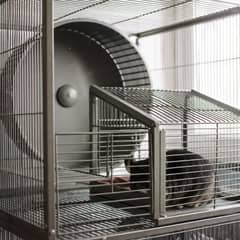
Every hamster, dwarf or Syrian, needs an unbroken floor of at least 40 by 20 inches, about 775 to 800 square inches, and more is always better. A 39-inch cage with acrylic panels on a metal frame meets that floor with a base deep enough for about 9 inches of bedding, and a large storage bin with the same floor costs far less. A bin or a tank needs a tight-fitting mesh lid, which keeps air moving and keeps in an animal that climbs and squeezes through small gaps. For a bin, cut out most of the lid's center and fasten quarter-inch metal mesh over the opening with bolts or cable ties, leaving no sharp ends inside. The materials run about $15 to $25. Syrians do well in something larger still, such as a 47-inch cage with acrylic panels on a metal frame, about 1,110 square inches of floor with a base deep enough for 11 inches of bedding. In a wire cage, bar spacing should be no more than half an inch for Syrians and a quarter inch for smaller species, Roborovskis above all, since they squeeze through small gaps.
Temperature
65 to 75°F is the comfortable range, kept stable. Below 65°F the room is out of range and appetite and activity start to drop. Below about 41°F, particularly with short days, a hamster can enter torpor, a hibernation-like state that can be dangerous, because it does not fatten first and can starve if it does not wake to eat. Above 80°F risks heat stress. No extra heat source is needed in a normal indoor room, and a digital thermometer shows whether the room stays in range. Room humidity of 40 to 60% is the target, and the same device reads it.
Bedding: Deeper Than You'd Guess
Use at least 6 inches of dust-free, paper-based bedding or aspen shavings, and treat that as the minimum; 10 inches or more is better, with one end piled deepest. A 40 by 20 inch floor takes about 80 liters of bedding at 6 inches deep and about 130 at 10, so buy by the expanded volume printed on the bag. In a study of 45 male Syrians, every hamster given about 16 inches or more built its own burrow and used it, and the researchers concluded that about 16 to 31 inches seemed to improve welfare. Avoid cedar and pine entirely, since the aromatic oils in both irritate the airways.
Hamsters kept on about 4 inches of bedding gnawed the cage wire more and ran the wheel harder than those given 16 or 31 inches. In a shallow cage, wire-gnawing is a bedding problem before it is a toy problem.
Lighting
No special lighting or UVB is required. A normal day and night cycle is enough. Hamsters are nocturnal, so bright light during their active hours disturbs them.
The Wheel: Solid, Not Wire, and Properly Sized
A solid-surface wheel with no rungs is essential, because wire wheels cause foot injuries. Size matters too: a dwarf needs a wheel of at least 8 inches, such as an 8.2 inch silent wheel, and a Syrian at least 12 inches, such as a 12 inch Silent Runner. A wheel that is too small forces an arched running posture that is hard on the spine over time.
The Non-Obvious Requirement: A Sand Bath
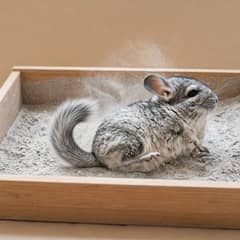
Every hamster needs a dust-free, non-clumping sand bath. Hamsters roll in it to work oil and dirt out of the coat, the way a bird uses a dust bath. Use a shallow, heavy dish of hamster bathing sand, big enough for the hamster to roll in, and leave it in the enclosure. Sift out droppings when you spot-clean and top the sand up as it thins.
Hides, Water and Food
A hideout, a tunnel to bury in the deep end, a water bottle, a food dish and a handful of plain, unscented paper nesting material complete a basic setup. Skip cotton and other fluffy nesting products, which can wrap around a hamster's legs. None of it needs to be elaborate, but all of it needs to be there, since a hamster with nowhere to hide stays stressed.
Cleaning: Spot Daily, Deep Less Often
A hamster's cage smells of its own scent marks and its food stores, and a cleaning routine has to keep enough of both to leave the animal settled.
- Daily: remove soiled bedding and uneaten fresh food, and wash and rinse the water bottle or bowl.
- Every few weeks: move the hamster to a carrier, replace the soiled part of the bedding, wash the accessories and any dirty walls with a small-animal habitat cleaner, rinse off every trace of it, and let everything dry before fresh bedding goes in. Spot cleaning covers the days in between.
- Every time: set aside a handful of clean nesting material and any dry food hoard, and put them back afterward. Leave an established burrow in place during spot cleans. Return the nest, wheel and bowls to the same spots, since a hamster relies on the layout staying put.
A total strip-out erases the scent marks and the hoard at once, and it can leave a hamster unsettled for days. Clean in the evening, once the hamster is already awake.
Setup Order
- Pick the room: quiet, out of direct sun and drafts, holding 65 to 75°F, and dark at night.
- Place the enclosure at full size on a sturdy surface.
- Fill the bedding at least 6 inches deep, 10 or more where it fits, deepest at one end.
- Add the hides and a buried tunnel in the deep end, where the hamster will dig.
- Fit the wheel sized for the species, the sand dish, the food dish and the water bottle.
- Run it for a day with the thermometer in place, then bring the hamster home.
Build It Once, at Full Size
Set the enclosure up at full size, with the bedding deep, before the hamster arrives. It lives in this one space for its whole life and settles best when nothing in it moves, so start with the floor and the bedding and fit the wheel, hides and sand bath around them.
Sources & Further Reading
Last reviewed 24 Sep 2026 · 5 sources
- Merck Veterinary Manual: Providing a Home for a Hamster, and Hamsters (professional), for torpor and starvation
- LafeberVet: Basic Information Sheet: Hamster
- PetMD: Syrian Hamster Care Sheet
- PDSA: Hamsters as Pets
- Hauzenberger AR, Gebhardt-Henrich SG and Steiger A. The influence of bedding depth on behaviour in golden hamsters. Applied Animal Behaviour Science

The Hamster Care Package carries this setup as a checklist with the targets to hit, in a 47-page PDF you can keep by the cage, $8.99. Includes the Universal Pet Kit free: a routine chart and equipment log you can fill in.
Frequently Asked Questions
What size enclosure does a hamster need?
At least 40 by 20 inches of unbroken floor for any hamster, and more for a Syrian where you can. Starter kits fall well short of it.
How deep should hamster bedding be?
6 inches is the minimum, and much deeper is better: hamsters given 16 inches or more all dug real burrows.
What temperature should a hamster's room be?
A steady 65 to 75°F, which a normal indoor room already gives. Keep it away from cold windows in winter and sunny spots in summer.
Does a hamster need a special wheel?
Yes: a solid running surface and a diameter big enough that its back stays flat while it runs, which means a larger wheel for a Syrian than for a dwarf.
Do hamsters need a sand bath?
Yes. Rolling in sand is how a hamster keeps its coat clean, and a heavy dish of dust-free sand is all it takes.
More on the Hamster





Recommended Gear
As an Amazon Associate I earn from qualifying purchases through the links above, at no extra cost to you.

Written by Michael Ryan
Mike keeps two rescued bearded dragons, Dex and Cera, and writes the care guides on BeastlyFacts from his own research and mistakes. He is not a veterinarian.
More about Michael Ryan →You May Also Like



Subscribe - it's free
An occasional email when something new is worth your time. No spam.
Health and More