Hamster Feeding: Schedule, Diet, and Why They Stop Eating
On This Page▾

A hamster's cheek pouches can hold roughly a fifth of its own body weight, which changes how you should read a day of apparent silence at the food bowl. The amounts below cover the Syrian, the dwarf hamsters and the Chinese hamster, with the smaller portion for the smaller animals.
Feeding Schedule
Keep pellets available at all times, since hamsters rarely overeat them and hoard what they do not eat. Refill the bowl each evening, when a hamster wakes and starts to feed, with a measured amount: roughly 2 tablespoons for a Syrian and about 1 tablespoon for a dwarf or a Chinese hamster. Measuring the refill shows you each day how much went.
Fresh extras have firmer numbers: about 1 teaspoon of fresh vegetables a day, plus roughly a teaspoon of fruit around 3 times a week. Leave the fruit out for Campbell's and winter white dwarfs and for the Chinese hamster, which are prone to diabetes. Vegetables and fruit together stay at 5 to 10% of the diet. Seeds, nuts and plain popcorn are treats, once or twice a week. Skip iceberg lettuce and celery, which are mostly water.
A new hamster stays on the food it was already eating, and any change to its diet is made over about ten days, with a little of the new food mixed into the old.
What Hamsters Eat
The staple is a complete hamster pellet or lab block. A loose seed mix lets a hamster pick out the sugary, fatty bits and leave the fiber-rich pieces, which leads to dental problems and obesity, and a seed-only diet is too high in fat and short of nutrients.
Add small daily amounts of fresh vegetables (broccoli, cucumber, bell pepper, kale, spinach, peas, zucchini and carrot) plus occasional fruit (apple with the seeds removed, banana, melon and pear). A little timothy hay encourages the chewing that wears down continuously growing teeth. For a hamster it is a supplement, not the base of the diet.
Hamsters are omnivores that eat insects in the wild, so a protein treat such as a mealworm or a bit of boiled, unseasoned egg fits their diet. Scatter or hide some food around the enclosure rather than serving it all in a bowl, since searching and hoarding are how a hamster spends its night. Fresh water needs to be available at all times through a bottle with a metal spout the hamster licks, checked daily for leaks. A hamster drinks only about 2 teaspoons a day, so a bottle whose level has not moved in a day needs a look at the spout. Take out any fresh food left by the next evening, and check the hoard for it, before it spoils. A bottle with a glass spout is the wrong choice for a Syrian, which bites through glass.
Weight and Body Condition
A healthy adult Syrian weighs roughly 4 to 5 ounces, females heavier than males, and the dwarfs and the Chinese hamster weigh about 1 to 2 ounces, a Roborovski a little under 1. A kitchen scale and a small container make a weigh-in a thirty-second job, and a steady number is the plainest sign of a hamster that is eating and well. Sick hamsters often show weight loss, a hunched posture, lethargy, rough fur and labored breathing, and a hamster with a high metabolic rate loses condition quickly once it is unwell.
Safe Treats and Foods to Avoid
Safe, in moderation: mealworms, boiled unseasoned egg, small amounts of nuts and seeds, plain pasta, unsalted popcorn, fresh vegetables and fruit as listed above, and timothy hay.
Toxic: grapes and rhubarb; onion and garlic, which can cause hemolytic anemia; chocolate; bitter almonds (not the sweet almonds sold as snacks); raw kidney beans; raw potato; eggplant; and avocado. Leave citrus out as well, above all for the diabetes-prone dwarfs.
Why Hamsters Stop Eating
- Dental problems. The most common cause of a hamster refusing food. Continuously growing incisors that overgrow or get injured make chewing painful, so the hamster avoids food even while hungry.
- Wet tail. A serious intestinal infection, especially dangerous in young or recently weaned hamsters, that can be fatal within 24 to 48 hours if untreated. Appetite loss is an early sign alongside soiled, wet hindquarters.
- Cold-induced torpor. Below about 41°F, particularly with short days, a hamster can enter a hibernation-like state with little movement and little or no eating, and it can look as if the hamster has died. Move it to a warm room and handle it gently. Stroking it, or a warm heat pad or hot water bottle wrapped in a towel, helps it wake gradually, as long as it does not get too hot. Then take it to the vet as soon as possible. This torpor is distinct from true hibernation, and a hamster in it has not fattened beforehand, so it can starve if it stays down.
- Stress. A new environment, handling, or cage changes can cause a temporary, lower-urgency dip in appetite.
- Respiratory infection or other illness. Usually comes with other symptoms like labored breathing, discharge, or lethargy alongside reduced eating.
- Diabetes in the species prone to it. Campbell's and winter white dwarfs are the most prone to diabetes, and Chinese hamsters are prone as well. It changes appetite and energy.
- Cheek pouch impaction. Uncommon, but soft or moist food can clump and lodge in a pouch. Watch for one-sided swelling, face-pawing, drooling and a sudden loss of interest in collecting food, and see a vet if you find them.
When to Worry
A hamster that leaves its fresh food untouched and has taken nothing from the bowl for 6 to 12 hours of its waking night, while otherwise active, is worth watching. At 12 to 24 hours, or with any refusal paired with lethargy or diarrhea, call the vet. More than 24 hours without any food is critical, and more than 48 can kill a hamster, because its metabolism runs so fast.
A hamster living off its hoard is a different case. It caches food in its pouches and around the enclosure, so you may not see it eat for a day or more while it is fine. The worry is a hamster that leaves fresh food untouched and shows other signs. So count from what is left untouched and whether it comes out in the evening, never from whether you saw it eat. A hamster off its food needs a vet the same day if it also shows labored breathing or wheezing, wet or soiled hindquarters, discharge from eyes or nose, a swollen abdomen, seizures, noticeable weight loss, or a hunched, lethargic posture.
The Evening Check
Look at the bowl, the water level and the hamster itself each evening once it is up. A hamster that comes out, eats and runs is fine whatever its hoard looks like, and one that stays in its nest and leaves fresh food untouched needs a closer look.
Sources & Further Reading
Last reviewed 3 Oct 2026 · 6 sources
- VCA Hospitals: Feeding Rodents
- PetMD: Syrian Hamster Care Sheet
- PDSA: Hamsters as Pets, for sugar and diabetes in Russian dwarfs
- Merck Veterinary Manual: Hamsters
- Woodgreen Pets Charity: Do Hamsters Hibernate?, for warming a hamster out of torpor
- LafeberVet: Basic Information Sheet: Hamster
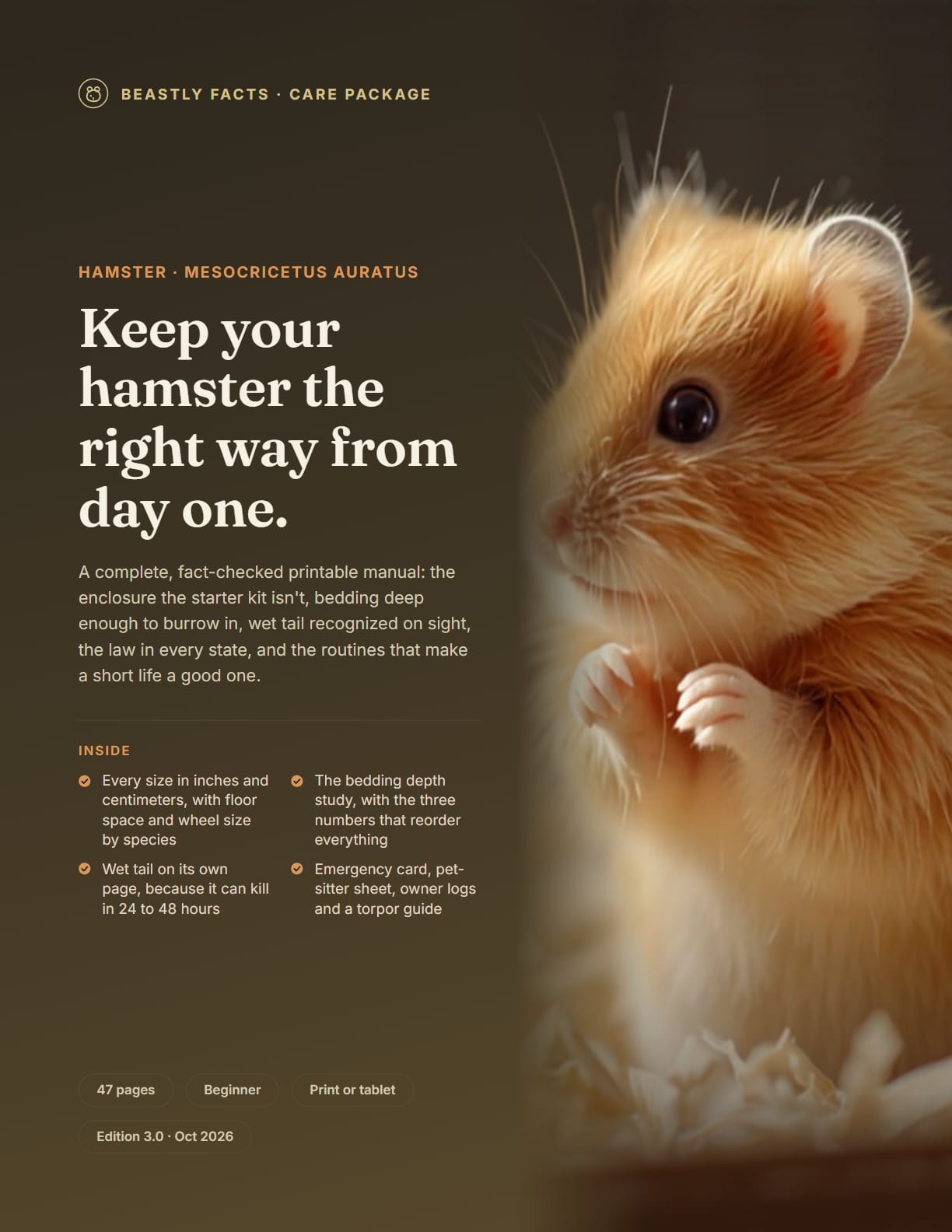
The Hamster Care Package puts the feeding section, an owner log and a pet-sitter sheet on paper, in a 47-page PDF you can keep by the cage, $8.99. Includes the Universal Pet Kit free: a routine chart and feeding log you can fill in.
Frequently Asked Questions
Should I leave food out all the time or feed on a schedule?
Keep pellets in the bowl at all times and refill it with a measured amount each evening, which shows you how much went. Water stays available around the clock.
Should I feed pellets or a seed mix?
Pellets or lab blocks. A loose mix lets the hamster eat only the fatty, sugary pieces.
Why has my hamster stopped eating?
Most often its teeth. A hamster that sniffs at food and walks away, or drops it, needs its mouth checked by a vet.
Is it normal not to see my hamster eat for a whole day?
Often, yes, because it eats from its stash out of sight. What matters is whether it comes out active in the evening and its weight holds.
How long can a hamster safely go without eating?
No more than about a day without any food, and two days can kill it. A hamster eating from its hoard is a different case.
What foods are dangerous for hamsters?
Grapes, rhubarb, the onion family, chocolate, bitter almonds, raw kidney beans, raw potato, eggplant and avocado. Leave citrus out too.
More on the Hamster


Written by Michael Ryan
Mike keeps two rescued bearded dragons, Dex and Cera, and writes the care guides on BeastlyFacts from his own research and mistakes. He is not a veterinarian.
More about Michael Ryan →You May Also Like

Subscribe - it's free
An occasional email when something new is worth your time. No spam.
Deep Dive
Health and More