Understanding Reptile Shedding (Ecdysis)
On This Page▾

Reptiles shed their skin (a process called ecdysis) to grow and to remove parasites and old, damaged skin. Understanding this process will help you support your animal and catch problems early - the humidity, temperature, and handling principles here apply across species, including the Crested Gecko, Leopard Gecko, and Ball Python. Turtles and tortoises are the exception and get their own section below, because they shed scutes and skin rather than a whole skin at once.
The Shedding Process
- Pre-shed: Eyes turn blue/opaque (in snakes), colors become dull, skin looks dry. Your animal may refuse food and hide more. A snake typically stays opaque for about 4 to 7 days.
- Clearing phase: The eyes go transparent again as the fluid behind the spectacle is reabsorbed. The shed itself typically follows about 4 to 7 days after that, so a clear-eyed snake is not a snake that has finished, it is one that is nearly ready.
- Active shed: The animal rubs against surfaces to start the peel, then crawls out of its skin.
What is actually separating the two skins during all of this is a lymph-like fluid carrying enzymes, released under the old layer, and it is the reason the eyes go cloudy at all. Our guide to how snakes actually shed covers that mechanism in full.
Supporting a Healthy Shed
- Humidity, temporarily: Raise humidity toward the high end of your species' range during the shed itself, ideally with a humid hide rather than a permanently damper enclosure. This helps detached skin come away in one piece, but it is not what separates the skin in the first place, see how snakes actually shed for the mechanism.
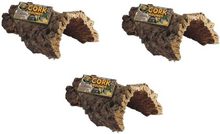
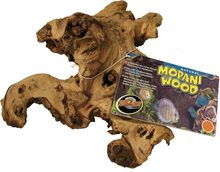
- Rough surfaces: Cork bark, slate, and branches give your animal something to rub against to start the peel.
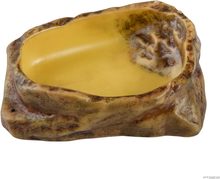
- Soak (if needed): Kevin Wright, DVM, DABVP describes placing the animal in chin-deep water at cage temperature for 30 minutes to loosen retained shed before removing it. Use a shallow dish and supervise throughout.
Stuck Shed (Dysecdysis)
Retained shed most commonly affects:
- Toes (geckos, lizards): Retained shed constricts the toe and cuts off blood supply. Gently remove with a damp cotton swab after soaking.
- Eye caps (snakes): Never try to remove these yourself. See a vet.
- Tail tip: Especially in leopard geckos. Retained rings can cause necrosis.
Kevin Wright, DVM, DABVP describes the mechanism behind the first and third of those directly: retained shed "often constricts toes and the tips of tails and may accumulate over time into bands of old sheds that block the blood supply to the tail tip or toe tip and may cause the loss of this extremity." The damage is cumulative across shed cycles, which is why a single slightly imperfect shed matters less than a pattern of them.
Turtles and Tortoises Shed Differently
Chelonians are the group most often left out of shedding advice, and they do not follow the snake and lizard pattern at all. They shed two separate things.
Scutes. The shell is covered in keratin plates called scutes, and VCA Animal Hospitals notes that these "normally flake off as the turtle grows." In aquatic species this is routine and expected, and a healthy shed scute comes away thin and translucent, with sound shell underneath.
Skin. Separately, VCA notes that turtles' skin "periodically (and normally) sheds off in pieces," which in a tank looks like a whitish, fuzzy substance drifting in the water. New keepers regularly mistake this for fungus.
The judgment call is telling a normal shed from a sick shell, and the line is clearer than it looks. Normal shedding leaves intact shell or skin underneath. Abnormal shedding does not. VCA puts the threshold plainly: "Full-thickness shedding of skin, leaving raw or bleeding areas, is clearly abnormal," and points at bacterial or fungal infection, hypovitaminosis A, burns, or trauma as the reasons. Pitted, soft, foul-smelling, or bleeding shell is not a shed in progress, and it needs a vet rather than a humidity adjustment.
One thing that is not a shedding problem, despite looking like one: pyramiding, the raised bumpy growth on shell scutes. That is a growth deformity rather than a shed gone wrong, and it has its own causes. Our red-eared slider health issues guide and sulcata tortoise health issues guide cover it where it belongs.
Root Causes of Dysecdysis
The Merck Veterinary Manual names six contributors to an abnormal shed:
- Low humidity
- Skin parasites
- Nutritional deficiencies
- Infectious diseases
- Lack of suitable abrasive surfaces
- Decreased thyroid function
Kevin Wright, DVM, DABVP adds that while dysecdysis often signals suboptimal husbandry, it can also be a sign of infectious disease, naming external and internal parasites, septicemia, inclusion body disease of boids, ophidian paramyxovirus, and internal abscesses. Repeated bad sheds in a correctly set up enclosure are a veterinary conversation, not a humidity problem.
Humidity is the most common single cause, but it is one of six, and an animal with nothing rough to rub against can fail to shed cleanly in a perfectly humid enclosure. The crested gecko humidity guide is the deeper look at getting humidity right for one commonly affected species.
Sources & Further Reading
Last reviewed 5 Sep 2026 · 5 sources
❓ Frequently Asked Questions
Is it normal for my reptile to stop eating before a shed?
Yes, refusing food in the run-up to a shed is common. A snake typically stays opaque for about 4 to 7 days, with the shed itself following roughly 4 to 7 days after the eyes clear, so the whole cycle is a week or two. Appetite usually returns once the shed is complete.
How often should a healthy reptile shed?
It varies widely by species, age, and growth rate - juveniles shed far more often than adults since they're growing faster. There's no universal schedule; focus on whether each shed comes off cleanly and completely rather than counting days between them.
Is it safe to help peel off shed skin myself?
Only in limited, low-risk cases like gently removing loosened retained shed from toes after a warm soak. Never attempt to remove retained eye caps on snakes yourself - that requires a veterinarian.
Does low humidity always cause stuck shed?
It's the most common cause, but not the only one. The Merck Veterinary Manual also lists skin parasites, nutritional deficiencies, infectious disease, a lack of suitable abrasive surfaces, and reduced thyroid function. An animal with nothing rough to rub against can fail to start the peel in a perfectly humid enclosure.
How long should a soak be for helping with a stuck shed?
Published recommendations vary by how stubborn the retained shed is. Kevin Wright, DVM, DABVP describes a 30 minute soak in chin-deep water at cage temperature before manual removal. The Merck Veterinary Manual describes a longer soak, several hours in warm water at 77 to 85 degrees Fahrenheit, for retained skin. Supervise throughout either way.
🛒 Recommended Gear
As an Amazon Associate, we earn from qualifying purchases through the links above - at no extra cost to you.
Written by Michael Ryan
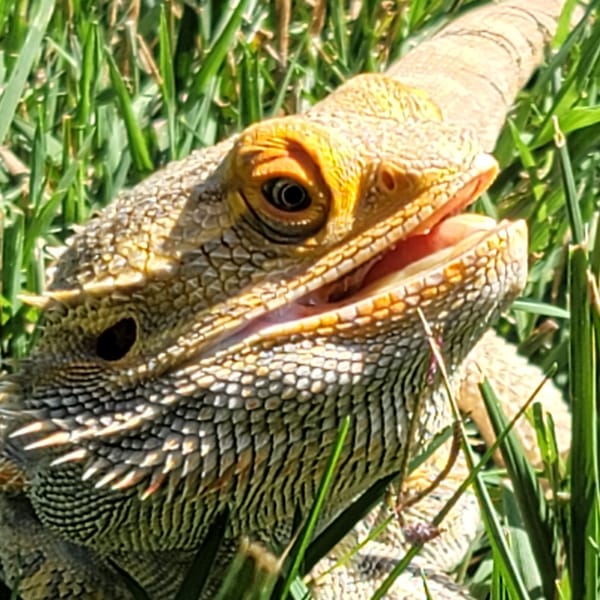
Mike keeps two rescued bearded dragons, Dex and Cera, and writes the care guides on BeastlyFacts from his own research and mistakes. He is not a veterinarian.
More about Michael Ryan →Comments
No comments yet - be the first!