Crested Gecko
Geckos
The velvety, fan-fringed gecko that needs no heat lamp!
On This Page▾
🤓 Did you know? Crested geckos were thought to be extinct until rediscovered in 1994 during a tropical storm in New Caledonia!

🗓️ The first week
The numbers a new owner needs in the first week, each from the article it links to. Rows with no link come from the encyclopedia.
- Day one
- A new gecko is quarantined 3 to 6 months away from any reptile you already keep, on paper towel, with its own tools and a vet workup inside that window.Quarantine guide →
- Enclosure
- 18x18x24 inches is the minimum for one adult, and taller is genuinely better, a 2x2x2 foot enclosure is a common upgrade. Height matters more than floor space here.Setup guide →
- Temperature
- Ambient 72 to 78°F. 85°F is a hard ceiling with zero exceptions, this species runs into heat danger faster than cold.Setup guide →
- Humidity
- 60 to 80%, spiking to 80% or higher right after the evening mist and drying to 45 to 50% by late afternoon before the next one. The daily swing is the point, not a constant number.Humidity guide →
- UVB
- Not strictly required, since a complete diet powder already supplies vitamin D3, but low-level UVB is still worth adding: a 24-inch T5 HO around 5.0, for a UVI of 1.0 to 2.0.Setup guide →
- Floor
- Paper towel for hatchlings and quarantine setups. Coconut fiber, sphagnum, or a bioactive mix for adults, at least 2 inches deep.Setup guide →
- Feeding schedule
- Hatchlings and juveniles get commercial crested gecko diet (CGD) daily, with live insects 1 to 2 times a week. Adults move to CGD every 2 to 3 days, with insects about once a week.Feeding guide →
- Not eating
- A healthy, good-weight adult can typically go 2 to 3 weeks without eating, but a vet consult is worth considering after the second week, especially with visible weight loss.Feeding guide →
- Handling
- Wait about two weeks, and until the gecko is a sub-adult of 8 to 15 grams (roughly 4 to 5 inches, about 6 months old). Then 1 to 2 minute sessions building to 15 minutes, under 20 minutes total a day. Never grab the tail, it does not grow back.Handling guide →
- Budget
- $50 to $200 for a normal morph, up to $500 to $1,000+ for rare morphs. $335 to $530 of equipment, $400 to $740 with the first vet exam. $31 to $52 a month after that.Cost guide →
- Adult size
- 7 to 9 inches including tail.
- Lifespan
- 15 to 20 years in captivity, with the earliest known captive individuals living into their 30s.Cost guide →
- Hygiene
- Wash hands with soap right after any contact, keep the gecko out of the kitchen, and never clean the enclosure in a kitchen sink or a bathtub people use.Hygiene guide →
- Power outage
- 65 to 72°F is the normal night low. Sustained below 72°F, day or night, causes lethargy and appetite loss, add heat, move the animal, or call the sitter.Emergency plan →
🚨 Emergency card
Call the vet now if you see any of these.
- A soft or misshapen jaw
- No bowel movement for a week or more
- Breathing difficulty
- Ongoing weight loss
- Any neurological symptoms
An exotic vet, found before you need one. Bring a new gecko in within the first 30 days of ownership, then an annual wellness exam with a fecal test as a baseline, not just when something looks wrong.
📰 Where to go next
How Much Does a Crested Gecko Really Cost?
$50 to $200 for the gecko, $335 to $530 of equipment, and $31 to $52 a month after that.
Crested Gecko Tank Setup: Vertical Space, Humidity, and a Hard Temperature Ceiling
The 18x18x24 vertical minimum, the 85°F hard ceiling, and why this species needs you to avoid heat rather than provide it.
Why Humidity Is Everything for Crested Geckos
The 60 to 80% daily swing, a misting schedule that actually works, and the signs humidity is running too low or too high.
Crested Gecko Feeding: Schedule, Diet, and Why They Stop Eating
Why powdered diet, not live insects, should be the staple, portion size by age, and the honest range of reasons a gecko stops eating.
How to Handle a Crested Gecko (And Why Tail Loss Is Different Here)
Settling-in time, the treadmilling technique, and why tail loss here is permanent, not regrowable.
Common Crested Gecko Health Issues and What Causes Them
Metabolic bone disease, floppy tail syndrome, impaction, stuck shed, and when a soft jaw or missed bowel movement means the vet.
Crested Gecko Enrichment: Vertical Space, Cover, and Foraging
Vertical climbing structure, cover at height, and foraging that asks for a little effort.
🛒 What to buy
Prices and the reasoning behind each item are in How Much Does a Crested Gecko Really Cost?.
❓ Frequently Asked Questions
How long can a crested gecko go without eating?
About 2 to 3 weeks for a healthy adult at a good weight, though a vet consult is worth considering once the second week passes, especially alongside visible weight loss. Juveniles hold far less reserve and don't get that grace period. Water runs on a shorter clock: roughly 3 days.
Does a crested gecko's tail grow back if it drops?
No, and this is the critical difference from species like leopard geckos. A crested gecko's tail does not grow back once dropped. The good news is a tailless gecko, often called a "frog butt" by keepers, lives a completely normal, healthy life.
What's the maximum safe temperature for a crested gecko enclosure?
85°F, a hard ceiling with zero exceptions. New Caledonia, where they come from, tops out at 79-85°F in the hot season, and a long stretch above that risks fatal heat stroke. Too much heat is the bigger danger with this species.
Subscribe - it's free
New care guides straight to your inbox. No spam. 🐾
🖨️ Printable Guide
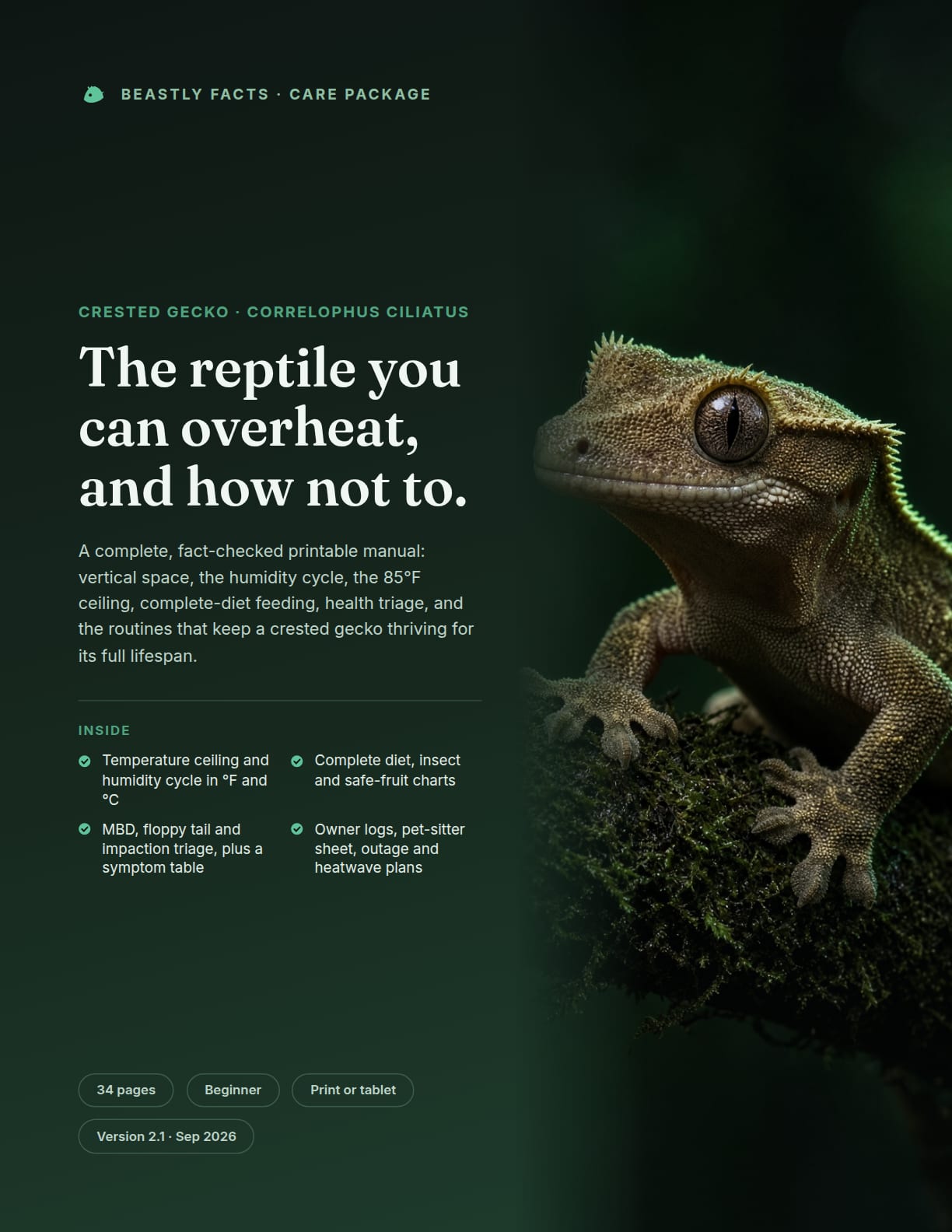
Crested Gecko Care Package
35 pages · PDF · $8.99
⚖️ Legal Guide
📰 Deep Dive
🦎 How Much Does a Crested Gecko Really Cost?
🦎 How to Handle a Crested Gecko (And Why Tail Loss Is Different Here)
🦎 Common Crested Gecko Health Issues and What Causes Them
🦎 Crested Gecko Tank Setup: Vertical Space, Humidity, and a Hard Temperature Ceiling
🦎 Crested Gecko Feeding: Schedule, Diet, and Why They Stop Eating
🦎 Crested Gecko Enrichment: Vertical Space, Cover, and Foraging
🩺 Health and More
💡 T5 vs Compact UVB: Which One Won't Fail Your Reptile
🔌 Reptile Emergency Plan: Power Outages, Travel, and Pet Sitters
💧 Reading Reptile Stool, Urates, and Hydration: A Daily Health Check
🧼 Salmonella and Reptile Hygiene: The Rules That Actually Matter
🌡️ Reptile Heating and Thermostats: Preventing Burns
🧫 Reptile Quarantine: Why New Snakes and Lizards Need Months, Not Weeks
🤩 Fun Facts
🦎 Gecko Toe Magic
Geckos can walk on walls and ceilings thanks to millions of tiny hair-like structures on their toes called setae. Each foot has about 500,000 of them, using molecular forces to stick to surfaces!
🦎 Rediscovered in 1994
Crested geckos were thought to be extinct until they were rediscovered in 1994 in New Caledonia! They're now one of the most popular gecko species in the hobby.
🦎 Climbing the Walls
Geckos have microscopic hairs on their feet that allow them to stick to surfaces and even run on ceilings! This amazing ability comes from van der Waals forces, making them one of nature's great climbers.