Reading Reptile Stool, Urates, and Hydration: A Daily Health Check
On This Page▾

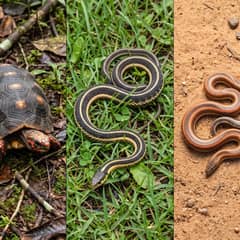
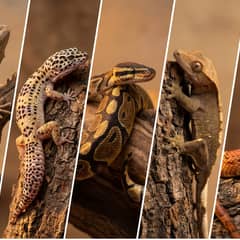
Every reptile keeper already does this daily without thinking much about it: scoop the enclosure, glance at what came out, move on. That five-second glance is also the most useful free health check available for a lizard, gecko, snake, turtle, or tortoise, because stool and urates change before almost anything else does. The check works across all three pet reptile groups (lizards, geckos included; snakes; and turtles and tortoises), though what counts as normal shifts with diet and species.
What Reptile Urates Are
Most reptiles handle nitrogen waste differently than mammals do. Instead of filtering it into liquid urine, the liver turns the nitrogen left over from protein digestion into uric acid, and the kidneys pass that uric acid out of the bloodstream. It comes out concentrated, as a white to cream, toothpaste-like paste: the white material in a reptile's droppings. Because most reptiles have a single cloacal opening shared by the digestive, urinary, and reproductive tracts, that urate paste comes out with, or right alongside, the solid stool in the same pass. It is part of the same bowel movement.
Turtles on land add a third part. A healthy land turtle's dropping is a semi-formed brown or greenish stool, a soft, chalky, off-white urate, and clear liquid urine passed along with them, so a wet patch beside it is normal.
Gout is the same system seen from the failure side: the disease that shows up when uric acid handling breaks down. How well a reptile manages that uric acid load depends on how much protein it eats, what kind, how often, and how hydrated it is. That last variable, hydration, is what makes the urate portion worth looking at every day.
The species this guide covers sort into the three groups like this:
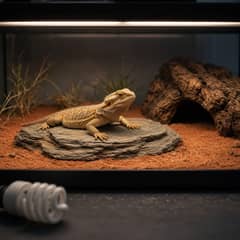
- Lizards: bearded dragon, ackie monitor, tegu, blue-tongue skink, fire skink, green anole, green iguana, Jackson's chameleon, veiled chameleon, savannah monitor, uromastyx, and the geckos (African fat-tail, crested, gargoyle, leaf-tailed, leopard, mourning, and tokay gecko)
- Snakes: ball python, boa constrictor, California kingsnake, corn snake, garter snake, hognose snake, milk snake, rosy boa
- Turtles and tortoises: box turtle, red-eared slider, red-footed tortoise, Russian tortoise, sulcata tortoise
Normal Stool Depends on Diet
There's no single "normal" reptile stool, and treating one shape as the universal standard is how owners miss problems in the other kind. Diet determines the look far more than the reptile family tree does.
Carnivorous and insectivorous reptiles, most of the lizards and geckos here plus every snake, produce a firmer, more defined stool. It often carries visible fragments of insect exoskeleton, since chitin is hard to digest, or, for snakes swallowing whole rodents, bits of fur, feather, or bone. Herbivorous reptiles run the opposite direction. Tortoises, along with plant-eating lizards like uromastyx and green iguana, are built to ferment fiber through a long gut, so their stool is fibrous, higher volume, and closer to a rabbit or horse's than to a leopard gecko's.
| Group | Typical solid stool | Normal urate | Worth knowing |
|---|---|---|---|
| Insect or meat eating lizards & geckos | Firm, well-defined log, often with visible exoskeleton fragments | White to cream paste, passed alongside the stool | Crested, gargoyle, and mourning geckos eat a meaningful amount of fruit-based commercial diet alongside insects, so their stool runs softer than a strict insectivore's like a tokay or leopard gecko |
| Herbivorous lizards (uromastyx, green iguana) | Larger volume, fibrous, holding visible plant material | Same white to cream paste, volume tracks the bigger plant-heavy meals | Judge these two against tortoises below, not against other lizards |
| Snakes | Semi-formed, sometimes carrying fur, bone, or feather from whole prey | White to cream paste, released with the stool | Garter snakes often eat fish or earthworms in place of rodents, so expect less fur and more mucus |
| Tortoises & box turtles | Fibrous and higher volume, like the herbivorous lizards above | White to cream paste, easiest to see right after a soak | Gritty or discolored urates are a bigger red flag here than almost anywhere else on this list |
| Aquatic turtles (red-eared slider) | Breaks apart in the water as loose pellets, logs, or chunks | Often not visible as a distinct paste at all: it disperses into the water | Judge hydration by water quality and basking behavior instead of a formed urate |
A few species sit between the two patterns. Box turtles and red-footed tortoises are omnivores, so their stool sits between the two extremes, and so does an adult bearded dragon's, since its diet shifts to about 80% greens as it grows up. The fruit-eating geckos in the table are the same kind of case. None of that makes any of these species abnormal. It's why the same word, "normal," describes different-looking output depending on what's eating.
Red Flags Worth a Vet Call, Across Every Group
A handful of signs mean the same thing regardless of which species you keep:
- Watery or completely unformed stool for more than one bowel movement in a row. A single soft stool after a big meal isn't alarming. Repeated watery stool is a different story, and it's a classic presentation of protozoal or parasitic disease in reptiles, such as Entamoeba invadens infection and coccidiosis.
- Visible blood, whether bright red, which points to fresh bleeding closer to the vent, or dark and tarry, which usually means digested blood from higher in the tract.
- Straining or visible discomfort passing waste. This is worth flagging on its own, since it can also point toward a cloacal problem, and veterinary emergency staff list it as a sign to watch for. A straining tortoise is the exception: treat it as an emergency, since it can mean a blocking cloacolith (covered below).
- An unusually strong or off smell, beyond what's normal for your own animal on its normal diet.
- Urates that are yellow, orange, or gritty and crystalline instead of smooth white to cream. This is the clearest red flag on this list. It signals dehydration at minimum, and in a more serious case, a urate or kidney problem, since uric acid handling depends directly on hydration status. It matters most in tortoises, where chronically granulated, dry, discolored urate is treated as clear evidence of extended dehydration. A gritty, crystalline urate comes from the same uric acid chemistry behind gout in reptiles. Pushed far enough by chronic dehydration or a high-protein diet, those crystals can deposit in joints or organs as articular or visceral gout.
Each is worth a vet call on its own; paired with lethargy or a skipped meal, call that week.
Urates Are Your Best Daily Hydration Check
Of every sign in a dropping, urate texture and color is the fastest hydration read a keeper has, faster than skin turgor or a weigh-in, and available every day without doing anything extra. Smooth, creamy, white to cream urate generally means a well-hydrated animal. Dry, hard, or gritty urate is the signal to act on: more misting for an arboreal species like a chameleon or crested gecko, and more soaking or a bigger, more accessible water dish for a terrestrial one, depending on how your species drinks and absorbs water. Wrinkled skin or sunken eyes are past that stage: a reptile showing either needs a vet right away.
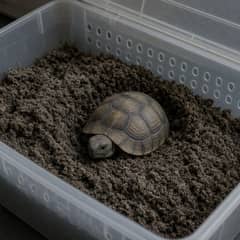
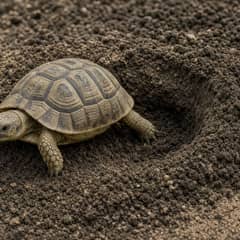
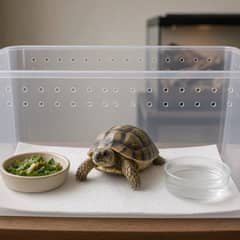
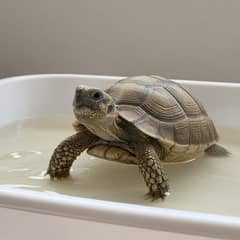
Tortoises deserve a specific note here, because many owners never see their tortoise's urates on a normal day. It lands in substrate, gets buried or kicked over, and goes unnoticed. A weekly soak for an adult, in a tub kept for the tortoise or one disinfected afterward, already standard husbandry for species like Russian tortoise and sulcata tortoise, is often when an owner gets eyes on the urate portion at all. This tracks tortoise physiology: wild tortoises often drink and urinate together during rain, and a warm soak reproduces that response in captivity. If a soak turns up urate that's gritty, granulated, yellow or orange, review water access and soak frequency right away instead of waiting to see if it resolves on its own. In a Russian tortoise or any other tortoise, chronic dehydration left uncorrected is the pathway toward kidney disease and gout.
Cloacoliths: What Gritty Urates Can Turn Into
Dry, gritty urate is an early warning, and a cloacolith is what it warns about. A cloacolith is an accumulation of urates, the crystalline portion of the urine, compacted into a stone sitting in the cloaca itself, the port that intestinal and urinary waste both exit through. Get one large enough and it blocks that port outright, so nothing can pass. A bladder stone is a different thing: it forms inside the bladder, not the cloaca, though it can cause the same straining.
The presentation is specific enough that an owner can recognize it. A tortoise with one strains to produce a bowel movement and vocalizes as it strains. That second half is the part worth pausing on, because noise from an animal visibly working at something sounds like effort more than a symptom, and it gets waved off. It shouldn't be. A blocking cloacolith is a true emergency, and the treatment is entirely a clinic procedure: sedation, pain relief, and forceps to break the stone down and flush it out of the cloaca. There is no home version of that. A soak will not dislodge a stone that is already wedged, and the wait-and-see approach that's reasonable for a soft stool is the wrong instinct here. Straining can also end in a vent prolapse.
Cloacoliths are documented most clearly in tortoises. Neither kind of stone forms overnight: solid uric acid builds up in the bladder and kidneys after a stretch of poor hydration or no water. For an indoor tortoise, regular soaking is the practical answer to that dehydration. It's the same soak that shows you the urates, and how often a tortoise needs soaking depends on age and species: daily for a hatchling, twice a week for a Russian tortoise juvenile, and about weekly for an adult of a dry-country species. Tortoises kept dry, fed too much protein, or given no standing water to drink from are the ones that end up with stones, which is why hydration is a husbandry priority for a big arid-habitat species like the sulcata tortoise.
How Often Is Normal Depends on the Animal
Frequency swings hard by species, body size, and feeding schedule, so neither "once a day" nor "once a week" is a target that fits every pet reptile. For snakes specifically, it runs directly on feeding: a snake generally won't have a bowel movement until a meal is mostly digested, so an adult corn snake fed every 14 to 21 days, or an adult California kingsnake fed every 10 to 14, tends to defecate on close to that same rhythm. An adult boa constrictor fed every 2 to 4 weeks, or any snake that just took an unusually big meal, can go that long between stools without anything being wrong at all. Day-active lizards, most geckos, and turtles and tortoises generally go every few days to about once a week as adults, with one exception that matters: a bearded dragon that has gone five or more days without a stool needs a vet visit. Hatchlings and juveniles across every group go more often still, since they eat more often too.
The number that matters is your own animal's baseline. A meaningful gap beyond it, or a sudden jump in frequency in either direction, is the signal to watch. A fixed count borrowed from a different species is no guide.
A Red-Eared Slider Needs a Different Kind of Check
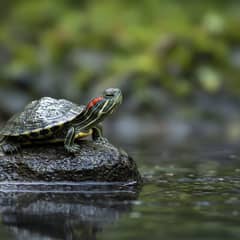
Reading stool and urate assumes you can see them clearly, which holds for a lizard, gecko, snake, or land tortoise but not for an aquatic species. A red-eared slider defecates directly into the water it lives in, where it breaks apart into loose pellets, logs or chunks that current and filtration scatter within minutes. The urate portion often never shows up as a distinct paste at all. It disperses straight into the water instead of sitting beside a formed stool the way it would for a tortoise or a bearded dragon.
That's no flaw in the animal. It's what elimination looks like for a species that lives and defecates in the same water. Judge hydration and gut health by proxy instead: watch water clarity between changes, confirm the turtle is eating and basking normally, and check right after a scheduled water change, when a fresh dropping is briefly visible and easier to evaluate.
A Five-Second Look at Every Scoop
The check costs nothing and adds no time, because the scoop is already part of the routine. What it needs is your own animal's normal, learned on ordinary days: diet-typical stool and smooth white to cream urate. Against that normal, one soft stool after a big meal can wait, while a change that persists is a reason to call a vet.
Sources & Further Reading
Last reviewed 14 Sep 2026 · 5 sources
- Merck Veterinary Manual: Routine Health Care of Reptiles; Disorders and Diseases of Reptiles
- VCA Animal Hospitals: Reptiles, Gout; Common Diseases of Tortoises
- ReptiFiles: Chronic Dehydration in Pet Reptiles: A Silent Threat
- Zen Habitats: Your Healthy Turtle
- Pollock C, DVM (2017). Reptile Emergency & Critical Care Summary Page. LafeberVet
Frequently Asked Questions
What exactly are reptile urates?
The reptile version of urine. Most reptiles get rid of nitrogen waste as uric acid paste instead of liquid, so it shows up as the white to cream part of a dropping, passed through the same cloacal opening in the same pass as the stool.
Why does my tortoise's poop look so different from my bearded dragon's?
Diet, not species quirk. Tortoises are herbivores with a long gut built for fermenting fiber, so their stool is fibrous and bulky. A bearded dragon's diet flips from about 80% insects as a juvenile, with a firm stool often showing exoskeleton, to about 80% greens as an adult, whose stool sits between the two.
What color urates mean my reptile might be dehydrated?
Yellow, orange, or gritty and crystalline urates instead of smooth white to cream point to dehydration, and in a more serious case, a urate or kidney problem. Urate color ties directly to hydration and protein handling, and it's the sign worth taking most seriously in tortoises specifically.
How often should my reptile poop?
It depends on species, size, and feeding schedule, and a snake's rhythm tracks its meals, since it won't go until one is mostly digested. Most day-active adult lizards, geckos, turtles and tortoises go every few days to about weekly, juveniles more often. The bearded dragon is the exception: five or more days without a stool needs a vet.
Can I check my red-eared slider's stool and urates the same way I'd check a land tortoise's?
No. A slider leaves no formed dropping to read, so the check moves to water clarity, appetite and basking, plus a look in the minutes after a water change.
When should a stool or urate change prompt a vet visit?
Repeated watery stool, blood, straining, a strong or unusual smell, and gritty or off-color urate each count. Paired with lethargy or a skipped meal, any one of them is worth a vet call the same week.

Written by Michael Ryan
Mike keeps two rescued bearded dragons, Dex and Cera, and writes the care guides on BeastlyFacts from his own research and mistakes. He is not a veterinarian.
More about Michael Ryan →You May Also Like


Subscribe - it's free
An occasional email when something new is worth your time. No spam.
Health and More