Fire Skink Enclosure Setup: Deep, Moist Substrate Above Everything Else
On This Page▾

Fire skink care comes down to one central skill more than any other: keeping deep substrate permanently moist for a species that spends most of its time burrowed within it.
Enclosure Size
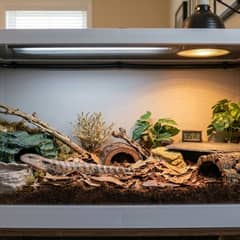
36 inches long by 18 inches wide by 18 inches tall as a minimum for a single adult, larger is genuinely worth it since this is an active species. Floor space matters more than height. Don't house multiple fire skinks together, especially two males, real fighting risk.
Temperature
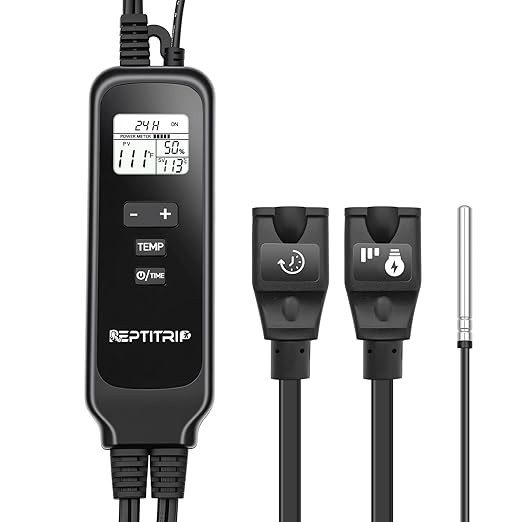
Ambient 80 to 86°F, with a basking spot around 92 to 96°F, and a night drop to about 70°F, 65°F is acceptable. A basking bulb, halogen works well, provides daytime heat, run through a dimming thermostat to hold that basking range precisely, and some keepers add an under-tank heater on the warm side as well.
Humidity
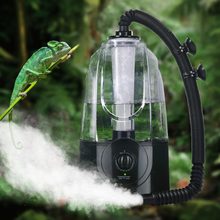
60 to 70% ambient, higher overnight. Achieved through misting once or twice daily, keeping the substrate itself consistently moist, and providing a humid hide lined with sphagnum moss. An automated misting system or fogger is a genuinely useful addition at night if you want to maintain humidity without constant manual misting. Monitor with a digital probe hygrometer rather than guessing, this connects directly to the respiratory infection and shedding problems dry air causes.
Substrate: The Single Most Important Decision Here
This is worth real attention since it's the defining requirement for this fossorial species. Provide 4 to 6 inches of a loose, moisture-retentive tropical mix, a DIY blend of roughly 40% topsoil, 40% coconut fiber, and 20% fine sand works well, topped with leaf litter or sphagnum moss. The substrate needs to stay damp, not waterlogged, and needs to hold a burrow shape. Avoid dry, sand-only setups entirely, they simply don't support how this species actually lives.
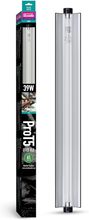
Published UVB targets for this species split, from Ferguson Zone 2 at UVI 0.7 to 1.0 up to UVI 3.0 to 4.0 at the basking area. The 5 to 6% linear T5 below sits at the lower end of that, which suits a forest-floor animal that spends most of its day under leaf litter and comes out to bask in patches rather than in open sun.
Lighting
UVB offers real benefit though is technically optional if diet is properly supplemented. A lower-output UVB tube in the 5 to 6% range, positioned so the basking area sits 7 to 10 inches below the lamp, replaced every 12 months, is a reasonable, well-supported choice.
Diet Basics
An insectivore, fed live. Full-grown adults eat two to three times a week depending on body condition, juveniles daily to every other day. At each feeding, offer as many insects as the skink can eat in about five minutes, with no feeder larger than the width of its own head.
Crickets, dubia and discoid roaches, mealworms and superworms with their beetles, earthworms, hornworms, silkworms and isopods all work, and variety across the week matters more than any single feeder. Dust with a calcium powder at nearly every feeding, and add a reptile multivitamin to the rotation.
Release the insects into the leaf litter rather than dropping them in a dish, so finding them is the activity. Nothing has been published on this species itself; the nearest evidence is a study on another skink, where live feeders cut the time spent hiding.
The Non-Obvious Requirement: Build for a Species You Won't Always See
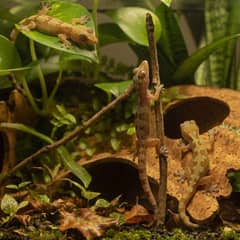
Because this is a burrowing animal, a fire skink kept in a sparse, minimally furnished enclosure will simply stay hidden most of the time, not because something's wrong, but because there's nowhere secure to be visible. Deep substrate, real cover, and permanent moisture aren't just about physical health, they're what actually lets you see and enjoy this striking lizard rather than staring at empty substrate. If you've kept the drier-climate blue-tongued skink, this is close to the opposite setup philosophy despite both being skinks.
Sources & Further Reading
Last reviewed 15 Sep 2026 · 3 sources
❓ Frequently Asked Questions
What size enclosure does a fire skink need?
36 by 18 by 18 inches minimum for one adult, and bigger is worth it for an active species. Floor space beats height. Don't house two fire skinks together, especially two males: real fighting risk.
What temperature does a fire skink enclosure need?
Ambient 80 to 86°F, a basking spot at 92 to 96°F, and a night drop to about 70°F, with 65°F acceptable. A halogen basking bulb handles the daytime heat; some keepers add an under-tank heater on the warm side.
What substrate does a fire skink need?
4 to 6 inches of a loose, moisture-retentive tropical mix. A DIY blend runs about 40% topsoil, 40% coconut fiber, 20% fine sand, topped with leaf litter or sphagnum moss. Keep it damp rather than waterlogged, and firm enough to hold a burrow.
Does a fire skink need UVB?
A real benefit, though optional if the diet is properly supplemented. Use a lower-output UVB tube at 5 to 6%, with the basking area 7 to 10 inches below the lamp, and replace it every 12 months.
Why does my fire skink stay hidden all the time?
Almost always because the substrate is too shallow or the enclosure is too sparse. Fire skinks are burrowers, and in a bare setup the only option is to wedge under a hide and stay there. Deep substrate, real cover, and permanent moisture are what let you see this species rather than staring at empty tank.
📰 More on the Fire Skink
📘 Fire Skink care guide
🦎 How Much Does a Fire Skink Really Cost?
🦎 How to Handle a Fire Skink (This Isn't the Blue-Tongued Skink)
🦎 Common Fire Skink Health Issues
🦎 Fire Skink Feeding: Five Minutes of Insects in the Leaf Litter, Twice a Week as an Adult
🦎 Fire Skink Enrichment: The Study Where Skinks Stopped Hiding
🛒 Recommended Gear
As an Amazon Associate, we earn from qualifying purchases through the links above - at no extra cost to you.
Written by Michael Ryan
Mike keeps two rescued bearded dragons, Dex and Cera, and writes the care guides on BeastlyFacts from his own research and mistakes. He is not a veterinarian.
More about Michael Ryan →Comments
No comments yet - be the first!