Bearded Dragon
Pogona vitticeps
On This Page▾
🌍 Overview
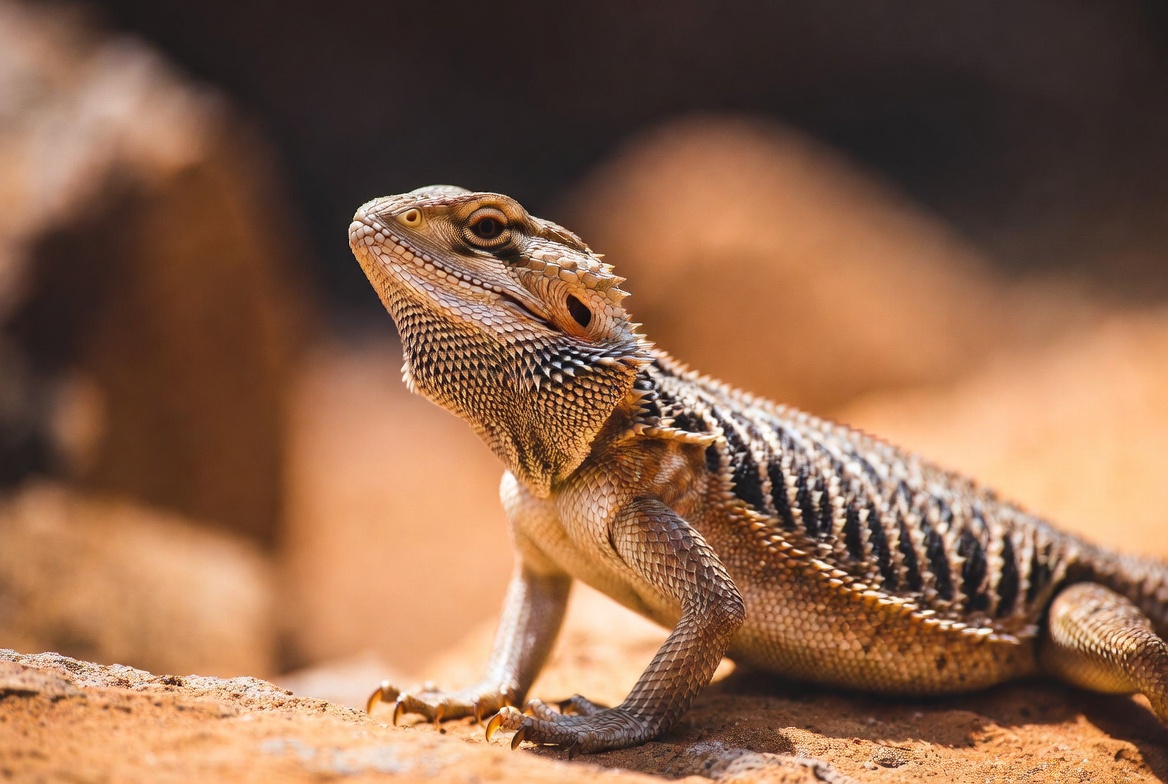
The inland bearded dragon is native to Australia's arid and semi-arid interior, where it basks on rocks and fence posts in open woodland and scrubland. They take their name from the expandable, spiny throat pouch - the "beard" - which darkens to black when threatened or excited. Among the most social of reptile pets, beardies are capable of forming genuine bonds with their keepers and are often described as having distinct personalities.
📋 Quick Facts
Native Range
Australia (central and eastern interior)
Natural Habitat
Arid woodland, scrubland, and rocky desert
Adult Size
16-24 inches (40-60 cm) including tail
Wild Diet
Omnivore - insects, vegetation, flowers, and small vertebrates
Wild Lifespan
5-8 years (predation and disease cut wild lifespans well short of the 10-15 years typical in captivity)
Conservation Status
Least Concern (IUCN)
📜 History
Australia banned the commercial export of live native animals in 1982, and no legal supply has left the country since. Every bearded dragon abroad therefore descends from stock that got out before or around that line, and large-scale breeding only took hold in Europe and the United States during the 1990s, which is when the species reached the American pet market in quantity. The ban did not end the traffic. A study in Conservation Biology surveying 152 websites and 27 social media pages found 163 Australian reptile species offered for sale overseas, more than one in six of the country's reptile fauna, with bearded dragons among the most commonly listed, and seizure records name at least 58 reptile species targeted for illegal export since the ban took effect.
⚖️ Compare
Bearded Dragon
Human
Adult Size
16-24 inches (40-60 cm) including tail
5-6 feet (150-185 cm); ~135-200 lbs
Wild Lifespan
5-8 years (predation and disease cut wild lifespans well short of the 10-15 years typical in captivity)
~73 years (global average)
Wild Diet
Omnivore - insects, vegetation, flowers, and small vertebrates
Omnivorous - eats just about anything
Native Range
Australia (central and eastern interior)
Global - originated in Africa roughly 300,000 years ago
Natural Habitat
Arid woodland, scrubland, and rocky desert
Everywhere from arctic tundra to tropical megacities
Conservation Status
Least Concern (IUCN)
Least Concern (8+ billion and counting)
🧠 Test Yourself
What's the Bearded Dragon's native range?
🤩 Fun Facts
🦎 Mood Ring Lizards
Bearded dragons can change color based on their mood and body temperature! They darken when cold or stressed, and lighten up when warm and happy. Their 'beard' puffs out and turns black when they're showing off.
🦎 The Wave of Peace
Bearded dragons wave one arm as a submissive gesture to other dragons. It's their version of 'no threat here!' and a polite greeting in dragon language.
🦎 Temperature-Switch Dragons
Bearded dragons have a clever built-in trick: while genetics set their sex at conception, incubating eggs above 32°C (about 90°F) can turn genetic males into fully functional females. It's nature's smart way to balance populations in hot climates!
📖 Care Guide
Bearded Dragon Care Guide
The chill, cuddly lizard that changes color with its mood!
⚖️ Where it is legal
6 US jurisdictions restrict this species, from outright bans to permits. Every one quotes the rule it comes from.
Subscribe - it's free
New animal facts and care guides straight to your inbox. No spam. 🐾
📰 Deep Dive
🦎 How Much Does a Bearded Dragon Really Cost?
🦎 How to Handle a Bearded Dragon Without Stressing It Out
🦎 Common Bearded Dragon Health Issues and What Causes Them
🦎 Bearded Dragon Tank Setup: Temperature, UVB, and Everything Else
🦎 Bearded Dragon Feeding: Schedule, Diet, and Why They Stop Eating
🦎 Bearded Dragon Enrichment: Climbing, Digging, and Safe Free-Roam
🦎 Bioactive Setups for Bearded Dragons
🦎 The Bearded Dragon Starter Shopping List (Buy Once, Cry Once)
🥬 Bearded Dragon Safe Foods List: Staple, Occasional, and Never Foods
🦎 Bearded Dragon Brumation: Triggers, the Routine, and When to Worry
🦎 Female Bearded Dragons: Eggs, Lay Boxes, and Egg Binding
🦎 Bearded Dragon Growth, Weight, and At-Home Health Checks
🦎 10 Surprising Bearded Dragon Facts
🩺 Health and More
💡 T5 vs Compact UVB: Which One Won't Fail Your Reptile
🔌 Reptile Emergency Plan: Power Outages, Travel, and Pet Sitters
💧 Reading Reptile Stool, Urates, and Hydration: A Daily Health Check
🧼 Salmonella and Reptile Hygiene: The Rules That Actually Matter
🌡️ Reptile Heating and Thermostats: Preventing Burns
🧫 Reptile Quarantine: Why New Snakes and Lizards Need Months, Not Weeks
🏡 Outdoor Reptile Housing: Pens, Predators, and What Actually Kills Them
🦎 Understanding Reptile Shedding (Ecdysis)
🦎 Five Reptiles That Actually Make Sense for Beginners
🦎 Uromastyx vs. Bearded Dragon: Which Desert Lizard Fits Your Setup
🦎 Bearded Dragon vs. Leopard Gecko: Which Beginner Reptile Should You Get
🤓 Did You Know?
Bearded dragons wave at each other as a sign of submission, basically saying 'Hey, you're the boss!'
📖 Short Story
There's a whole fiction series about a bearded dragon:
Chronicles of Dex: The Sun, the Glass, and the Cricket That Got Away
Explore More