How Much Does an African Fat-Tailed Gecko Really Cost?
On This Page▾

African fat-tailed geckos cost more than most beginner geckos, and morphs push that number considerably higher.
The Animal Itself: $75 to $600, Averaging $100 to $200 for Normals
Normal, wild-type patterned animals are the cheapest, commonly around $100. Morphs change the price substantially: mid-range combinations like Amelanistic or single-gene Oreo animals often run $200 to $400, while rare or high-end combos, Whiteout, Zulu, or stacked multi-gene animals, can reach $600 to $1,000 or more, occasionally higher for truly rare lines.
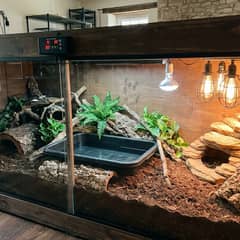
Upfront Setup: Roughly $200 to $450
| Item | Cost Range |
|---|---|
| 30x12x12 in or larger enclosure (20-gallon long minimum, 40-gal breeder ideal) | $90 - $170 |
| Under-tank heater with quality thermostat | $40 - $70 |
| 3 hides (warm, cool, moist) | $20 - $35 |
| Damp sphagnum moss for moist hide | $5 - $10 |
| Cypress mulch or coconut fiber substrate | $15 - $40 |
| Digital thermometer (IR gun ideal) | $15 - $30 |
| Shallow water dish | $8 - $15 |
| Low-output UVB (optional but beneficial) | $45 - $80 |
Prices last checked September 2026 at Josh's Frogs and PetSmart. Retail prices move; treat the table as a snapshot, not a quote.
The thermostat isn't optional, it's what keeps the heat mat from overheating the enclosure. Most complete setups land in the $200 to $450 range, not including the animal.

Ongoing Costs: Roughly $10 to $25 a Month
Gut-loaded crickets, dubia roaches, and occasional mealworms, plus calcium and multivitamin supplements. Electricity for a heat mat and optional UVB is modest, so most of the monthly spend is food.

The "fat tail" isn't just a name, it's a real energy reserve. Like a leopard gecko, this species stores fat in its tail and can draw on it during lean periods, which is part of why a healthy fat-tail's tail should always look plump rather than thin.
Vet Costs
A routine exam commonly runs $35 to $105, plus a fecal test around $65 to $110. Illness or emergency visits with diagnostics typically run $150 to $300 or higher, with surgical intervention, for example egg-binding, costing more still.
Lifespan: A Long Commitment
15 to 20 years is the commonly cited range, and the best-documented figure, a maximum recorded captive lifespan in the AnAge longevity database, is just over 16 years. Either way, it's a long-term commitment, well beyond many other beginner reptiles, including the leopard gecko this species is constantly compared to.
If you're weighing the two, the leopard gecko cost guide is the side-by-side: same heat mat, same feeders, a few dollars apart on the animal. Among the other easygoing geckos, the gargoyle skips the heating bill and the mourning gecko skips the feeder bill, which is where the real differences show up.
Three Geckos, Three Very Different Pets looks at all three together.
Sources & Further Reading
Last reviewed 26 Jul 2026 · 2 sources
❓ Frequently Asked Questions
How much does an African fat-tailed gecko itself cost?
Normals are the cheapest at commonly around $100, inside a typical range of $75 to $600. Mid-range morphs such as Amelanistic or single-gene Oreo often run $200 to $400. Whiteout, Zulu, and stacked multi-gene animals can reach $600 to $1,000 or more.
What does a full setup cost before the gecko?
Roughly $200 to $450. That covers a 20-gallon long enclosure (40-gallon breeder is a better choice), an under-tank heat mat and thermostat, optional low-output UVB, substrate, three hides, a thermometer/hygrometer, and a water dish.
What are the ongoing monthly costs?
Roughly $10 to $25 a month, mostly feeders: gut-loaded crickets, dubia roaches, occasional mealworms, plus calcium and multivitamin supplements. Heat mat and optional UVB electricity is modest.
How long do African fat-tailed geckos live, and how does that affect budgeting?
15 to 20 years is the commonly cited range, and the best-documented figure is a maximum recorded captive lifespan of just over 16 years. Either way it is a long-term commitment, well beyond many other beginner reptiles.
📰 More on the African Fat-Tailed Gecko
📘 African Fat-Tailed Gecko care guide
🦎 How to Handle an African Fat-Tailed Gecko
🦎 Common African Fat-Tailed Gecko Health Issues
🦎 African Fat-Tailed Gecko Tank Setup: Built for the Ground, Not the Branches
🦎 African Fat-Tailed Gecko Feeding: Schedule, Diet, and Why They Stop Eating
🦎 African Fat-Tailed Gecko Enrichment: The Closest Cousin Was Studied
🛒 Recommended Gear
As an Amazon Associate, we earn from qualifying purchases through the links above - at no extra cost to you.
Written by Michael Ryan
Mike keeps two rescued bearded dragons, Dex and Cera, and writes the care guides on BeastlyFacts from his own research and mistakes. He is not a veterinarian.
More about Michael Ryan →Comments
No comments yet - be the first!