Leopard Gecko
Geckos
The smiling gecko that's perfect for first-time reptile parents!
On This Page▾
🤓 Did you know? Unlike most geckos, leopard geckos have eyelids and can blink and wink at you! They also store fat in their chunky tails for energy reserves.

🗓️ The first week
The numbers a new owner needs in the first week, each from the article it links to. Rows with no link come from the encyclopedia.
- Day one
- A new gecko is quarantined 3 to 6 months away from any reptile you already keep, on paper towel, with its own tools and a vet workup inside that window.Quarantine guide →
- Enclosure
- 36x18x18 inches is the adult minimum, well past the old 20-gallon-long standard. A hatchling can start in a 10-gallon. Floor space counts for more than height.Setup guide →
- Heat
- A heat mat under the warm hide, always on a thermostat, with the probe inside the warm hide and the mat's surface checked with an infrared gun. Skip overhead heat lamps as the primary source.Temperature guide →
- Temperatures
- Warm hide floor 88 to 92°F, warm side air 80 to 84°F, cool side 70 to 77°F. Nights in the 70s, with 65°F the floor.Temperature guide →
- Hides
- Three, not one: a warm dry hide, a cool dry hide, and a humid hide lined with damp substrate on the cool or middle side.Setup guide →
- Humidity
- 30 to 40% in the enclosure, 70 to 80% inside the humid hide only. Raising the whole enclosure to hit that number is a respiratory infection risk.Setup guide →
- UVB
- Optional but worth doing, kept low: a UVI of 0.5 to 1.5 at the basking spot for normally pigmented geckos, 0.5 to 0.7 or lower for albino and other pale morphs.Setup guide →
- Floor
- Paper towel or tile. Never calcium sand.Setup guide →
- Feeding schedule
- Hatchlings daily, juveniles daily or every 1 to 2 days, adults every 2 to 4 days once the tail is as thick as the neck.Feeding guide →
- Calcium
- Gut-load feeders for 24 to 48 hours, dust with plain calcium at most feedings for juveniles and breeding females and 2 to 3 times a week for adults, calcium with D3 a couple of times a week if there is no UVB, a multivitamin about once a week.Feeding guide →
- Not eating
- A healthy adult with a plump tail can go a couple of weeks. A visibly thinning tail is the signal to stop waiting and see a reptile vet.Feeding guide →
- Handling
- Wait one to two weeks, and until it eats normally and stops fleeing. Then 5-minute sessions every other day, building to 10 to 20 minutes. Never by the tail, never during a shed.Handling guide →
- Budget
- $250 to $400 to set up, $20 to $50 a month. An annual wellness exam runs $85 to $105; sick visits $100 to $800 or more.Cost guide →
- Adult size
- 7 to 11 inches.
- Lifespan
- 15 to 20 years in captivity, some longer.
- Hygiene
- Wash hands with soap right after any contact, keep the gecko out of the kitchen, and never clean the enclosure in a kitchen sink or a bathtub people use.Hygiene guide →
- Power outage
- 70°F is the normal night low. Below 65°F, add heat, move the animal, or call the sitter.Emergency plan →
🚨 Emergency card
Call the vet now if you see any of these.
- A thinning "stick" tail combined with weight loss
- Jaw softness or visible deformity
- Tremors
- Any breathing difficulty
- Drooling or pus around the mouth
- Appetite loss that persists more than a few days
- Prolapse
- Retained shed that's swollen, darkened, or won't clear from the eyes or toes
A reptile-experienced vet, found before you need one. Treat a tail thinning to a stick as cryptosporidiosis until a fecal PCR says otherwise: one clear test doesn't fully rule it out, and there is no cure.
📰 Where to go next
How Much Does a Leopard Gecko Really Cost?
$20 to $45 for the gecko, $250 to $400 for the setup, $20 to $50 a month, and what a sick visit really costs.
Leopard Gecko Tank Setup: What Your Gecko Actually Needs
The 36x18x18 minimum, belly heat on a thermostat, the three-hide system, and the humid hide that prevents most shedding problems.
The Complete Leopard Gecko Temperature Guide
Every zone's target, mat versus overhead, the thermostat rule, night temperatures, and the signs the numbers are wrong.
Leaf-Tailed Gecko Feeding: As Much as It Eats in a Night, and the Insects Come Out by Morning
As much as it eats in a night, daily young and every other day adult, insects sized to the species, dusted lightly, and the mist as the water supply.
How to Handle a Leopard Gecko Safely
Settling-in time, the two-handed scoop, the stress signs, and why you never grab the tail.
Common Leopard Gecko Health Issues and What to Watch For
Metabolic bone disease, cryptosporidiosis, impaction, stuck shed, egg binding, prolapse, and the list that means the vet today.
Leopard Gecko Enrichment: What the Research Actually Supports
What the research says, why the three hides come first, hunting presentation, climbing and dig options, and a priority order.
🛒 What to buy
Prices and the reasoning behind each item are in How Much Does a Leopard Gecko Really Cost?.
❓ Frequently Asked Questions
What's the one setup detail people get wrong most often?
Humidity. Keep the general enclosure at 30 to 40%, but separately provide a dedicated humid hide at 70 to 80% humidity. Raising humidity across the whole enclosure to hit that number instead just creates a respiratory infection risk.
Why has my leopard gecko stopped eating?
Most of the time it's normal: a shed cycle, brumation in cooler months, a recent move, or just a temperature that's a little too low for proper digestion. Check the warm side of the enclosure first, that's the single most common fixable cause. It only becomes a concern if it's paired with visible weight loss, a thinning tail, lethargy, or it drags on for weeks with no improvement.
What is stick tail disease in leopard geckos?
It's the common name for cryptosporidiosis, a severe and highly contagious parasite with no cure. Around half of captive leopard geckos may carry it, and it causes the tail to thin out to a stick shape along with emaciation and appetite loss. Symptomatic cases have a mortality rate around 50%.
Subscribe - it's free
New care guides straight to your inbox. No spam. 🐾
🖨️ Printable Guide
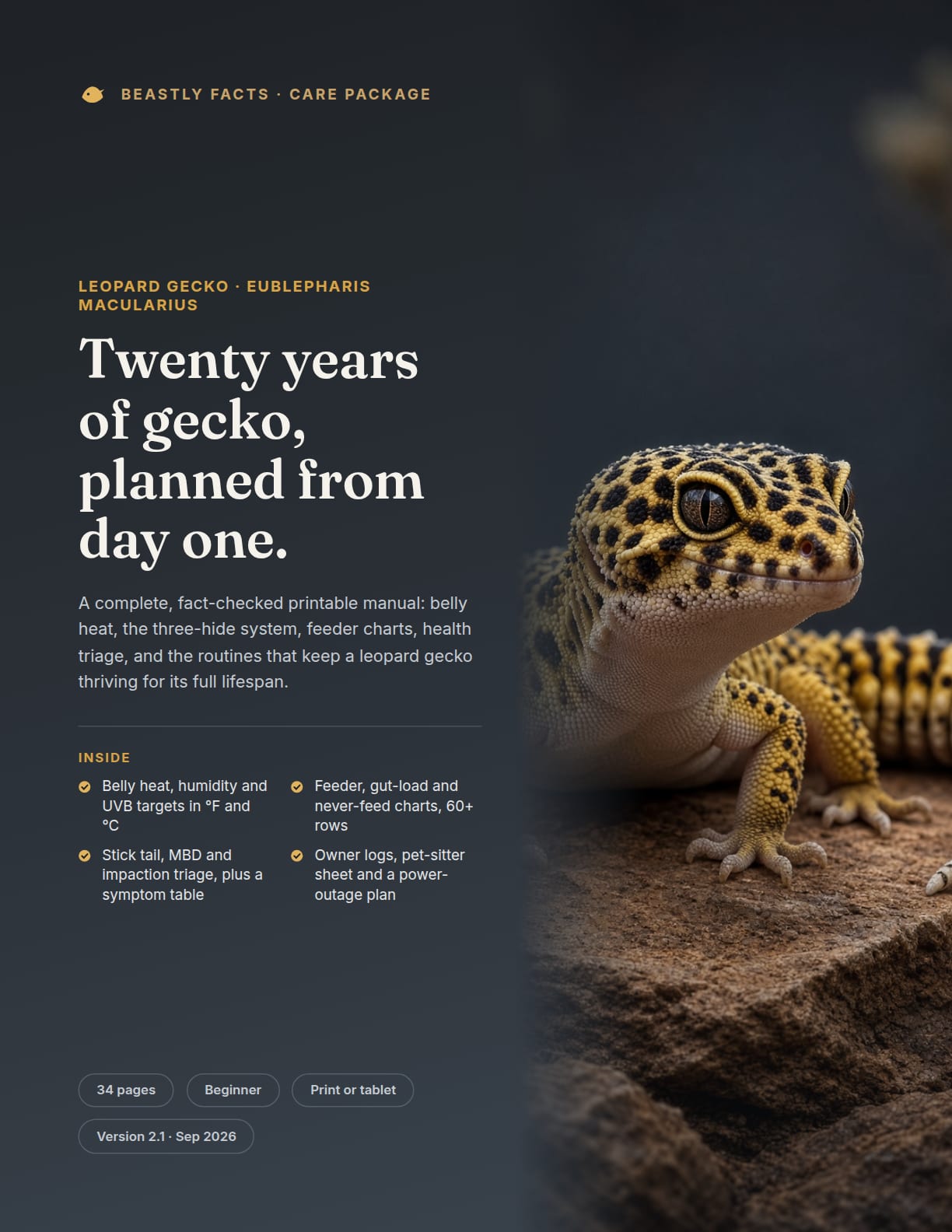
Leopard Gecko Care Package
35 pages · PDF · $8.99
⚖️ Legal Guide
📰 Deep Dive
🦎 How Much Does a Leopard Gecko Really Cost?
🦎 How to Handle a Leopard Gecko Safely
🦎 Common Leopard Gecko Health Issues and What to Watch For
🦎 Leopard Gecko Tank Setup: What Your Gecko Actually Needs
🦎 Leopard Gecko Feeding: Schedule, Diet, and Why They Stop Eating
🦎 Leopard Gecko Enrichment: What the Research Actually Supports
🩺 Health and More
💡 T5 vs Compact UVB: Which One Won't Fail Your Reptile
🔌 Reptile Emergency Plan: Power Outages, Travel, and Pet Sitters
💧 Reading Reptile Stool, Urates, and Hydration: A Daily Health Check
🧼 Salmonella and Reptile Hygiene: The Rules That Actually Matter
🌡️ Reptile Heating and Thermostats: Preventing Burns
🧫 Reptile Quarantine: Why New Snakes and Lizards Need Months, Not Weeks
🤩 Fun Facts
🦎 Gecko Toe Magic
Geckos can walk on walls and ceilings thanks to millions of tiny hair-like structures on their toes called setae. Each foot has about 500,000 of them, using molecular forces to stick to surfaces!
🦎 Tail Fat Reserves
Leopard geckos store fat reserves in their thick tails. A skinny tail can signal poor health or stress. A healthy gecko should have a plump, rounded tail.
🦎 Climbing the Walls
Geckos have microscopic hairs on their feet that allow them to stick to surfaces and even run on ceilings! This amazing ability comes from van der Waals forces, making them one of nature's great climbers.