Mourning Gecko Tank Setup: A Small, Humid, Planted Display Vivarium
On This Page▾

Mourning gecko setups look more like a miniature planted terrarium than a typical reptile tank, this is a display colony, not a single-animal enclosure.
Enclosure Size
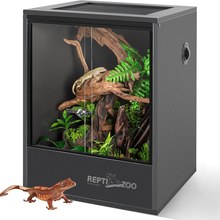
A 12x18x18 inch, tall, front-opening enclosure works for a pair or small group of up to about three to five. Since mourning geckos self-multiply, plan on eventually stepping up to something larger, an 18x18x24 inch enclosure comfortably houses a bigger group as your colony grows. Height matters more than floor space for this arboreal species.
Temperature
A daytime ambient temperature of 70 to 80°F with a warm basking spot up to 85°F works well, dropping to 65 to 72°F at night. At normal room temperature, most homes need no dedicated heat source at all. Only add gentle supplemental heat if your room consistently runs cold.
Humidity
Keep relative humidity between 60 and 80%, with brief peaks up to 90% via daily mistings. Let the enclosure dry slightly afterward to prevent mold and respiratory issues, and use a moisture-retentive substrate to help hold humidity between mistings.
Substrate
Coconut coir, or a coir and sphagnum moss blend, works well and supports a bioactive-style setup nicely. Keep it appropriately moist without becoming waterlogged.

Lighting
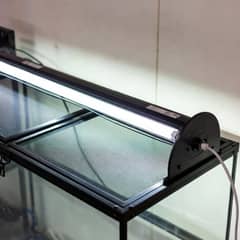
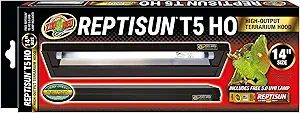
Low-output UVB (in the 5 to 6% range) is strongly recommended given how frequently females lay eggs and the resulting calcium demand. Run a standard 12-hour light cycle.
The Detail That Matters More Than Almost Anything Else: Escape-Proofing
Hatchling mourning geckos measure under an inch long, small enough to slip through ventilation gaps and around door frames that would easily contain nearly any other gecko species. Once loose in a house, they're extremely difficult to recover.
Before adding any mourning geckos to a new enclosure, seal every gap you can find with aquarium-safe putty or a similar barrier. This single step prevents the most common and most frustrating mourning gecko keeping mistake.
Furnishings
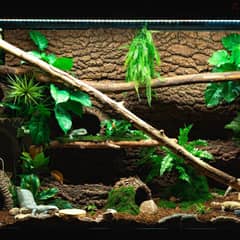
Dense foliage, either live plants (pothos and similar low-light species work well) or artificial, plus cork bark and branches for climbing. Provide multiple feeding stations, a dominant female may guard a single food dish and prevent others from eating. Adult mourning geckos may eat hatchlings, so if intentionally breeding, plan for separating young animals as they appear.

Gargoyle geckos are commonly fed the same complete crested gecko diet powder as mourning geckos, and the gargoyle gecko tank setup guide shows how a very different-sized species furnishes a similar diet station.
Our complete guide to UVB lighting explains why glass blocks UVB and why a bulb needs replacing long before it stops looking bright.
Sources & Further Reading
Last reviewed 25 Jul 2026 · 1 source
❓ Frequently Asked Questions
What size enclosure does a mourning gecko need?
A tall, front-opening 12x18x18 holds a pair or a small group of three to five. Because the colony multiplies on its own, plan to move up: 18x18x24 houses a bigger group comfortably. For an arboreal species, height counts for more than floor space.
Does a mourning gecko need a heat source?
Usually not. Days at 70 to 80°F with a basking spot up to 85°F, nights at 65 to 72°F, and most homes hit that at room temperature. Add gentle supplemental heat only if the room runs cold.
What humidity does a mourning gecko need?
60 to 80%, with brief peaks to 90% when you mist daily. Let it dry back a little between mistings to keep mold and respiratory problems away, and use a moisture-retentive substrate to hold the range.
What's the single most important setup detail for a mourning gecko?
Escape-proofing. Hatchling mourning geckos are small enough to slip through ventilation gaps and door frames that would contain nearly any other gecko species. Seal every gap you can find with aquarium-safe putty or a similar barrier before adding any mourning geckos to a new enclosure.
Do mourning geckos need UVB?
Low-output UVB at 5 to 6% is strongly recommended, since females lay often and the calcium demand follows. Keep a standard 12-hour light cycle.
📰 More on the Mourning Gecko
📘 Mourning Gecko care guide
🦎 How Much Does a Mourning Gecko Really Cost?
🦎 Should You Handle a Mourning Gecko? Realistically, No
🦎 Common Mourning Gecko Health Issues (Egg-Laying Changes the Picture)
🦎 Mourning Gecko Feeding: Schedule, Diet, and Why They Stop Eating
🦎 Mourning Gecko Enrichment: The Only One You Should Keep in Groups
🛒 Recommended Gear
As an Amazon Associate, we earn from qualifying purchases through the links above - at no extra cost to you.
Written by Michael Ryan
Mike keeps two rescued bearded dragons, Dex and Cera, and writes the care guides on BeastlyFacts from his own research and mistakes. He is not a veterinarian.
More about Michael Ryan →Comments
No comments yet - be the first!