Hissing Cockroach Enrichment: Somebody Built Them a Welfare Framework
On This Page▾

We nearly wrote this guide saying no research exists. It does, and it is more sophisticated than what most vertebrates in the pet trade have.
A 2023 paper in Animals assessed the welfare of captive group-housed Gromphadorhina oblongonota, a congener of the pet species, and applied the Animal Welfare Assessment Grid, a validated objective welfare monitoring tool. Group level is the right level, because these are colony animals.
What the Research Says
The welfare of invertebrates under human care is described in the literature as a growing concern, with an explicit need for a validated system for monitoring terrestrial invertebrate welfare at a group level. The Animal Welfare Assessment Grid is an objective welfare-monitoring tool approved for use across a wide range of species, and the 2023 study applies it to group-housed Gromphadorhina.
That framing is the useful part. Most invertebrate care writing either ignores welfare or transplants a vertebrate model onto an animal it does not fit. A group-level framework matches how these animals actually live.
Current laws in most jurisdictions do not apply to invertebrate animals at all, so their welfare in captivity is largely unregulated. The argument the literature makes for taking it seriously anyway is lifespan: these are animals that live for years, not weeks.
The honest limit: this is a welfare-assessment framework, not a test of specific enrichment items. Nobody has run a preference test on hissing cockroaches. What follows is husbandry that permits natural behavior, and this guide should not pretend otherwise.
Colony Housing
They are gregarious, they cluster, and the welfare research that exists is on groups. A single hissing cockroach is neither how the species lives nor how it has been studied.
A colony also makes the enclosure more interesting to watch, since most of the visible behavior in this species is social: the hissing that gives them their name is used in male competition and in disturbance responses.
Substrate With Depth
Coconut fiber substrate deep enough to burrow into does two jobs at once: shelter, and a humidity buffer that a bare tank floor cannot provide. A colony enclosure wants enough of it for real depth across the whole floor.
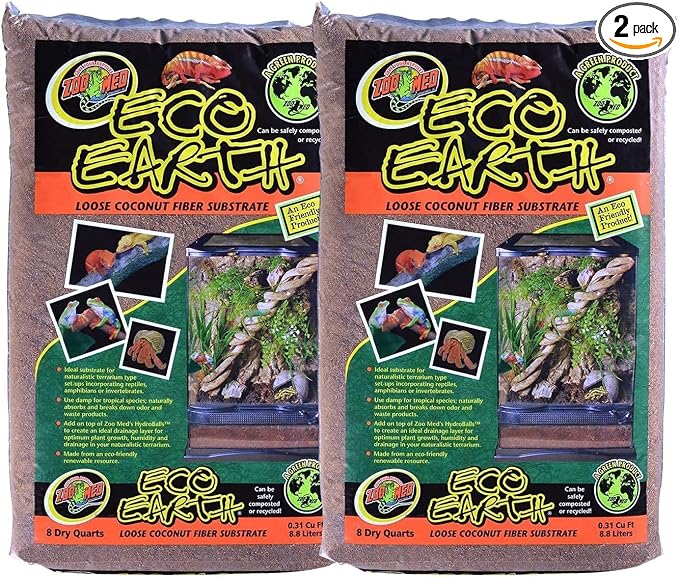
Add leaf litter and pieces of rotting wood over the top. These are forest floor animals, and litter is both cover and food.
Vertical Bark and Climbing
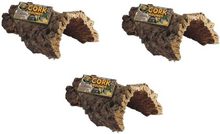
Hissing cockroaches climb well, which is why the enclosure needs a smooth barrier at the top. Stacked cork bark gives a colony vertical surface area and somewhere to cluster in layers instead of competing for one flat floor.
Vertical clearance also matters for molting. A nymph that cannot find a clear space to shed against will deform, which is functional husbandry, not enrichment, and it outranks everything called enrichment. The invertebrate molting guide covers the same vulnerable window across species.
Varied Food, Scattered
Detritivores that eat a broad range of plant matter. Scattering varied food across substrate and bark, rather than putting it in a dish, extends feeding into foraging across a colony, with no crowding at one point.
Priority Order
- Colony housing, never single animals
- Substrate deep enough to burrow into, holding humidity
- Leaf litter and rotting wood as cover and food
- Stacked bark for clustering and vertical surface
- Vertical clearance for molting
- Scattered, varied food
- Rearrangement, occasionally and gently
What Not to Do
Do not keep a single animal, since the species is gregarious and the research is on groups. Do not let substrate dry out, because humidity is what the depth is partly for. Do not skip the smooth top barrier, since they climb better than people expect. Do not disturb a molting animal, which will be pale and still. And do not present this species' husbandry as evidence-backed enrichment, because the study is a welfare framework and not a test of items, and saying so is the more credible position.
Sources & Further Reading
❓ Frequently Asked Questions
Is there welfare research on hissing cockroaches?
Yes. A 2023 paper applied the Animal Welfare Assessment Grid, a validated monitoring tool used across a wide range of species, to a group-housed congener of the pet species. It assesses welfare at colony level, which is the level these animals live at, and it does not test individual enrichment items.
Why does group-level assessment matter?
Because these are colony animals and welfare questions about them are colony questions. The research identifies a need for a validated system for monitoring terrestrial invertebrate welfare at group level, which is exactly the framing a keeper should use rather than watching one individual.
Should hissing cockroaches be kept in colonies?
Yes. They are gregarious and cluster together, and the welfare work that exists is on group-housed animals. A single hissing cockroach is not how the species lives or how it has been studied.
How deep should the substrate be?
Deep enough to burrow into and hold humidity, which is what the substrate is doing double duty for. These are forest floor animals that shelter in leaf litter and rotting wood, and a bare tank floor removes both the shelter and the humidity buffer.
Do they need climbing structure?
They climb well, which is why enclosures need a smooth barrier at the top. Stacked bark and cork give a colony vertical surface area and somewhere to cluster, and vertical space is also needed for molting.
Is invertebrate welfare taken seriously?
Increasingly, but from a very low base. Current laws in most places do not apply to invertebrates, and welfare in captivity is often neglected. These animals can live for years, which is the argument the literature makes for why husbandry standards should exist at all.
📰 More on the Madagascar Hissing Cockroach
📘 Madagascar Hissing Cockroach care guide
🪳 How Much Does a Madagascar Hissing Cockroach Really Cost?
🪳 How to Handle a Madagascar Hissing Cockroach (And How That Hiss Actually Works)
🪳 Common Madagascar Hissing Cockroach Health Issues (Prevention Does Almost All the Work)
🪳 Madagascar Hissing Cockroach Enclosure Setup: Humidity, Substrate, and Keeping Them From Climbing Out
🪲 Madagascar Hissing Cockroach Feeding: Schedule, Diet, and Why They Stop Eating
🛒 Recommended Gear
As an Amazon Associate, we earn from qualifying purchases through the links above - at no extra cost to you.
Written by Michael Ryan
Mike keeps two rescued bearded dragons, Dex and Cera, and writes the care guides on BeastlyFacts from his own research and mistakes. He is not a veterinarian.
More about Michael Ryan →Comments
No comments yet - be the first!