Green Anole Enrichment: The Studies Exist, and They Found Nothing
On This Page▾

The green anole is a strange case. Most species kept as pets have no enrichment research at all. The green anole has several studies, and every one of them came back empty.
Researchers tested cage size, added perches and refuges, repeated handling, and long-term captivity in green anoles. None of it moved the measures they tracked. That is a real result on this exact species, and it is not the same thing as proof that none of it matters.
What the Research Says
Four threads, all pointing the same unhelpful direction.
Cage size. Volumes from roughly 0.05 to 0.2 cubic meters produced no effect on body mass, tail-base width, heterophil to lymphocyte ratios, behavior or fecal corticosterone metabolites.
Environmental provisioning. Adding or removing perches and leaf refuges produced no effect on the same measures, plus body color and brightness.
Handling. Held twice a day for one minute over three weeks, no effect.
Long-term captivity. Four months produced no negative effect on physiological or behavioral measures in males, and the same in females apart from body mass and tail width.
Null results are rare in this literature because they are hard to publish. A run of them on one species is genuinely useful information, and it says as much about how difficult reptile welfare is to measure as it does about anoles.
Reading a Null Result Honestly
Two mistakes are available here and both are worse than the study.
The first is ignoring it because it is inconvenient. These are real, controlled, species-specific papers, which is more than almost any other pet reptile has, and the fair conclusion is that within the ranges tested, nobody could detect a difference.
The second is treating it as a license. Within the ranges tested is doing the heavy lifting. Cage volumes topped out around 0.2 cubic meters, so the comparison was a small cage against a slightly larger small cage, not a small cage against a planted six-foot vivarium. And the outcome measures, corticosterone metabolites, H/L ratios, body mass, are stress-physiology proxies. They tell you whether an animal is chronically stressed. They do not tell you whether it has anything to do.
An animal can pass every one of those checks and still be spending its life on a bare floor. That is the gap the studies leave open, and it is why the rest of this guide exists.
Height and Vertical Perches
From natural history, not from the enrichment papers, and much better supported. Anoles are arboreal perch specialists. They sit vertically on stems, display from height, and thermoregulate by moving between perches at different light levels.
A 24x24x24 terrarium gives an adult real vertical range. Fill it with thin branches and stems at varied angles, because a lizard this size wants perches it can grip around, never a wide flat log.
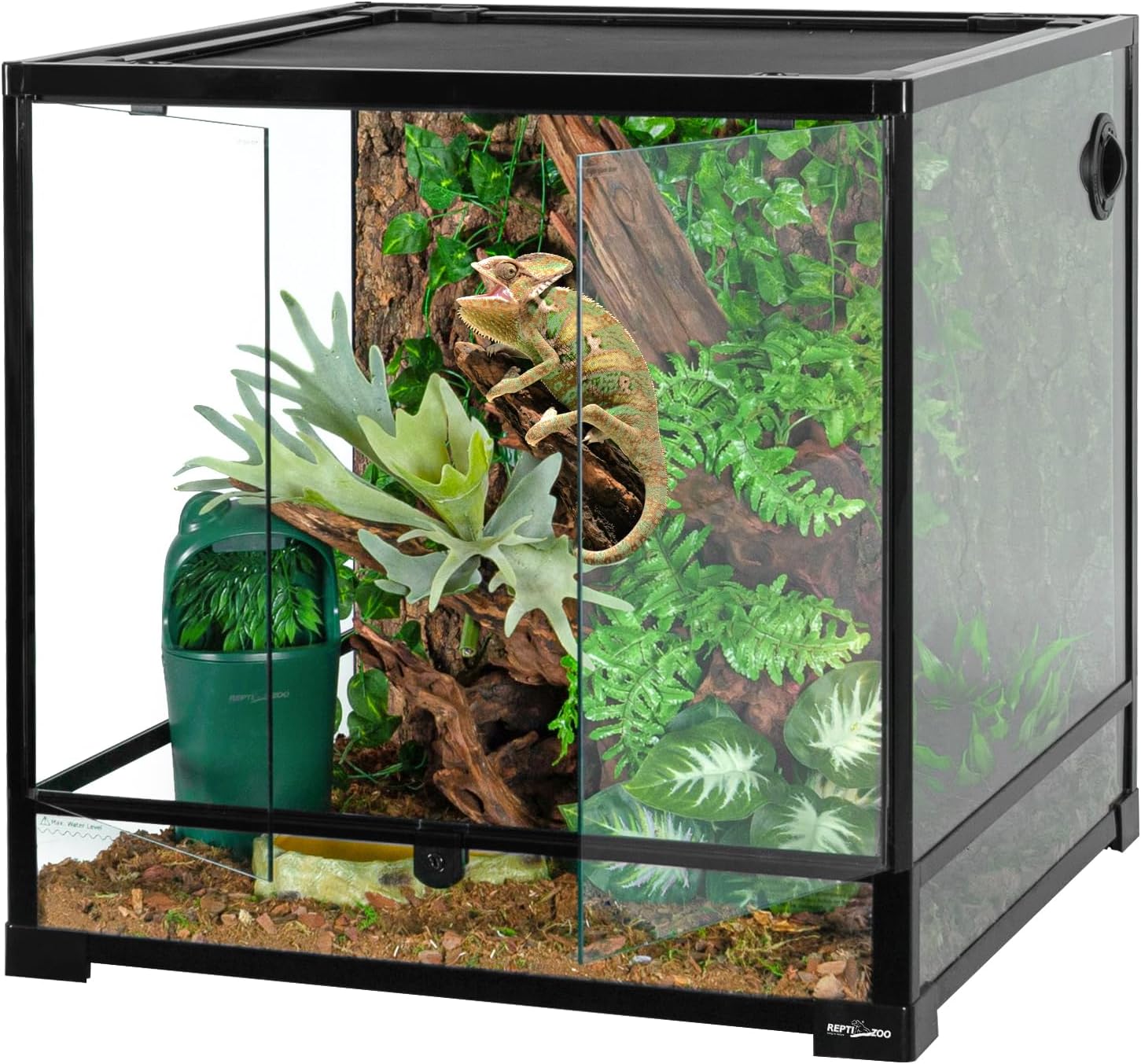
Planting, Dense
Live planting does three jobs at once: perches, visual cover so animals can break line of sight from each other, and leaf surface for water droplets.
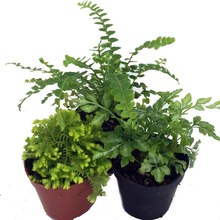
The cover half matters more than it looks. In a group, an anole that cannot get out of another anole's sight has no way to end an encounter, and continuous low-level display is how subordinate anoles get run down.
Water Off Leaves
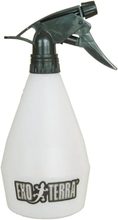
Anoles drink droplets, not standing water. A fine mist spray bottle once or twice a day, aimed at foliage and glass, is how hydration actually happens for this species. Keep a shallow dish as well, and do not count on it.
Housed Alone, and Why Two Males Is the Worst Version
The default for this species is one anole per enclosure. Conflict is the reason, and it is not only a male problem: the standard husbandry advice is not to house green anoles together at all, which the enclosure setup guide carries alongside the dimensions.
Two males is the version that fails fastest and most visibly. The dewlap is a territorial signaling structure and males use it constantly, so two in one enclosure means an argument that never resolves, and the loser stops feeding. In a group, an anole that cannot get out of another anole's sight has no way to end an encounter, and continuous low-level display is how subordinate anoles get run down.
Live Prey to Chase
Small insects released into the planting rather than dropped in a dish. Anoles are visual hunters that track and stalk, and the chase is the part a bowl removes. This is the same conclusion the leopard gecko work reached about feeding enrichment.
Priority Order
- Vertical space with thin, grippable perches at varied heights
- A working basking and UVB gradient
- Dense planting for cover and droplet surface
- Misting instead of a bowl
- Live prey released to be hunted
- One male at most
- Novelty, last, and with the null results in mind
What Not to Do
Do not use the null results to justify a bare enclosure, since the studies measured stress markers and not opportunity. Do not house anoles together, and never two males. Do not rely on a standing dish for a species that drinks off leaves. Do not skip UVB for a small diurnal basking lizard. And do not read the handling study as an invitation, because tolerating something and enjoying it are not the same measurement.
Sources & Further Reading
4 sources
- The effect of cage size on stress levels in captive green anole (Anolis carolinensis). Animal Welfare
- The effect of environmental provisioning on stress levels in captive green anole (Anolis carolinensis). Animal Welfare
- Routine handling does not lead to chronic stress in captive green anole (Anolis carolinensis). Animal Welfare
- The Effect of Long Term Captivity on Stress Levels in Anolis carolinensis Lizards. Journal of Applied Animal Welfare Science
❓ Frequently Asked Questions
Is there enrichment research on green anoles?
Yes, unusually. Several papers in Animal Welfare examined cage size, environmental provisioning with perches and leaf refuges, and routine handling in Anolis carolinensis, plus a study on the effect of four months of captivity. All of them reported no measurable effect on the outcomes they tracked.
Does that mean a bare enclosure is fine?
No. Those studies measured body mass, tail-base width, heterophil to lymphocyte ratios, fecal corticosterone metabolites and scored behavior. None of that captures whether an animal has anything to do. A lizard can return a normal stress panel and still be sitting in a box with no opportunities in it.
Why would the studies find nothing?
The tested ranges were narrow. Cage volumes spanned roughly 0.05 to 0.2 cubic meters, which is small at both ends, so the comparison was between a small cage and a slightly larger small cage. Corticosterone metabolites and H/L ratios are also blunt instruments that move for many reasons.
So what should I build?
A tall, densely planted enclosure with vertical perches at several heights and a proper basking gradient. That comes from anole natural history and thermal biology rather than from the enrichment studies, and it is well supported independently of them.
Can green anoles live together?
The default is one anole per enclosure, since the standard advice is not to house green anoles together at all. Two males is the version that fails fastest: males are display animals with a dewlap built for territorial signaling, and putting two in a shared space produces continuous confrontation until the loser stops feeding.
Do anoles drink from a bowl?
Mostly not. They take droplets off leaves and glass, so misting once or twice a day is how they hydrate. A standing dish is worth having and should not be your hydration plan.
🛒 Recommended Gear
As an Amazon Associate, we earn from qualifying purchases through the links above - at no extra cost to you.
Written by Michael Ryan
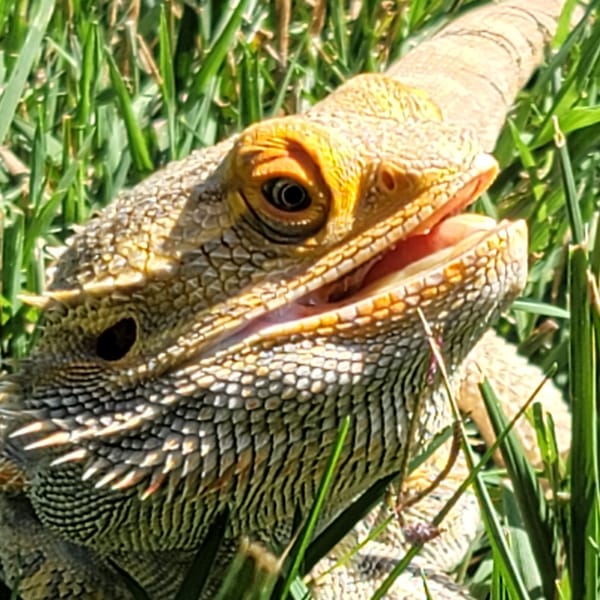
Mike keeps two rescued bearded dragons, Dex and Cera, and writes the care guides on BeastlyFacts from his own research and mistakes. He is not a veterinarian.
More about Michael Ryan →Comments
No comments yet - be the first!