How to Handle a Fire Skink (This Isn't the Blue-Tongued Skink)
On This Page▾

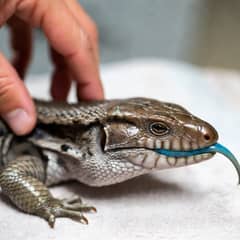
Fire skinks and blue-tongued skinks share a family name and not much else temperamentally. If you've kept the docile, handleable blue-tongued skink, expect something genuinely different here.
Shy, fast, and quick to hide, not aggressive
Fire skinks aren't defensive or bitey in any meaningful sense, but they are notably skittish, fast-moving, and prone to burrowing out of sight the moment they feel exposed. Wild-caught animals especially stay flighty, while captive-bred individuals tame more readily with patient, gradual handling. Even settled fire skinks tend to stay squirmy and quick rather than becoming the sit-still, seemingly-enjoys-it handling experience a blue-tongued skink can offer.
The handling risks are minor but real
An occasional hard bite if cornered, and like many lizards, tail autotomy under grasping pressure. Never grab or restrain by the tail. Given how fast and squirmy this species is, handle low over a soft surface as a sensible precaution against an accidental drop or escape.
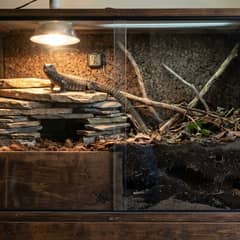
Give a fire skink a shallow scattering of substrate and it vanishes into a corner under a hide. Give it the 4 to 6 inches of a soil-and-fiber mix it can actually tunnel through, and the same animal builds a burrow system, comes out to bask, and behaves like a completely different lizard, substrate depth changes this species' visible behavior more than almost any other single factor.
First-timer mistakes
- Buying a fire skink expecting the same docile, cuddly relationship the blue-tongued skink offers, this is genuinely a different kind of pet.
- Under-furnishing the enclosure. A bare tank leaves this naturally shy species perpetually hidden and stressed, exactly the wrong setup for a burrowing animal that needs to feel secure before it'll ever be visible or calm.
- Keeping substrate too dry, which compounds the skittishness and creates real health risk.
- Grabbing the tail.
The honest comparison
Both are skinks, and that's about where the similarity ends. Blue-tongued skinks are larger, drier-climate, omnivorous, and personable, tolerant of and often seeming to enjoy interaction. Fire skinks are smaller, humidity-loving, insectivorous, and fossorial, closer to a beautiful display animal you occasionally get to interact with than a lizard built for regular handling. Go in expecting the latter, and this is a genuinely rewarding species to keep.
Sources & Further Reading
Last reviewed 15 Sep 2026 · 1 source
❓ Frequently Asked Questions
Are fire skinks easy to handle?
Not in the way a blue-tongued skink is. Fire skinks aren't defensive or bitey in any meaningful sense, but they're notably skittish, fast-moving, and prone to burrowing out of sight the moment they feel exposed. Captive-bred individuals tame more readily than wild-caught ones.
Is a fire skink dangerous to handle?
No. A cornered fire skink can bite hard on occasion, and the tail drops under grasping pressure the way most lizards' do. Keep hands off the tail, and work low over something soft, since this one is fast.
How is a fire skink different from a blue-tongued skink?
In almost every way that matters for handling. A blue-tongued skink is larger, from a drier climate, omnivorous, and personable enough to seem to enjoy the attention. A fire skink is small, humidity-loving, insectivorous, and fossorial, closer to a display animal.
What's the biggest mistake first-time fire skink owners make?
Expecting a blue-tongued skink's temperament from a different animal. Under-furnishing the enclosure is the other one: a bare tank leaves this shy, burrowing species hidden and stressed.
Should I buy a wild-caught or captive-bred fire skink?
Captive-bred if you can find and afford one. Wild-caught animals are notably skittish and stay flighty longer, while captive-bred individuals tame more readily with patient, gradual handling.
📰 More on the Fire Skink
📘 Fire Skink care guide
🦎 How Much Does a Fire Skink Really Cost?
🦎 Common Fire Skink Health Issues
🦎 Fire Skink Enclosure Setup: Deep, Moist Substrate Above Everything Else
🦎 Fire Skink Feeding: Five Minutes of Insects in the Leaf Litter, Twice a Week as an Adult
🦎 Fire Skink Enrichment: The Study Where Skinks Stopped Hiding
Written by Michael Ryan
Mike keeps two rescued bearded dragons, Dex and Cera, and writes the care guides on BeastlyFacts from his own research and mistakes. He is not a veterinarian.
More about Michael Ryan →Comments
No comments yet - be the first!