Argentine Tegu Feeding: Schedule by Age, the Protein-to-Plant Split, and the Obesity Trap
On This Page▾

An Argentine tegu is an omnivore with a large appetite and a slow metabolism, and nearly every diet problem in the species comes from feeding an adult the way its keeper fed it as a hatchling. Here is the schedule by age, what goes on the plate at each stage, the portion rule that keeps the whole thing in proportion, and how to read a tegu that has gone off food.
Feeding Schedule by Age
The schedule steps down with age, and the steps are wide:
| Age | How often | Portion |
|---|---|---|
| Hatchling, 0 to 6 months | 5 times a week | About the size of the tegu's skull |
| Juvenile, 7 to 12 months | 4 times a week | Skull-sized |
| Subadult, 1 to 2 years | 3 times a week | Skull-sized |
| Adult, past 2 years | 2 times a week | Skull-sized, and weigh the animal monthly |
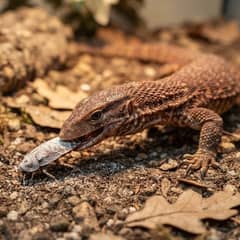
The portion rule is the part that makes the schedule work: a meal is about the size of the tegu's skull, and any whole prey item is slightly smaller than the skull so it cannot choke. A tegu will eat far past that if allowed, which is the whole reason the number exists.
Older care sheets give a simpler version, daily for the first year, every other day to three years, every third day after, and the two schedules sit within a day a week of each other. Either way the direction is the same: the adult eats a fraction as often as the hatchling, and the keeper who never makes that cut is feeding the fatty liver the health guide describes.
Two skull-sized meals a week is an adult Argentine tegu's whole diet. The animal will look hungry every day. It is not.
What Argentine Tegus Eat
In the wild, tegus eat fruit, eggs, insects and small animals including reptiles and rodents, and Florida's wildlife agency describes them as efficient egg predators that take the eggs of ground-nesting birds and reptiles, alligator eggs and gopher tortoise hatchlings among them. That range is the template for the captive plate, and the balance shifts as the animal grows.
First year: about 90 percent protein, 10 percent vegetables, fruit occasionally. A hatchling is mostly an insect eater. Gut-loaded crickets, dubia and other roaches, earthworms and similar feeders carry it, with gut-loading run for two to three days before the insects go in. The gut-loading guide covers what the feeder eats and for how long.
Adult Argentine: about 60 percent protein, 30 percent vegetables, 10 percent fruit. Protein moves from insects toward whole prey and lean meat. Frozen-thawed mice, rats and chicks are the staple, sized slightly smaller than the skull. Beef heart and ground chicken or turkey work when mixed with calcium powder, since a boneless meat has none of its own. Live rodents are not worth the bite injuries to the lizard.
Colombian tegu, at any age: about 90 percent protein, 10 percent vegetables. The two species are sold side by side and fed the same way by mistake. A Colombian is a carnivore that takes a little plant matter; an Argentine is an omnivore that needs a third of its adult plate to be vegetables.
The vegetable list is the dark leafy one: collard, kale, mustard and turnip greens, with squash and pumpkin. Fruit is a garnish, apples, blackberries, blueberries, mango and melon, and it matters more with age. Eggs are a favorite, and the one preparation rule is to cook them. Raw egg white carries avidin, an enzyme that blocks the tegu's ability to absorb biotin, and the result is a lizard that sheds badly for no visible reason.
Calcium on everything that is not whole prey. A mouse carries its own skeleton. Ground meat, insects and greens do not, so a calcium powder goes on those to correct the calcium-to-phosphorus ratio, with a multivitamin on the weekly rhythm the setup guide gives. The UVB lighting guide covers why the powder does nothing without the light: metabolic bone disease in reptiles comes from a low calcium-to-phosphorus ratio or missing vitamin D3, and from a lack of UVB, and a tegu with the wrong bulb gets it with the right diet.
Foods to Avoid
Avocado, azalea flowers and leaves, buttercups and onion are toxic. Broccoli and eggplant are off the list, as are lettuce of any kind, which is water, and citrus and seeds. Raw egg is the biotin problem above, and dog or cat food is not a tegu diet however eagerly it is taken. Nothing goes in from your hand: a hungry tegu strikes at food and does not sort a finger from it, so meals arrive by tongs, bowl or a separate feeding tub.
Why Tegus Stop Eating
Brumation. The one every keeper meets. Wild tegus retreat into burrows through the winter months in a hibernation-like state and emerge as the days lengthen, in late winter in the south. A captive Argentine follows the same clock: it slows down in autumn, sleeps more, and refuses food for weeks or months while losing little weight. The brumation guide is written for tortoises, but the pre-brumation empty gut and the vet check beforehand are the same instruction. Feeding a tegu that is going down is the mistake, since food sitting in a cold gut rots.
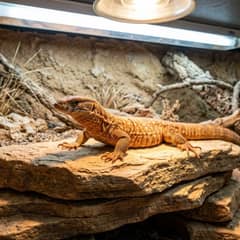
A cold enclosure. A tegu that cannot reach its basking temperature cannot digest, and a lizard that cannot digest stops eating. Check the basking surface with a temperature gun before anything else.
Overfeeding. An adult on two big meals a week is not hungry between them, and a keeper who reads that as a fast and adds food is building the obesity. The reptile manual's summary is exact: restricted exercise, no brumation where it belongs, and excess calories together produce morbid obesity and hepatic lipidosis quickly.
Too much protein. Gout, urate crystals settling in the organs, follows chronic excess protein in the diet. An adult Argentine on an all-rodent plate with no vegetables is the case.
Shedding, a new enclosure, a new keeper. Each costs a few days of appetite and nothing more.
When to Worry
A tegu that refuses food in autumn while its enclosure is warm and it is otherwise bright is brumating, and the answer is to let it. A tegu that refuses food in summer, or that loses weight visibly, or that stops eating alongside a swollen abdomen, straining, a limp, or a soft jaw, is the one to take in. The stool and urates guide covers the dry, gritty urate that signals dehydration and the early gout the protein-heavy diet leads to, and a tegu's droppings are large enough to read from across the room.
The tegu is a lizard that will eat whatever it is offered, as often as it is offered, for its whole life. The schedule is the keeper's job, and a five-foot lizard at a healthy weight is the evidence it was done.
Sources & Further Reading
❓ Frequently Asked Questions
How often should I feed an Argentine tegu?
By age. Hatchlings under six months eat five times a week, juveniles to a year four times, subadults of one to two years three times, and adults past two years twice a week. Each meal is about the size of the tegu's skull. An adult kept on a juvenile's schedule is the obesity case every tegu vet sees.
What is the right mix of protein, vegetables and fruit?
In the first year, about 90 percent protein and 10 percent vegetables with the occasional fruit. An adult Argentine flips toward 60 percent protein, 30 percent vegetables and 10 percent fruit. The Colombian tegu stays near 90 percent protein for life, so know which species you have before you build the plate.
Can a tegu eat raw eggs?
Cooked, yes. Raw egg white carries avidin, an enzyme that blocks biotin absorption and shows up as shedding problems over time. Scramble or boil them, shell and all for the calcium.
Why has my tegu stopped eating?
In autumn, almost always brumation. Wild tegus retreat into burrows for the winter and emerge in late winter, and a captive animal that slows down, sleeps more and refuses food as the days shorten is following that clock. A tegu that stops eating in summer, in a warm enclosure, with weight loss or a swollen belly, is the one that needs a vet.
📰 More on the Argentine Tegu
🦎 How Much Does an Argentine Black and White Tegu Really Cost?
🦎 How to Handle an Argentine Tegu (The Reptile That Acts Like a Dog)
🦎 Common Argentine Tegu Health Issues
🦎 Argentine Tegu Enclosure Setup
🦎 Tegu Enrichment: Borrowing From the Monitors, and Saying So
🦎 Is It Legal to Own an Argentine Tegu? Florida's Prohibited List Explained
🛒 Recommended Gear
As an Amazon Associate, we earn from qualifying purchases through the links above - at no extra cost to you.
Written by Michael Ryan
Mike keeps two rescued bearded dragons, Dex and Cera, and writes the care guides on BeastlyFacts from his own research and mistakes. He is not a veterinarian.
More about Michael Ryan →Comments
No comments yet - be the first!