Common Fire Skink Health Issues
On This Page▾

Fire skinks are hardy, and nearly every health issue in this species connects back to one thing: getting humidity and substrate moisture right for a fossorial animal that depends on both.
Respiratory Infection
Open-mouth breathing, mucus, and wheezing. Caused by substrate or overall enclosure conditions running too dry, or occasionally too cold. See a vet, this needs professional treatment. Prevention is straightforward, maintain 60 to 70% substrate humidity consistently, which is a misting, substrate and hygrometer question rather than a treatment one.
Poor or Incomplete Shed (Dysecdysis)
From low humidity. Retained shed on the toes or tail can constrict circulation if left unaddressed. Manageable at home with corrected humidity and a humid hide, though retained eye caps or a severe case should prompt a vet visit rather than repeated home attempts.
A fire skink's entire visible behavior tracks substrate depth and moisture almost exactly. Too shallow and dry, and it stays wedged under a hide out of sight; deep and appropriately damp, and the same animal builds a burrow system, forages through leaf litter, and comes out to bask, most of what looks like "temperament" in this species is actually a humidity and depth response.
Substrate Impaction
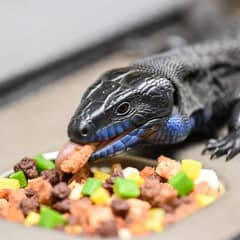
From ingesting dry, loose substrate accidentally while feeding. See a vet if suspected. Prevented by proper moist substrate. Scatter feeding in the leaf litter stays; a dish is only for an animal with a past impaction.
Metabolic Bone Disease
Less common in this species than in some other lizards, but still possible if UVB and calcium supplementation are inadequate. See a vet.
Tail Loss or Injury
Not a disease, but worth including since it's a genuine, preventable outcome of rough handling. A dropped tail heals but regrows imperfectly. Minor cases are manageable on their own, an open or infected wound needs a vet.
The Husbandry Pattern Worth Remembering
Low humidity is directly responsible for the respiratory infection and poor shedding that make up most of this species' real health risk. Dry substrate causes impaction, and scatter feeding on damp litter, which the feeding guide is built around, is safe where a dish on dry substrate is not. And rough handling causes preventable tail loss. This is a species where getting the moisture and substrate depth right, more than any other single factor, determines how healthy and how visible your fire skink actually is.
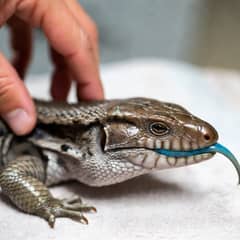
If you're weighing this species against the drier-climate blue-tongued skink, the humidity requirement is what separates the two health lists, since most of what shows up here starts with substrate that has been allowed to dry out.
Sources & Further Reading
Last reviewed 11 Aug 2026 · 2 sources
❓ Frequently Asked Questions
What causes respiratory infection in fire skinks?
Substrate or overall enclosure conditions running too dry, or occasionally too cold. Watch for open-mouth breathing, mucus, and wheezing. See a vet, this needs professional treatment, and prevention is straightforward, maintain 60 to 70% substrate humidity consistently.
Why does my fire skink have retained shed?
Low humidity, almost always. Shed left on the toes or tail can constrict circulation if it isn't addressed. Correcting humidity and a humid hide handles it at home, though retained eye caps or a severe case should prompt a vet visit.
What causes substrate impaction in fire skinks?
Dry, loose substrate swallowed by accident during feeding. See a vet if suspected. Moist substrate prevents it. Scatter feeding into the leaf litter, which the setup and enrichment guides call for, is safe on a properly moist substrate, and a dish is only for an animal that has already had an impaction or is on a dry, fine substrate that should be replaced anyway.
Do fire skinks get metabolic bone disease?
Less commonly than in some other lizards, but it's still possible if UVB and calcium supplementation are inadequate. See a vet if you suspect it.
What's the single biggest factor in fire skink health?
Humidity and substrate moisture, by a wide margin. Respiratory infection and poor shedding, most of this species' real health risk, come straight from low humidity, and impaction comes from dry substrate. Moisture determines how healthy, and how visible, a fire skink is.
📰 More on the Fire Skink
📘 Fire Skink care guide
🦎 How Much Does a Fire Skink Really Cost?
🦎 How to Handle a Fire Skink (This Isn't the Blue-Tongued Skink)
🦎 Fire Skink Enclosure Setup: Deep, Moist Substrate Above Everything Else
🦎 Fire Skink Feeding: Five Minutes of Insects in the Leaf Litter, Twice a Week as an Adult
🦎 Fire Skink Enrichment: The Study Where Skinks Stopped Hiding
Written by Michael Ryan
Mike keeps two rescued bearded dragons, Dex and Cera, and writes the care guides on BeastlyFacts from his own research and mistakes. He is not a veterinarian.
More about Michael Ryan →Comments
No comments yet - be the first!