Tegu Enrichment: Borrowing From the Monitors, and Saying So
On This Page▾

There is no enrichment study on this species. That belongs in the first line, because most care writing would simply assert things instead.
Nothing has been published on tegu enrichment. The closest real evidence is the varanid problem-solving literature, and tegus are teiids, a separate lineage that converged on a similar shape and lifestyle. The husbandry that follows is sound. The evidence behind it belongs to a different animal, and this guide will not pretend otherwise.
Where the Evidence Comes From
For Salvator merianae, nothing. Searching returns care content, not studies.
The nearest thing is the monitor work behind the ackie monitor: eight juvenile black-throated monitors were given a transparent food tube and all eight opened it within ten minutes on the first trial, with later longitudinal testing showing solving latencies dropping over time, which was read as learning.
Monitors and tegus are not close relatives. Varanids and teiids are separate lineages that independently arrived at the same design: large, active, wide-ranging, burrowing carnivores that investigate everything. That convergence is why the husbandry transfers. It is also why the evidence is a borrow rather than a finding.
Behind both sits Burghardt's review, which argued reptiles had been systematically under-enriched, and that the cause was wrong assumptions about their cognition.
Substrate Depth, the Biggest Decision
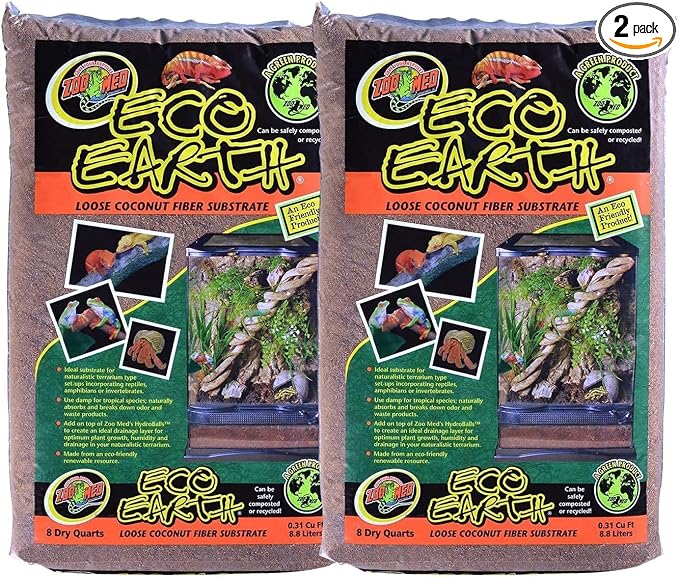
Tegus dig, extensively, and will build a burrow they sleep in and brumate in. Depth is the largest single enclosure choice for the species, and a shallow layer is just bedding.
Give them enough loose burrowing substrate to construct in, mixed so it holds a tunnel. An 8 by 4 foot floor at 12 to 18 inches of depth takes many bags, so buy for the volume rather than the bag.
Puzzle and Extraction Feeding
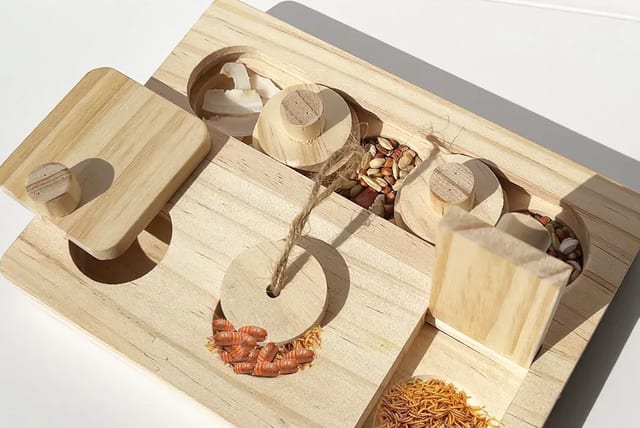
This is the item the borrowed evidence most directly supports. A container with visible food that has to be opened, food under a moveable object, food buried in a new spot: all of it is trivially easy to improvise and all of it is closer to the study apparatus than anything sold as reptile enrichment.
An extraction puzzle board covers the manipulation half off the shelf, and it is worth saying that this is the right species for one: a tegu will work sliders and lift-out plugs, which is exactly what a bearded dragon will not do.
Target and Station Training
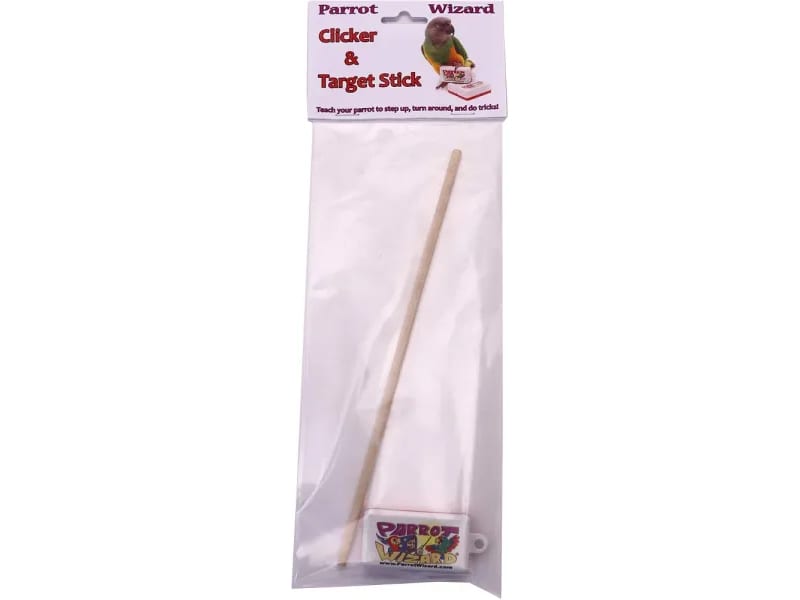
Standard practice in zoo collections for large lizards, and widely done by private tegu keepers. A clicker and target stick and a few minutes daily makes weighing, health checks and moving the animal far less stressful for both of you.
Be clear in your own head that this is practice rather than published evidence. It is well established practice, and the distinction still matters.
A Soak Big Enough to Get Into
Tegus soak readily. A container large enough to fully enter supports hydration and shedding and is genuinely passive: you provide it, the animal decides. Larger tubs are worth it for an adult.
Priority Order
- Substrate deep enough for a real burrow
- Enclosure floor area, since this is a wide-ranging forager
- Puzzle and extraction feeding
- Target and station training
- A soaking container
- Scent novelty and varied food placement
- Rearrangement and objects, last
What Not to Do
Do not present borrowed varanid evidence as if it were about tegus, which is the mistake this guide exists to avoid. Do not keep a digging animal on a shallow substrate layer. Do not make a bowl the only way this animal ever meets its food, when it will work a puzzle feeder instead. Do not let enrichment distract from basking temperatures and UVB, which outrank all of it and which the enclosure setup guide puts numbers on.
An enclosure with burrow-depth substrate in it is the expensive part of enriching a tegu, and no puzzle tube substitutes for it.
Sources & Further Reading
4 sources
- Borrowed evidence. No enrichment study exists for this species. The problem-solving findings below are from monitor lizards and are covered in full in our Ackie Monitor enrichment guide.
- Manrod JD, Hartdegen R and Burghardt GM. Rapid solving of a problem apparatus by juvenile black-throated monitor lizards. Animal Cognition
- Latency in problem solving as evidence for learning in varanid and helodermatid lizards. Copeia
- Burghardt GM (2013). Environmental enrichment and cognitive complexity in reptiles and amphibians. Applied Animal Behaviour Science, 147, 286-298
- Training and enrichment of ectotherms. Frontiers in Ethology
❓ Frequently Asked Questions
Is there enrichment research on Argentine tegus?
No. Searching the literature returns nothing on Salvator merianae specifically. The nearest evidence is problem-solving work on monitor lizards, where eight of eight juvenile black-throated monitors opened a food tube within ten minutes on the first trial, and follow-up work showed solving times dropping across repeated trials. Tegus are teiids rather than varanids, so that is a looser borrow than it looks.
How loose is the borrow?
Loose enough to state plainly. Monitors and tegus are not close relatives, they are separate lineages that converged on a similar shape and lifestyle: large, active, intelligent, burrowing carnivores that forage widely. The convergence is why the husbandry advice transfers, and it is not the same as a study on your animal.
How trainable are tegus?
They are among the most commonly trained reptiles in private keeping, and target and station training is standard in zoo collections for large lizards. That is practice rather than published evidence, and this guide separates the two.
How deep should tegu substrate be?
Deep enough for an animal this size to construct a real burrow, which is substantially deeper than most keepers provide. Tegus dig extensively and will excavate a burrow they sleep and brumate in. This is the single largest enclosure decision for the species.
Do tegus need a soaking dish?
Yes, large enough to get fully into. They soak readily, and it supports both hydration and shedding. It is one of the few passive enrichment items: provide it and the animal decides when to use it.
Does handling count as enrichment for a tegu?
It is closer to true for a tegu than for almost any other reptile, since well-socialized individuals tolerate and appear to seek interaction. But training is the better framing, because it gives the animal a choice and a task rather than making it the object of the activity.
📰 More on the Argentine Tegu
📘 Argentine Tegu care guide
🦎 How Much Does an Argentine Black and White Tegu Really Cost?
🦎 How to Handle an Argentine Tegu (The Reptile That Acts Like a Dog)
🦎 Common Argentine Tegu Health Issues
🦎 Argentine Tegu Enclosure Setup
🦎 Is It Legal to Own an Argentine Tegu? Florida's Prohibited List Explained
🛒 Recommended Gear
As an Amazon Associate, we earn from qualifying purchases through the links above - at no extra cost to you.
Written by Michael Ryan
Mike keeps two rescued bearded dragons, Dex and Cera, and writes the care guides on BeastlyFacts from his own research and mistakes. He is not a veterinarian.
More about Michael Ryan →Comments
No comments yet - be the first!