Gargoyle Gecko Enrichment: A Shrub to Climb and Food to Find
On This Page▾

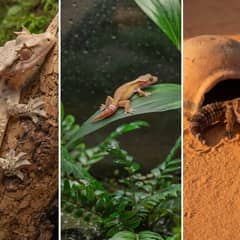
A gargoyle gecko spends its nights moving through low shrubs, from branch to branch and down to the ground, hunting as it goes. Enrichment for this species means rebuilding that shrub inside the enclosure and giving the gecko reasons to use all of it. Heat under the 85°F ceiling, the humidity cycle and the basic hides keep a gargoyle alive; enrichment is what goes on top of them.
Wild gargoyles perch about 5 to 6 feet up, come down to the ground to forage, and eat insects, lizards, flowers and sap. Fill the enclosure from floor to top, put food where the gecko has to travel for it, and add novelty last.
A Night in the Maquis
Gargoyle geckos live only in New Caledonia, in maquis, the low scrub that grows on the island's mineral soils, and along the edges of humid forest, on the mountains of southern Grande Terre. They are found on shrubs and small trees, perching about 5 to 6 feet up on average, and individuals space themselves out by using different perch heights. They come down to the ground to forage and to mate, and shelter under rocks and loose bark.
They are most active one to four hours after dark. A prehensile tail helps them grip branches as they climb, and their wild diet may be the most unusual of any gecko: insects and other invertebrates, smaller lizards including geckos and skinks, and flowers and tree sap.
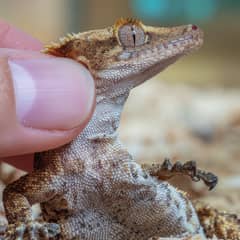
In New Caledonia the gargoyle's common name is gecko géant à tête bossue, the knob-headed giant gecko, after the raised crests on its skull.
Branches First, at Every Height
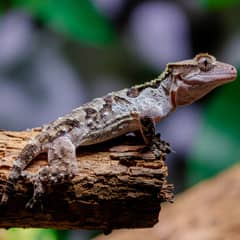
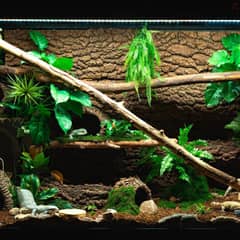
An 18x18x36 terrarium is the adult minimum and bigger is always better. The height only counts once there is something in it. Run branches vertically and diagonally so the tail has something to wrap around, and set perches at several heights rather than one shelf near the top. Cork slabs and dense live planting give cover at every level, so the gecko can disappear wherever it happens to be.
The floor belongs to the climbing space too. Leaf litter over the substrate, a low cork hollow and plants rooted at ground level give a gecko a reason to come down, and somewhere to hide when it does. The test is simple: the gecko should be able to travel from the floor to the top without touching glass, and find cover at any height on the way.
Food That Takes Finding
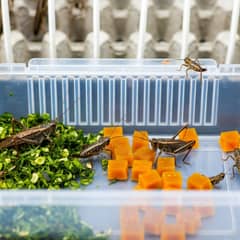
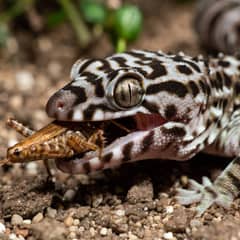
Food is the easiest enrichment to get right, because a wild gargoyle works for every meal. Offer the prepared powdered gecko diet in cups at different heights, so reaching it takes a climb. Release a few live insects into the planting in the evening rather than serving them in a dish, only as many as the gecko will catch that night, and rotate the prey species. Check the next morning and take out any it missed. Gut-load the insects and dust them with plain calcium before they go in, since a loose insect that the gecko catches is only as nutritious as what it ate.
After Dark: Feed, Watch, Leave It
Match the routine to the gecko's night. Feed and mist in the evening, when it is waking up, and watch from across the room with the room lights low.
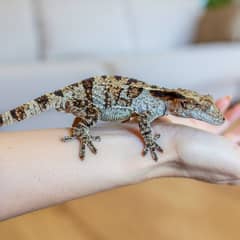
Handling is stressful for reptiles, so it does not count as enrichment. Daytime sessions still help a gecko settle, as long as they stay short and calm enough that a jumpy animal never drops its tail.
How to Tell It Is Working
A settled gargoyle moves between perches after dark, visits the floor, hunts down its insects and eats from the cups. One that pushes against the glass again and again, or stops eating, is telling you something in the setup is wrong.
Novelty, Last and One at a Time
A new piece of cork, a branch moved to a different angle or a prey insect the gecko has not seen before is cheap and easy to try. Objects and scents are common in zoo reptile programs; treat them as optional. Change one thing at a time and watch whether the gecko uses it. If it does, keep it; if it never goes near it, take it out.
Priority Order
Heat, humidity and enclosure size come before everything on this list.
- Branches at every height, angled so the tail can grip
- Cover at more than one level, the floor included, with live planting
- Food placed so reaching it takes a climb, and insects loose in the planting
- Novelty, last
Build the Shrub, Then Watch It
A gargoyle tells you whether the enclosure works by how it uses the space after dark. Build the branches and the floor first, make it move for its food, and let what the gecko does decide what you add next.
Sources & Further Reading
Last reviewed 16 Sep 2026 · 5 sources
- Snyder J, Snyder L, Bauer AM (2010). Ecological observations on the gargoyle gecko, Rhacodactylus auriculatus (Bavay, 1869), in southern New Caledonia. Salamandra 46:37-47
- endemia.nc: Rhacodactylus auriculatus, species account by the Department of Herpetology, Australian Museum
- Cincinnati Zoo and Botanical Garden: Gargoyle Gecko
- Bartolomé A, Carazo P, Font E (2023). Environmental enrichment for reptiles in European zoos: Current status and perspectives. Animal Welfare 32:e48
- Whittaker AL, Golder-Dewar B, Triggs JL, Sherwen SL, McLelland DJ (2021). Identification of Animal-Based Welfare Indicators in Captive Reptiles: A Delphi Consultation Survey. Animals 11(7):2010
Frequently Asked Questions
How do I know the enclosure is working?
It can climb from the floor to the top on branches alone, and after dark it is out moving, coming down to the floor and feeding.
How high do gargoyle geckos climb?
Wild gargoyles perch about 5 to 6 feet up on average and come down to the ground, so fill the full height, floor included.
What is the best feeding enrichment for a gargoyle gecko?
Making it move for its food. Diet cups at different heights and live insects loose in the planting both do that.
Does handling count as enrichment?
No. A few short sessions in the daytime help a gecko get used to you, but reptiles find handling stressful, so it never takes the place of structure or food.
More on the Gargoyle Gecko
Recommended Gear
As an Amazon Associate I earn from qualifying purchases through the links above, at no extra cost to you.

Written by Michael Ryan
Mike keeps two rescued bearded dragons, Dex and Cera, and writes the care guides on BeastlyFacts from his own research and mistakes. He is not a veterinarian.
More about Michael Ryan →You May Also Like
Subscribe - it's free
An occasional email when something new is worth your time. No spam.
Deep Dive
Health and More