Quaker Parakeet Enrichment: The Only Parrot That Builds a House
On This Page▾

A wild Quaker spends its day near a colony nest it helped build, feeding with its flock and adding sticks to the family's chambers. Bringing that work back into a cage, the building above all, does more than anything else to keep a pet Quaker busy and calm.
Quakers are the only parrots that build their own nests instead of using a tree cavity, and pet Quakers still weave whatever they are given. Give a Quaker material to weave and food to work for before you buy it another toy.
A Day at the Colony Nest
Wild Quakers live in the lowlands of Paraguay, Bolivia, Argentina and Brazil, usually near water. They build big communal nests from woven sticks and twigs, and each pair keeps its own set of at least two chambers inside the shared structure. As the colony grows, each new pair builds its apartment onto the main nest. With a reliable food source nearby, the flock rarely wanders far from home. They eat seeds, fruit, blossoms, leaf buds, thistles, grasses and parts of trees.
Each part of that day points to something a pet Quaker needs: material to build with, food to search for, company, and a home base it can trust.
Weaving Material, the Species-Specific One
Start here, because no other pet parrot needs it the same way. Offer safe untreated twigs, willow strips, palm, seagrass and plain paper strips. A Quaker pushes material into the cage bars, weaves it through toys and works at the structure for hours. A rope and shred toy gives it something to weave into, and it comes out once the rope frays. Natural material is what actually gets woven.
Two cautions. Leave out loose, stringy fiber, which wraps around toes and necks. And watch for territorial behavior: building can bring cage aggression, especially in spring. If it does, scale the material back instead of taking it all away, and never add a nest box.
Foraging, the Bulk of the Day
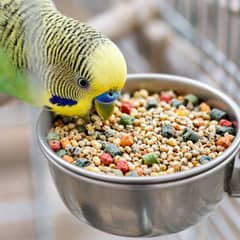
Wild Quakers spend their day finding food, so make the pet bird work for part of it too. Use hanging forage toys, food wrapped in paper, pushed into cardboard or threaded on skewers, and hide it in several places so the bird has to search. Rotate the method, because a Quaker works out a puzzle quickly. A full bowl is also the road to the fatty liver disease this species is known for.
Space and a Flight Path
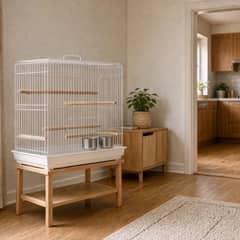
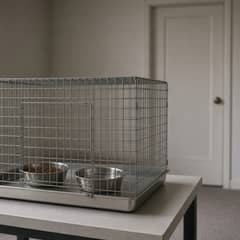
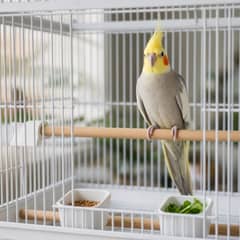
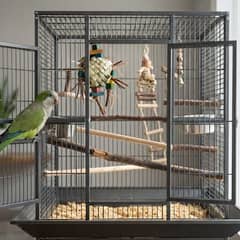
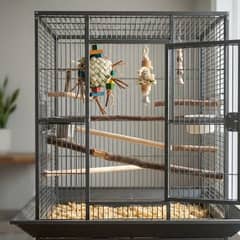
Give the Quaker a wide flight cage and hours out of it every day. Fill the sides with perches and toys and leave the middle open, so the bird can cross the cage in flight.
Company, Because They Live in Colonies
Quakers are colony birds, which is unusual even among parrots. A Quaker needs either a companion bird or an owner who is really involved every day. A cage in a busy room does not count as company. The bird needs time with you.
Training and Talking
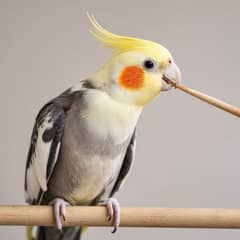
Quakers are among the better small talkers and take well to training. Run short positive reinforcement sessions, ten minutes twice a day, with a clicker and target stick, and end them while the bird is still keen. They cover the mental work and the social attention a colony bird looks for.
Calls and Screaming
Loud calls are how a parrot keeps in touch with its flock, and to a pet Quaker the household is the flock. Expect the most noise in the early morning and at dusk, when wild flocks gather, and whenever the house gets loud: a vacuum, music, a phone call or people talking over each other. A frightened, bored, lonely, stressed or sick bird calls more.
What makes it worse is attention for the noise. Yelling back, rushing over, or covering the cage and turning off the light all teach the bird that screaming works.
- Ignore the scream whenever you safely can.
- Reward the quiet: when the bird is calm, give praise, a moment of attention, a bite of baby carrot, a pinch of seed or a foraging toy.
- Keep the household routine steady, so the bird is not calling for company it expects and does not get.
- Ask the avian vet for a referral to an avian behaviorist if the calling keeps climbing.
A sound you have never heard from the bird before is different: birds often call out during a seizure, so get it seen right away.
A Day in Practice
Put together, a good day for a pet Quaker looks like this:
- Morning: fresh pellets and chopped vegetables, a bath offered while the room warms up, and the cage serviced while the bird is out.
- Through the day: weaving material in the bars, part of the food inside foraging toys, and the bird in a room where it can see and hear you.
- Evening: supervised time out of the cage with you, a short training session, and your company at dusk before the calling starts, not attention once it has.
- Night: cage covered, room dark and quiet for 10 to 12 hours.
Sleep
Give the Quaker 10 to 12 hours of dark, quiet sleep. An under-slept parrot gets louder, nippier and more likely to pluck.
How to Tell It Is Working
A Quaker with enough to do chatters, weaves, shreds, forages and moves around the whole cage. The warning signs are feather plucking, screaming beyond its normal contact calls, and cage aggression that keeps getting worse. The same signs can mean illness, so have an avian vet check a Quaker that shows them.
One Change at a Time
Keep the perches, dishes and cage where they are, and rotate the extras. Add one new toy or material at a time and watch how the bird takes it.
Priority Order
- Give it weaving material, which nothing else replaces for this species.
- Deliver part of the food through foraging.
- Give it a wide cage with a clear flight path, and hours outside it.
- Give it daily company, yours or a companion bird's.
- Run short daily training sessions.
- Protect 10 to 12 hours of dark, quiet sleep.
- Add new objects last, and rotate them.
Start With Something to Weave
If only one thing changes this week, hang a bundle of safe twigs or paper strips where the Quaker can push it into the bars. Add foraging next, and keep the nest box out for good.
Sources & Further Reading
Last reviewed 24 Sep 2026 · 5 sources
- Animal Diversity Web: Myiopsitta monachus (monk parakeet), University of Michigan Museum of Zoology
- Meehan CL, Millam JR and Mench JA (2003). Foraging opportunity and increased physical complexity both prevent and reduce psychogenic feather picking by young Amazon parrots. Applied Animal Behaviour Science
- Feather damaging behaviour in parrots: a review with consideration of comparative aspects (PDF, downloads)
- VCA Animal Hospitals: Biting and Screaming in Birds
- Environmental enrichment for birds. Veterinary Partner (VIN)
Frequently Asked Questions
Is there enrichment research on Quaker parakeets?
No study has tested enrichment on Quakers themselves. In other parrots, foraging and a more complex cage both prevented and reduced feather picking caused by stress or boredom.
What makes Quakers different from other parrots?
They build nests. Quakers, also called monk parakeets, are the only parrots that construct their own stick nests rather than using a tree cavity, and they build large communal structures with separate chambers. Captive Quakers still weave, and that gives you an enrichment avenue no other pet parrot offers.
What should I give them to weave with?
Safe untreated twigs, willow and palm strips, seagrass and plain paper strips. They will push material into cage bars and toys and work at it for hours. Avoid loose, stringy fiber that can wrap around a toe or a neck.
Will nest building trigger breeding or aggression?
It can. Nest building in an unpaired bird sometimes comes with territorial behavior around the cage, especially in spring. Provide the material and watch the behavior, and if a bird becomes cage-aggressive, scale the material back rather than removing every outlet.
Are Quakers social?
Very. They are colonial nesters, which is unusual among parrots, and they need substantial daily interaction or a companion. A lone Quaker with an absent owner is a strong candidate for screaming and plucking.
More on the Quaker Parakeet
Recommended Gear
As an Amazon Associate I earn from qualifying purchases through the links above, at no extra cost to you.

Written by Michael Ryan
Mike keeps two rescued bearded dragons, Dex and Cera, and writes the care guides on BeastlyFacts from his own research and mistakes. He is not a veterinarian.
More about Michael Ryan →You May Also Like
Subscribe - it's free
An occasional email when something new is worth your time. No spam.
Health and More