African Fat-Tailed Gecko Enclosure Setup: Built for the Ground, Not the Branches
On This Page▾

Fat-tailed geckos are ground-dwellers and burrowers, so their enclosure is built around the floor: its size, the heat coming up through it and the depth a gecko can dig into. Build it, run it until the readings hold steady, and only then bring the gecko home.
Enclosure Size
One adult needs an enclosure of at least 36x18x18 inches. Some vet clinics accept a 20-gallon long (about 30x12x12 inches) for one adult, though it leaves little room for a warm-to-cool gradient and for the nightly exploring a fat-tail does. A 40-gallon breeder at 36x18x16 inches gives the same floor space as the 36x18x18. Floor space matters more than height, because this terrestrial species spends its time on the ground and underground.
Temperature and Heat Source
This species needs supplemental heat. The warm side (the warm hide floor) should run 88 to 92°F and the cool side 75 to 80°F, with a nighttime drop to around 70 to 75°F. A drop at night is normal. Provide belly heat through an under-tank heat mat, always on a thermostat, which serves as the main heat source for a ground gecko and stays on day and night. Leave the thermostat at the same setting around the clock: the night drop comes from the room cooling, not from turning the mat down. The mat sticks to the outside of the tank, under the glass bottom, never inside the enclosure where the gecko can touch it. Use a mat made for reptile tanks: a human heating pad is not designed to sit under a cage. Skip heat rocks and strong overhead basking bulbs: both carry a burn risk, and a strong lamp also dries the enclosure out.
Setting the heat, in order:
- Stick the mat to the underside of the tank, beneath where the warm hide will sit, covering no more than about a third of the floor.
- Over the mat, keep the substrate to about 1 inch so the heat reaches the hide floor.
- Run the mat on an on/off thermostat and put the probe inside the warm hide, where the gecko sits. Fix the probe in place so a digging gecko cannot move it, and check it at every spot-clean: a probe pushed away from the heat leaves the mat running flat out.
- Read the warm hide floor and the cool end at floor level with an infrared temp gun, then adjust the thermostat until both sit in range.
If the room runs cold enough that the cool end stays under 75°F by day or the night low falls below range, add a ceramic heat emitter on its own thermostat. It gives heat with no light. A colored or red bulb is the wrong fix, because it lights the enclosure at night.
Humidity
A fat-tail needs more humidity than a leopard gecko, though most of the enclosure stays dry. Keep ambient humidity around 50 to 70%, and give the gecko a permanent humid hide that holds 70 to 80%: that hide is what keeps its sheds coming off cleanly. An ambient reading that stays above about 70% is too wet. Some keepers run a seasonal cycle. A consistent moist hide matters more than chasing an exact seasonal number.
Track it with a digital hygrometer placed at floor level, where the gecko lives. To check the humid hide, move the probe inside it for a reading, then put it back. When the air reads low, mist with a pressure sprayer, using distilled water if your tap water is hard.
Building the Humid Hide
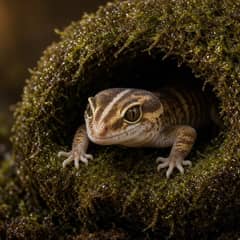
- Use a box or cave with a small entry hole, placed at the cool end.
- Line it with damp sphagnum moss or a damp paper towel, slightly damp and never dripping.
- Re-dampen it every day and replace the lining every week.
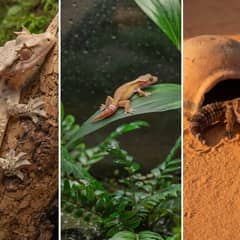
In the West African grasslands it comes from, this nocturnal gecko shelters in rocky crevices and burrows. Each hide in the enclosure stands in for one of those.
Source: Tree of Life Exotic Pet Medical Center
Substrate: Deep Enough to Burrow
Every new gecko starts on paper towel through its 3 to 6 month quarantine, and a juvenile stays on paper until it is over 6 months old and through quarantine. After that, naturalistic sandy-soil mixes work well for healthy adults. A topsoil and play sand mix works, or a coconut fiber and reptile sand combination. Provide at least 4 inches of depth so the gecko can burrow, everywhere except the patch over the heat mat, which stays at about 1 inch.
Skip pure loose sand for every gecko, adult or young. It dries a gecko out, interferes with shedding and can cause impaction if swallowed.
Lighting
Fat-tailed geckos are nocturnal, and UVB is optional when the gecko gets a calcium supplement with D3 on the schedule in the feeding guide. A gecko is most likely to thrive with low-output UVB in the 2 to 5% range.
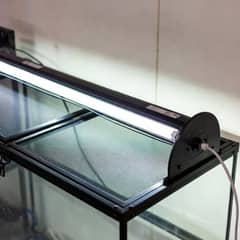
The 2.5% printed on a 24-inch, 14-watt T5 tube like the Arcadia ShadeDweller is the share of its output that falls in the UVB band. It says nothing about strength. A fat-tail is a shade dweller: the target is a UV index of 0.6 to 1.4 at the gecko's back on the spot closest to the tube, falling toward zero across the rest of the enclosure. Hang the tube at the distance the maker's chart gives for it, then confirm the reading with a UV index meter.
Mount the tube inside the enclosure or over a mesh top, never over glass, which blocks UVB. Replace the tube every 9 to 12 months, or sooner if the maker rates it shorter, since output fades long before it stops looking bright.
With a UVB tube, run it on a timer for 10 to 12 hours a day, then lights off. Without one, the room's own daylight sets the gecko's day, and nothing needs a timer. Skip red and moonlight bulbs too: light after dark disrupts a reptile's day-night cycle, and the heat mat keeps working through the night without lighting the enclosure.
Furnishings for a Burrower
Skip tall climbing furniture, since vertical space goes to waste in a fat-tail's enclosure. Low rocks, cork bark and low branches are fine, and the furnishings that matter most sit on the floor:
- A warm, dry hide over the mat
- A cool, dry hide at the other end
- The humid hide, also at the cool end
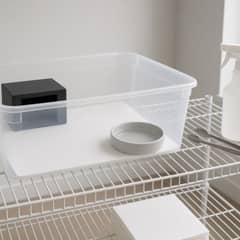
- A shallow water dish, low enough for the gecko to soak in
Set rocks on the floor of the tank, under the substrate, so a digging gecko cannot undermine them and bring one down on itself.
A Laying Box for Females
A female with nowhere suitable to dig and lay is at risk of egg binding. This setup is borrowed from leopard gecko care, since the same vet guidance applies: a lidded plastic box with a doorway cut in the side, filled with damp sphagnum moss or coconut coir, set in a quiet spot out of direct heat.
Keeping It Clean
- Daily: spot-clean droppings and uneaten insects, and refresh the water.
- Weekly: scrub the water dish with a vet-grade reptile disinfectant and rinse it well. Replace the humid hide lining, or sooner if it smells sour or looks soiled, since a warm, damp hide is where waste and mold build up fastest.
- Every 3 months: break the whole enclosure down and clean it.
- Every 3 to 6 months: replace the soil bed.
The hand-washing and the rules for where reptile items get cleaned follow the reptile hygiene guide that applies to every reptile tank.
Run It Before the Gecko Arrives
Build it in this order:
- Stick the mat to the underside of the tank and plug it into the thermostat, with the probe where the warm hide will sit.
- Lay paper towel across the floor. The new gecko lives on it through quarantine.
- Place the warm, cool and humid hides and the water dish.
- Hang the UVB tube, if you use one, on its timer.
- Set up the hygrometer and keep the temp gun to hand.
Let it run for at least a full day and night, since the night low cannot be read any sooner. Read the warm hide floor, the cool end, the night low and the humidity, and adjust until each one holds in range. Then the gecko goes in, the lid goes on, and it is left alone to settle.
When quarantine ends and the soil bed goes in, read the warm hide floor and the soil surface over the mat again with the temp gun and reset the thermostat, since the inch of soil over the mat changes what the hide floor reaches.
Sources & Further Reading
Last reviewed 15 Sep 2026 · 6 sources
- Tree of Life Exotic Pet Medical Center: African Fat-Tailed Gecko Care
- ReptiFiles: the African fat-tailed gecko care sheet, leopard gecko lighting, temperature and humidity and how to quarantine reptiles
- Cadillac Veterinary Clinic: African Fat-Tailed Geckos
- Yarmouth Veterinary Center: the African fat-tailed gecko care sheet (Word file, downloads) and the gravid gecko
- VCA Animal Hospitals: Lighting Requirements for Reptiles
- LafeberVet: Setting Up Your Lizard's Home (PDF, downloads)
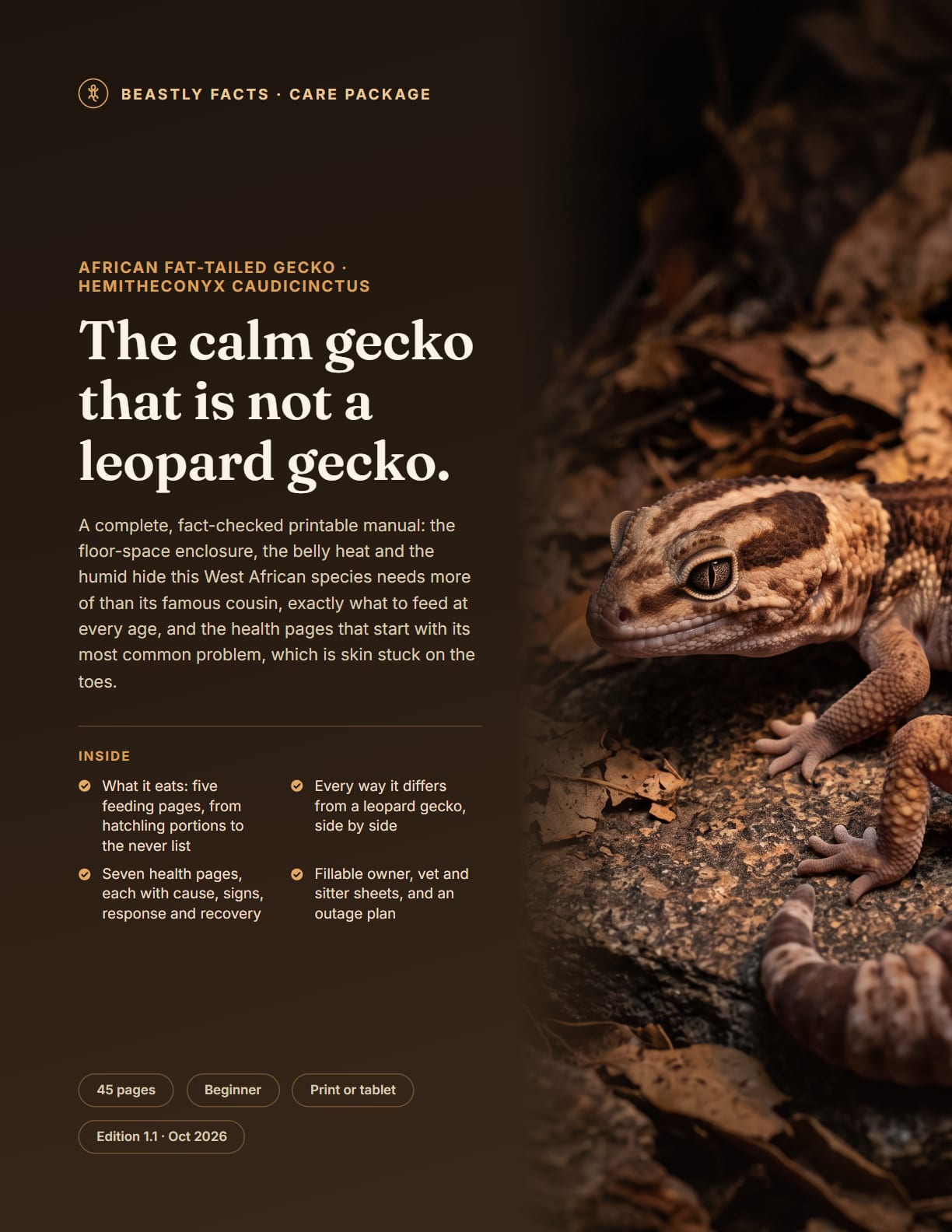
The African Fat-Tailed Gecko Care Package carries this setup as a checklist with the targets to hit, in a 45-page PDF you can keep by the enclosure, $8.99. Includes the Universal Pet Kit free: a routine chart and equipment log you can fill in.
Frequently Asked Questions
What size enclosure does an African fat-tailed gecko need?
At least 36x18x18 inches for one adult. A 40-gallon breeder, 36x18x16 inches, has the same footprint, and the footprint is what counts: a fat-tail lives on the ground and under it, so extra height goes unused.
Does an African fat-tailed gecko need a heat mat or a heat lamp?
A heat mat run on a thermostat, warming the floor to 88 to 92°F at the warm end and 75 to 80°F at the cool end, falling to 70 to 75°F at night. Heat rocks and strong overhead basking bulbs can burn the gecko.
How humid should the enclosure be?
Higher than a leopard gecko needs, though the enclosure stays mostly dry. Ambient around 50 to 70% works, and a permanent humid hide at 70 to 80% is the piece that prevents shedding problems.
What substrate is best for African fat-tailed geckos?
A healthy adult does well on a sandy soil it can dig into, such as a topsoil and play sand mix, or coconut fiber mixed with reptile sand, laid 4 inches deep or more. Every new gecko stays on paper towel through its 3 to 6 month quarantine, and a juvenile until it is over 6 months old.
Does this species need UVB?
It is optional for this nocturnal gecko when it gets a calcium supplement with D3, though it is most likely to thrive with a low-output tube in the 2 to 5% band. With or without one, the lights run 10 to 12 hours a day.
More on the African Fat-Tailed Gecko
Recommended Gear
As an Amazon Associate I earn from qualifying purchases through the links above, at no extra cost to you.

Written by Michael Ryan
Mike keeps two rescued bearded dragons, Dex and Cera, and writes the care guides on BeastlyFacts from his own research and mistakes. He is not a veterinarian.
More about Michael Ryan →You May Also Like
Subscribe - it's free
An occasional email when something new is worth your time. No spam.
Deep Dive
Health and More