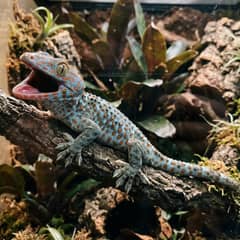
How to Handle an African Fat-Tailed Gecko
On This Page▾

African fat-tailed geckos are among the calmest, most handleable pet geckos available, often described as even more docile than their close cousin, the leopard gecko.
What to Expect
Adults are tolerant of handling and usually stay calm throughout a session. Juveniles tend to be shyer and take longer to settle. Any gecko, regardless of species, can bite if it's sick, scared, or genuinely provoked, but this is the exception for this species, not the norm.
Getting Started
Wait about two weeks after bringing a new gecko home, don't begin handling until it's eating regularly. Support the body fully and let it walk across your hands rather than gripping it. Avoid handling right after feeding or during a shed cycle.
Tail Drop
Like most geckos, a fat-tail will drop its tail if grabbed roughly or badly frightened. Never grab or restrain the tail. The regrown tail comes back looking different, smoother and more bulbous than the original, but it does regrow.
A fat-tail's tail isn't just for balance, it's a genuine fat reserve the gecko draws on during lean periods, which is exactly why losing it is such a costly event and never something to risk by grabbing one by the tail.
Reading the Vocalizations
Fat-tailed geckos are more vocal than many other pet geckos, and the sounds actually mean something. Chirping or squeaking generally signals discomfort, often related to handling, treat it as a cue to ease off. A slow tail-swish combined with an arched back is a clearer "leave me alone" signal.
The Leopard Gecko Comparison
These two species are constantly compared, and for good reason, they're close relatives (same subfamily), both have eyelids, both lack sticky toe pads, both are terrestrial. The main practical difference shows up in care instead of handling: fat-tails need meaningfully higher humidity than leopard geckos, and are more sensitive to conditions that run too dry. If you're deciding between the two, that humidity gap is the deciding factor rather than temperament, since a leopard gecko forgives a dry enclosure and a fat-tail does not. Among the other calm geckos, the gargoyle gecko tolerates being picked up on similar terms.
Sources & Further Reading
Last reviewed 26 Jul 2026 · 2 sources
❓ Frequently Asked Questions
Are African fat-tailed geckos good with handling?
Yes, they're among the calmest pet geckos available, often described as even more docile than the closely related leopard gecko. Adults tolerate handling well and usually stay calm through a session. Juveniles tend to be shyer and take longer to settle.
How soon can I start handling a new African fat-tailed gecko?
Two weeks after it comes home, and not before it is eating regularly. Once you start, support the whole body and let the gecko walk across your hands instead of gripping it. Skip handling right after a meal or during a shed.
What do the chirping and squeaking sounds mean?
Discomfort, usually with being handled. A chirp or a squeak is the cue to ease off and put the gecko back down. An arched back with a slow tail-swish is the same message, stated more clearly.
Will an African fat-tailed gecko drop its tail like a leopard gecko?
Yes, if it is grabbed roughly or badly frightened, which is why the tail is never a handhold. The tail does grow back. The replacement is smoother and more bulbous than the one it lost.
📰 More on the African Fat-Tailed Gecko
📘 African Fat-Tailed Gecko care guide
🦎 How Much Does an African Fat-Tailed Gecko Really Cost?
🦎 Common African Fat-Tailed Gecko Health Issues
🦎 African Fat-Tailed Gecko Tank Setup: Built for the Ground, Not the Branches
🦎 African Fat-Tailed Gecko Feeding: Schedule, Diet, and Why They Stop Eating
🦎 African Fat-Tailed Gecko Enrichment: The Closest Cousin Was Studied
Written by Michael Ryan
Mike keeps two rescued bearded dragons, Dex and Cera, and writes the care guides on BeastlyFacts from his own research and mistakes. He is not a veterinarian.
More about Michael Ryan →Comments
No comments yet - be the first!