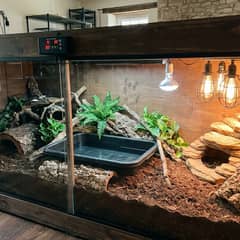
Jackson's Chameleon Enclosure Setup: Considerably Cooler Than the Veiled Chameleon
On This Page▾

Jackson's chameleon husbandry looks similar to the veiled chameleon's on paper, tall screen enclosure, misting, UVB, but the actual temperature numbers run meaningfully cooler, a direct result of this species' high-altitude East African origin.
Enclosure Size
24 inches long by 24 inches wide by 48 inches tall for a single adult, larger is better. Juveniles under about 10 months can do well temporarily in something smaller, around 16x16x30 inches. House one chameleon per enclosure, males will fight. A tall screen enclosure sized correctly from the start saves a later upgrade.

Temperature: The Defining Difference From the Veiled Chameleon
Basking spot around 85°F, similar to the veiled chameleon, but ambient air should stay considerably cooler, 68 to 75°F, with a genuine night drop to 50 to 65°F. Supplemental night heat usually isn't needed and can work against this species, unlike some reptiles that need warmth around the clock, Jackson's chameleons are adapted to cool mountain nights. Use a halogen basking bulb on one side during the day only, run through a dimming thermostat to keep that gradient accurate.
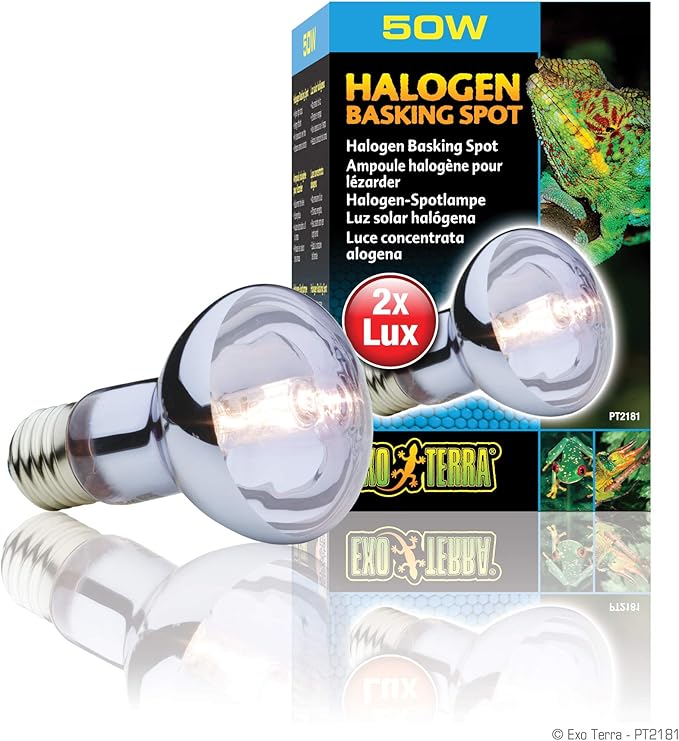

The night drop here isn't a nice-to-have, it's the point. Jackson's chameleons come from cool, high-altitude forest in East Africa, and mimicking that genuine overnight chill, rather than propping the enclosure up to a constant temperature, is part of what keeps this species healthy long term.
Humidity
Relative humidity of 60 to 100%, the LafeberVet figure, held with misting every 4 to 8 hours or an automated misting system, and a cool-mist humidifier where the room cannot hold it. Live plants help maintain it naturally. The misting is also how the animal drinks, since Jackson's chameleons take water as droplets from leaves rather than from a dish. Hobby care sheets describe a day-low, night-high pattern instead, with the enclosure drying out between mistings by day and spiking overnight, and that is what a misting schedule produces in practice; the veterinary range is the band the enclosure should stay inside while it does. Keep a fogger off while the heat lamp is on.
Substrate
Bare bottom with paper towel is the simplest, most manageable choice, though a bioactive substrate setup works too if you prefer. Avoid loose, particulate substrate that could be accidentally ingested and cause impaction.
Lighting
UVB is required, a Zoo Med ReptiSun 5.0 T5 HO or Arcadia Forest 6% bulb, replaced every 6 to 12 months.
Diet Basics
Live insects, varied: crickets, roaches, silkworms, superworms, mealworms, grasshoppers and wax worms, along with pesticide-free snails, slugs, caterpillars and flies.
Offer no more than five to seven insects at a feeding, none larger than the space between the chameleon's eyes. Overfeeding is its own risk here, since gout in this species traces back to too much protein as readily as to too little water.
Gut-load the insects before they go in. What the cricket ate is what the chameleon gets.
Supplement lightly, on a weekly rhythm: calcium dusted onto an adult's non-breeding diet once weekly, and a general vitamin and mineral supplement that may go on once weekly too. This is a species where more is a real risk: avoid products high in vitamin D, which can reach toxicity, and go carefully with synthetic vitamin A, which this species is especially sensitive to and which drives the edema and gout it is prone to.
The Non-Obvious Requirements
Favor an enclosure with two or three solid sides rather than full mesh, this helps hold humidity and genuinely reduces stress compared to an all-screen setup. Use distilled water in misters and foggers to avoid mineral buildup and equipment damage, and disinfect misting equipment regularly. Never run a fogger while the heat lamp is on, the combination can create dangerous conditions inside the enclosure.
If the lighting side of this is new to you, our complete guide to UVB lighting covers Ferguson Zones and the mistakes that cause metabolic bone disease.
Sources & Further Reading
Last reviewed 15 Sep 2026 · 2 sources
❓ Frequently Asked Questions
What size enclosure does an adult Jackson's chameleon need?
24 by 24 by 48 inches for one adult, and bigger is better. A juvenile under about 10 months can sit temporarily in something like 16x16x30. One chameleon per enclosure: males fight.
What temperature does a Jackson's chameleon need, and how does it differ from a veiled chameleon?
Basking near 85°F, much like a veiled chameleon, but the ambient air stays cooler at 68 to 75°F, with a real night drop to 50 to 65°F. Night heat is usually unnecessary and can work against a species adapted to cool mountain nights.
What humidity does this species need?
60 to 100% relative humidity, the veterinary figure, from misting every 4 to 8 hours or an automated mister, with a cool-mist humidifier where the room cannot hold it. The misting is also how the chameleon drinks. Live plants hold it up naturally.
What substrate and lighting does a Jackson's chameleon need?
Bare bottom with paper towel is simplest, though bioactive works. UVB is required: a Zoo Med ReptiSun 5.0 T5 HO or an Arcadia Forest 6%, swapped every 6 to 12 months.
What are the non-obvious setup requirements for this species?
Two or three solid sides rather than full mesh, which holds humidity and cuts stress. Use distilled water in misters and foggers, disinfect the equipment on a schedule, and never run a fogger while the heat lamp is on, since the combination can create dangerous conditions.
📰 More on the Jackson's Chameleon
📘 Jackson's Chameleon care guide
🦎 How Much Does a Jackson's Chameleon Really Cost?
🦎 How to Handle a Jackson's Chameleon
🦎 Common Jackson's Chameleon Health Issues
🦎 Jackson's Chameleon Feeding: Three Insects Every Other Day, and the Supplement That Causes Edema
🦎 Jackson's Chameleon Enrichment: A Mountain Animal in a Warm House
🛒 Recommended Gear
As an Amazon Associate, we earn from qualifying purchases through the links above - at no extra cost to you.
Written by Michael Ryan
Mike keeps two rescued bearded dragons, Dex and Cera, and writes the care guides on BeastlyFacts from his own research and mistakes. He is not a veterinarian.
More about Michael Ryan →Comments
No comments yet - be the first!