Red-Footed Tortoise
Chelonoidis carbonarius
On This Page▾
🌍 Overview
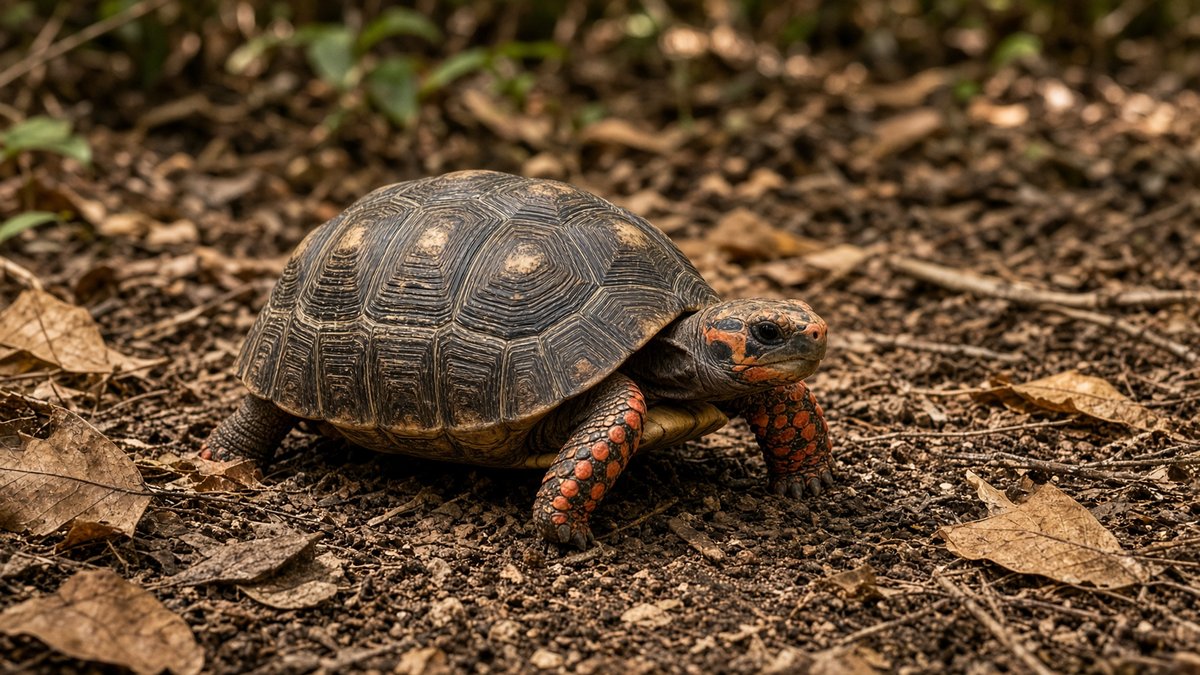
The red-footed tortoise is a tropical species native to South America east of the Andes, named for the bright red-to-orange scales on its limbs and head. Unlike the site's other tortoises, red-foots are genuine omnivores - alongside fruit and foliage, wild tortoises regularly eat carrion, insects, land snails, and other invertebrates, a real source of animal protein that strict grazers like the sulcata and Russian tortoise never touch. Their adult size lands squarely between those two species, which is a large part of their popularity: manageable enough for keepers who would never take on a 100+ lb sulcata, but noticeably roomier than a Russian tortoise. Coming from warm, humid, equatorial forest rather than cold steppe or desert, they don't brumate the way a Russian tortoise does, and they can live 50 to 70 years or more with good care.
📋 Quick Facts
Native Range
South America east of the Andes (Colombia to northern Argentina); also Panama and Trinidad
Natural Habitat
Tropical rainforest, dry forest, savanna, and humid forest edges
Adult Size
11-16 inches (28-41 cm); exceptional individuals up to 20 inches (51 cm)
Wild Diet
Omnivore - fruit, flowers, foliage, fungi, carrion, and invertebrates
Wild Lifespan
Not documented in the wild; 50 to 70+ years in captivity, with up to 90 reported
Conservation Status
Vulnerable (IUCN Tortoise & Freshwater Turtle Specialist Group); CITES Appendix II
📜 History
Johann Baptist von Spix described the species in 1824 as Testudo carbonaria. The name was rebuilt twice after that: Roger Bour and Charles Crumly moved the South American tortoises into Chelonoidis in 1982, and the Turtle Taxonomy Working Group corrected the mismatched feminine ending to carbonarius in 2017. Long before any of that the tortoise had a place at the table, because the Roman Catholic church counted it as permissible during fasting periods, and pastel de morrocoy, baked and served in the shell, remains a Lenten dish that animals are still traded across borders to supply. Officially declared CITES exports between 2000 and 2005 came to roughly 35,565 tortoises, and smuggling is thought to account for well over twice that.
⚖️ Compare
Red-Footed Tortoise
Human
Adult Size
11-16 inches (28-41 cm); exceptional individuals up to 20 inches (51 cm)
5-6 feet (150-185 cm); ~135-200 lbs
Wild Lifespan
Not documented in the wild; 50 to 70+ years in captivity, with up to 90 reported
~73 years (global average)
Wild Diet
Omnivore - fruit, flowers, foliage, fungi, carrion, and invertebrates
Omnivorous - eats just about anything
Native Range
South America east of the Andes (Colombia to northern Argentina); also Panama and Trinidad
Global - originated in Africa roughly 300,000 years ago
Natural Habitat
Tropical rainforest, dry forest, savanna, and humid forest edges
Everywhere from arctic tundra to tropical megacities
Conservation Status
Vulnerable (IUCN Tortoise & Freshwater Turtle Specialist Group); CITES Appendix II
Least Concern (8+ billion and counting)
🧠 Test Yourself
What's the Red-Footed Tortoise's native range?
🤩 Fun Facts
🐢 100-Year Commitment
Tortoises can live for over 100 years, so adopting one is genuinely a lifelong commitment. You may need to include them in your will!
🐢 Courting Like a Chicken
Male red-footed tortoises make a clucking sound during courtship, genuinely similar to a chicken, one of the more unexpected behaviors documented in a group of animals most people assume are silent.
⚖️ Where it is legal
9 US jurisdictions restrict this species, from outright bans to permits. Every one quotes the rule it comes from.
⚖️ Legal Guide
Subscribe - it's free
New animal facts and care guides straight to your inbox. No spam. 🐾
📰 Deep Dive
🐢 How Much Does a Red-Footed Tortoise Really Cost?
🐢 How to Handle a Red-Footed Tortoise
🐢 Common Red-Footed Tortoise Health Issues and What Causes Them
🐢 Red-Footed Tortoise Enclosure Setup: A Humid Tropical Setup, Not a Desert One
🐢 Red-Footed Tortoise Feeding: Diet, Schedule, and Why Protein Isn't Optional
🐢 Red-Footed Tortoise Enrichment: Enriched Tortoises Are More Optimistic
🩺 Health and More
🔌 Reptile Emergency Plan: Power Outages, Travel, and Pet Sitters
🐢 Tortoise Herpesvirus: Why Every New Tortoise Needs Months of Quarantine, Not Weeks
💧 Reading Reptile Stool, Urates, and Hydration: A Daily Health Check
🐢 Tortoise Soaking: How Often, How Deep, How Warm, and How Long
🧼 Salmonella and Reptile Hygiene: The Rules That Actually Matter
🌡️ Reptile Heating and Thermostats: Preventing Burns
🐢 Tortoise Brumation: Which Species, and How to Do It Right
🐢 Tortoise Sexing, Eggs, and Egg Binding
🌿 Safe Weeds and Wild Plants for Tortoises, Uromastyx, and Iguanas
🏡 Outdoor Reptile Housing: Pens, Predators, and What Actually Kills Them
📋 Succession Planning for a Pet That May Outlive You
🦎 Understanding Reptile Shedding (Ecdysis)
🦎 Three Reptiles Worth Starting With, Each for a Different Reason
🤓 Did You Know?
Unlike the strictly plant-eating Russian and sulcata tortoises, red-footed tortoises are true omnivores that eat carrion, insects, and land snails in the wild - a real taste for animal protein most pet tortoises never develop!
Explore More