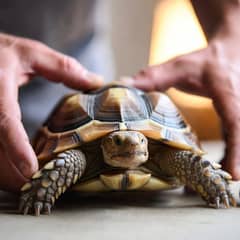
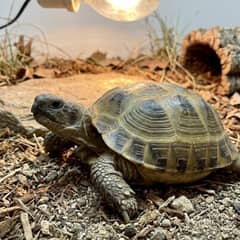
Red-Footed Tortoise Feeding: Diet, Schedule, and Why Protein Isn't Optional
On This Page▾

Red-footed tortoises need a different diet than the other commonly kept tortoises, real omnivores that need real fruit and real animal protein, not just a grazer with an occasional treat. Getting this balance right is one of the most important things you can do for this species' long-term health.
Feeding Schedule
Offer food daily for tortoises under about 5 years old, since juveniles are still building the growth that gets them to adult size, which most individuals come close to within 5 to 10 years. Past that age, many keepers shift to every other day for adults, which helps prevent the overly fast growth that drives shell pyramiding. Fresh water in a soakable dish should always be available regardless of feeding day, this species drinks and soaks noticeably more than a Russian or sulcata tortoise.
What Red-Footed Tortoises Eat
The working rule of thumb is roughly 90% plant matter and 10% animal matter. On the plant side, about 70% leafy greens, 20% other vegetables, and 10% fruit is a sound split, with fresh fruit running closer to 15% and a bit less protein at the other end of the published range. In the wild it swings much further: Animal Diversity Web notes wild red-footed tortoises eat mostly fruit in the wet season and shift toward flowers and foliage in the dry season, alongside carrion, fungi, and invertebrates year-round. A reasonable everyday target for a captive diet is leafy greens and vegetables as the base (collard, mustard, dandelion, endive, turnip greens, kale), fruit as a real but secondary slice (papaya, mango, banana, berries, melon, guava, pineapple), and a genuine, regular helping of protein.
For that protein slice, earthworms, land snails, dubia roaches, and other appropriately sized feeder insects are better choices than dog or cat food, which shows up in some older hobbyist advice but isn't formulated for a reptile's needs. A small amount of lean cooked meat or a low-iron commercial carnivore diet works as an occasional alternative. Hibiscus flowers and cactus pads are also good additions to the greens side.
In the wild, male red-footed tortoises eat noticeably more fruit than females do, one of several documented sex-based differences in how this species forages, according to research summarized by Animal Diversity Web.
Why Animal Protein Isn't Optional
This is the single most important way this species' diet differs from the sulcata and Russian tortoises, and it's worth taking seriously rather than treating as a minor preference. Red-footed tortoises raised on a plant-only diet commonly develop hind-leg weakness or paralysis, along with poor fertility and weak hatchlings, a pattern reported repeatedly across care literature and by reptile veterinarians fielding these cases. That's the direct opposite of the advice for a sulcata, where any meaningful amount of animal protein causes progressive kidney and liver damage, the rule the sulcata tortoise feeding guide is built around. If you're coming to a red-footed tortoise after keeping an arid-species tortoise, don't default to a hay-and-weeds-only routine out of habit, it's a genuine health risk for this species specifically.
Fruit: More Tolerance Than Most Tortoises, But Still Not Unlimited
The higher fruit tolerance is real and verified, not a myth. Where a sulcata or Russian tortoise should get fruit only as a rare, tiny treat (commonly capped under 5% of the diet), a red-footed tortoise can handle fruit as a genuine, regular part of the menu, commonly cited at 10 to 15% of the captive diet by weight. That said, "more tolerant" isn't "unlimited." Even wild tortoises that eat heavily seasonally shift back toward flowers and foliage the rest of the year, and a captive diet that leans too far into fruit day after day can still cause loose stools and an imbalanced diet overall. Keep leafy greens and vegetables as the everyday base, with fruit as a real but secondary component.
Calcium and UVB Needs
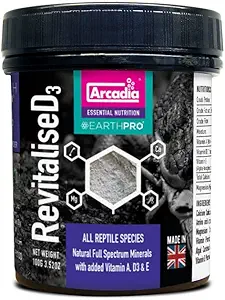
Dust food with a calcium and D3 supplement several times a week, more often for fast-growing juveniles, since indoor tortoises without regular unfiltered sunlight need dietary D3 to actually use that calcium. Leaving a cuttlebone in the enclosure gives a free-choice calcium source alongside scheduled dusting. None of this substitutes for daily UVB exposure though.

Foods to Avoid or Limit
Skip dog and cat food as a regular protein source, it isn't formulated for reptile needs even though it appears in some older care advice. Limit high-oxalate foods like spinach to occasional use rather than a staple, since they interfere with calcium absorption. Iceberg lettuce is mostly water and offers little nutrition, better as an occasional filler than a base food. And while fruit is more welcome here than in a sulcata's diet, don't let it crowd out the leafy greens and protein that actually carry this species' nutrition.
Sources & Further Reading
4 sources
- PetMD: Tropical Tortoise Care Sheet
- Animal Diversity Web: Chelonoidis carbonaria
- Reptiles Magazine: Red-Footed Tortoise Care Sheet
- Mendoza, P., Furuta, C., Garcia, B., Zena, L.A., Artoni, S., Dierenfeld, E.S., Bícego, K.C., & Carciofi, A.C. (2022). "Starch and fiber intake effects on energy metabolism, growth, and carapacial scute pyramiding of red-footed tortoise hatchlings (Chelonoidis carbonaria)." Comparative Biochemistry and Physiology Part A, 265, 111131. doi.org/10.1016/j.cbpa.2021.111131
❓ Frequently Asked Questions
What should a red-footed tortoise eat most of?
Roughly 90% plant matter (leafy greens, flowers, and a meaningful helping of fruit) and 10% animal matter. That plant majority should still be dominated by leafy greens and vegetables rather than fruit day to day, with fruit as a large but secondary slice.
Can red-footed tortoises eat more fruit than other tortoises?
Yes. Care sheets commonly put fresh fruit at 10 to 15% of the everyday diet, and wild red-footed tortoises eat considerably more of it seasonally. Compare that to a sulcata or Russian tortoise, both of which should get fruit only as a rare, tiny treat.
Why is animal protein not optional for red-footed tortoises?
On a plant-only diet, this species commonly develops hind-leg weakness or paralysis, poor fertility, and weak hatchlings. A sulcata is the opposite case, where a meaningful amount of animal protein causes kidney and liver damage, so don't carry a hay-and-weeds routine over from an arid species.
How often should I feed a red-footed tortoise?
Daily for tortoises under about 5 years old. Past that, many keepers shift to every other day to prevent obesity and overly fast, pyramiding-prone growth. Fresh water should always be available regardless of feeding day.
What calcium and UVB does a red-footed tortoise need?
Calcium with D3 dusted onto food several times a week, more often for fast-growing juveniles, and a cuttlebone as a free-choice source. Daily UVB is needed alongside it.
📰 More on the Red Footed Tortoise
📘 Red Footed Tortoise care guide
🐢 How Much Does a Red-Footed Tortoise Really Cost?
🐢 How to Handle a Red-Footed Tortoise
🐢 Common Red-Footed Tortoise Health Issues and What Causes Them
🐢 Red-Footed Tortoise Enclosure Setup: A Humid Tropical Setup, Not a Desert One
🐢 Red-Footed Tortoise Enrichment: Enriched Tortoises Are More Optimistic
🛒 Recommended Gear
As an Amazon Associate, we earn from qualifying purchases through the links above - at no extra cost to you.
Written by Michael Ryan
Mike keeps two rescued bearded dragons, Dex and Cera, and writes the care guides on BeastlyFacts from his own research and mistakes. He is not a veterinarian.
More about Michael Ryan →Comments
No comments yet - be the first!