Corn Snake
Pantherophis guttatus
On This Page▾
🌍 Overview
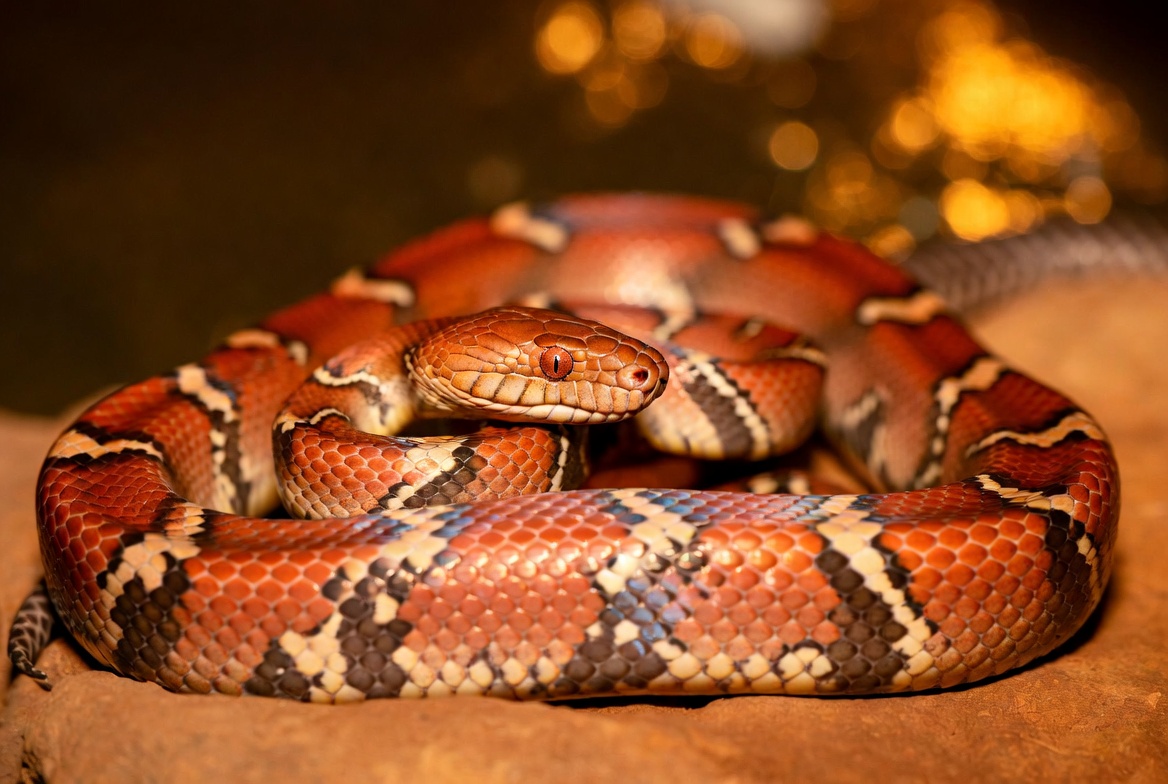
Corn snakes are slender, medium-sized rat snakes native to the eastern United States. They are excellent climbers and highly active, often found in cornfields and farm buildings where rodent prey is abundant - hence the name. Docile, hardy, and available in a staggering array of captive-bred color morphs, they are widely considered the ideal beginner snake for new reptile keepers.
📋 Quick Facts
Native Range
Eastern and central United States
Natural Habitat
Pine forest, woodland, rocky hillside, and agricultural land
Adult Size
3.5-5 feet (107-152 cm)
Wild Diet
Mice, rats, birds, and lizards
Wild Lifespan
Not documented in the wild, where predation and disease are assumed to shorten it; the longest recorded in captivity is just over 32 years
Conservation Status
Least Concern (IUCN)
📜 History
The corn snake hobby has a documented starting point. The first amelanistic corn snake was caught in North Carolina in 1953, and in 1959 Dr. Bernard Bechtel bred that animal to three normal females, then crossed the offspring back to each other to produce the first captive-bred corn snake morph in 1961. That single line opened the door to selective breeding in snakes at a time when reptile genetics were barely understood, and breeders through the 1970s and 1980s built on it. Every corn snake color sold today descends from that method, which is a large part of why the species became the standard beginner snake.
⚖️ Compare
Corn Snake
Human
Adult Size
3.5-5 feet (107-152 cm)
5-6 feet (150-185 cm); ~135-200 lbs
Wild Lifespan
Not documented in the wild, where predation and disease are assumed to shorten it; the longest recorded in captivity is just over 32 years
~73 years (global average)
Wild Diet
Mice, rats, birds, and lizards
Omnivorous - eats just about anything
Native Range
Eastern and central United States
Global - originated in Africa roughly 300,000 years ago
Natural Habitat
Pine forest, woodland, rocky hillside, and agricultural land
Everywhere from arctic tundra to tropical megacities
Conservation Status
Least Concern (IUCN)
Least Concern (8+ billion and counting)
🧠 Test Yourself
What's the Corn Snake's native range?
🤩 Fun Facts
🐍 Tongue Sniffers
Snakes smell with their tongues! They flick their forked tongue to collect chemical particles from the air, then press it into the Jacobson's organ on the roof of their mouth to 'read' the smells.
📖 Care Guide
Corn Snake Care Guide
The curious, colorful beginner snake that never stops exploring!
⚖️ Where it is legal
12 US jurisdictions restrict this species, from outright bans to permits. Every one quotes the rule it comes from.
⚖️ Legal Guide
Subscribe - it's free
New animal facts and care guides straight to your inbox. No spam. 🐾
📰 Deep Dive
🐍 How Much Does a Corn Snake Really Cost?
🐍 How to Handle a Corn Snake
🐍 Common Corn Snake Health Issues and What Causes Them
🐍 Corn Snake Tank Setup: Floor Space, a Mandatory Thermostat, and a Humidity Debate
🐍 Corn Snake Feeding: Schedule, Diet, and Why They Stop Eating
🐍 Corn Snake Enrichment: The Species With the Most Research Behind It
🩺 Health and More
🐍 Brumation in Pet Snakes: How to Safely Cool Down Ball Pythons and Corn Snakes
🔌 Reptile Emergency Plan: Power Outages, Travel, and Pet Sitters
💧 Reading Reptile Stool, Urates, and Hydration: A Daily Health Check
🧼 Salmonella and Reptile Hygiene: The Rules That Actually Matter
🌡️ Reptile Heating and Thermostats: Preventing Burns
🧫 Reptile Quarantine: Why New Snakes and Lizards Need Months, Not Weeks
🐍 Sexing, Growth, and Body Condition in Pet Snakes
🐍 How Snakes Actually Shed, and Why Humidity Is Not the Engine
🦎 Understanding Reptile Shedding (Ecdysis)
🦎 Five Reptiles That Actually Make Sense for Beginners
⚖️ Four Pets You Only Really Understand by Comparison
🐍 Ball Python vs. Corn Snake: Which Beginner Snake Fits You Better
🐍 Milk Snake vs. Corn Snake: Which Beginner Snake Actually Differs More
🐍 Corn Snake vs. Hognose Snake: Which Beginner-Friendly Snake Fits You
🤓 Did You Know?
Corn snakes are named for their distinctive belly pattern that resembles Indian corn kernels, not because they're found in corn fields (though they are)!
Explore More