Milk Snake vs. Corn Snake: Which Beginner Snake Actually Differs More
On This Page▾

Both are docile, hardy colubrids that consistently top "best beginner snake" lists, and honestly, their day-to-day care looks a lot alike. What sets them apart isn't difficulty, it's identification, range, and where each one's color variety comes from.
The Comparison
| Milk Snake | Corn Snake | |
|---|---|---|
| Adult length | 28-48 in by subspecies | 3-5 ft |
| Natural range | Canada to Central/South America | Southeastern US |
| Recognized subspecies | ~24 | 1 (many captive morphs) |
| Mimics a venomous species? | Yes, the eastern coral snake | No |
| Name origin | Milk-colored scales near old barns (folk myth) | Checkerboard belly resembles corn kernels |
| Feeding reliability | Generally reliable | Famously reliable |
| Lifespan | 20 years or more | 15-20 years, records past 30 |
| Beginner-friendly? | Yes | Yes |
One of Them Is a Venomous Snake Lookalike
This is the sharpest real difference between the two. Many milk snake subspecies have evolved color patterns that closely resemble venomous coral snakes, a textbook case of Batesian mimicry, a harmless species borrowing the warning colors of a dangerous one to deter predators. It works well enough on people too that rhymes like "red touch yellow, kill a fellow, red touch black, friend of Jack" exist specifically to help distinguish a harmless milk snake from a venomous coral snake in the wild. Corn snakes don't mimic anything venomous and don't carry that same identification risk, though their reddish-orange blotched pattern still occasionally gets them mistaken for a copperhead by someone unfamiliar with either species.
Choose a Milk Snake if the coral snake mimicry and huge range of natural subspecies coloration genuinely appeals to you. Just know the enclosure and feeding routine won't differ much from a corn snake's, this is a choice about the animal itself, not an easier or harder care level.
Range and Variety Come From Different Places
Milk snakes have one of the widest natural geographic ranges of any snake in the Americas, found almost anywhere east of the Rocky Mountains in the US and stretching down through Mexico and Central America, which is exactly why around two dozen subspecies have been described, each with its own natural coloration shaped by its region. Corn snakes are native to a much smaller area, primarily the southeastern United States, but decades of selective captive breeding have produced an enormous range of color morphs, arguably more than any other commonly kept pet snake. One species is colorful because of where it naturally lives; the other is colorful because of what breeders have done with it.
Neither name is about diet, and one of them is built on a myth. A corn snake's name comes from its belly, a checkerboard pattern of black and white marks resembling kernels of maize, documented in print since the 1600s. A milk snake's name comes from a false belief that farmers who found them in barns, and noticed a cow producing less milk than usual, blamed the snake for somehow milking the cow. In reality, both snakes were there for the same reason, hunting the rodents drawn to stored grain, snakes are strict carnivores and neither one has ever fed on milk.
Care Needs Are Close to Identical
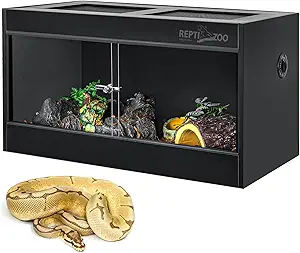
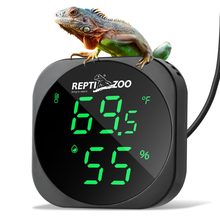
Both species do well in a similarly sized enclosure, 48 by 24 by 24 inches as the milk snake's adult minimum, eat appropriately sized rodents on a similar schedule, and are comfortable in a similar temperature and humidity range, tracked with a thermometer and hygrometer. Both are also famous for being genuinely easy to handle, calm, and rarely defensive once settled in. If anything, corn snakes have a very slightly stronger reputation for bulletproof feeding reliability, but milk snakes aren't meaningfully behind.
A Corn Snake is the better fit if morph variety from selective breeding is what you're after, or if you want the species with the single strongest reputation for reliable feeding. Either snake will reward the same basic care routine, so let personal preference on looks make the final call.
Bottom Line
Pick a milk snake if the coral snake mimicry and a huge range of natural, wild-type coloration appeal to you. Pick a corn snake if you'd rather choose from an enormous catalog of captive-bred color morphs, or just want the species with the single most bulletproof feeding reputation. Either way, you're getting one of the two most genuinely beginner-friendly snakes in the hobby. The milk snake and corn snake encyclopedia profiles cover the overlapping North American ranges behind how often the two get confused.
Sources & Further Reading
Last reviewed 14 Sep 2026 · 5 sources
- Lampropeltis triangulum (Milk Snake), Animal Diversity Web (University of Michigan)
- Sinaloan Milksnake, Smithsonian's National Zoo & Conservation Biology Institute
- Corn Snake, Smithsonian's National Zoo & Conservation Biology Institute
- Pantherophis guttatus (Corn Snake), Animal Diversity Web (University of Michigan)
- How To Care For a Corn Snake, RSPCA
❓ Frequently Asked Questions
Is a milk snake or a corn snake easier to care for?
Honestly, both are about equally easy, which is unusual for a comparison guide. Both are hardy, docile colubrids with similar size, similar enclosure needs, and similar diets. The differences here are more about identification, range, and color variety than about which one is harder to keep.
Why do milk snakes get mistaken for venomous snakes?
Because many milk snake subspecies practice genuine Batesian mimicry, evolving color patterns similar to venomous coral snakes to deter predators. It's effective enough at fooling people that rhymes like 'red touch yellow, kill a fellow' exist specifically to help people tell a harmless milk snake apart from a venomous coral snake in the wild. Corn snakes don't mimic a venomous species and don't carry that same identification risk.
How did the corn snake get its name?
From its belly, not its diet. A corn snake's underside has a checkerboard pattern of alternating black and white marks that resembles the kernels of maize, or Indian corn, which is the most commonly cited origin for the name, documented in print as far back as the 1600s. A secondary theory ties the name to how often the species was found near corn cribs hunting the rodents drawn to stored grain.
Which has more color and pattern variety, a milk snake or a corn snake?
Both are highly variable, but for different reasons. Milk snakes have roughly two dozen recognized subspecies spread across an enormous natural range, from Canada down through Mexico and Central America, each with its own natural coloration. Corn snakes have a smaller natural range but an enormous number of captive-bred color morphs developed through selective breeding, arguably the widest morph variety of any commonly kept snake.
Which snake has the wider natural range, milk snake or corn snake?
Milk snake, by a large margin. Milk snakes have one of the widest geographic ranges of any snake species in the Americas, found almost anywhere east of the Rocky Mountains in the US and down through Central America. Corn snakes are native to a much smaller range, primarily the southeastern United States.
🐍 How Much Does a Corn Snake Really Cost?
🐍 How Much Does a Milk Snake Really Cost?
🐍 How to Handle a Corn Snake
🐍 How to Handle a Milk Snake (And the Coral Snake Look-Alike Question)
🐍 Common Corn Snake Health Issues and What Causes Them
🐍 Common Milk Snake Health Issues
🐍 Corn Snake Tank Setup: Floor Space, a Mandatory Thermostat, and a Humidity Debate
🐍 Milk Snake Tank Setup: Corn Snake Basics, Plus a Few Species-Specific Twists
🐍 Corn Snake Feeding: Schedule, Diet, and Why They Stop Eating
🐍 Corn Snake Enrichment: The Species With the Most Research Behind It
🐍 Milk Snake Enrichment: A Shy Snake Needs More Cover, Not Less Space
🐍 Is It Legal to Own a Corn Snake? State-by-State Guide
🐍 Is It Legal to Own a Milk Snake? State-by-State Guide
🛒 Recommended Gear
As an Amazon Associate, we earn from qualifying purchases through the links above - at no extra cost to you.
Written by Michael Ryan
Mike keeps two rescued bearded dragons, Dex and Cera, and writes the care guides on BeastlyFacts from his own research and mistakes. He is not a veterinarian.
More about Michael Ryan →Comments
No comments yet - be the first!