How to Handle a Corn Snake
On This Page▾

Corn snakes are docile, hardy, and consistently ranked among the best beginner snakes, but juveniles can be fast, wiggly, and defensive before they settle into the calmer temperament adults are known for.
Let It Settle In First
Give a new corn snake time to acclimate and eat successfully 3 to 4 times, roughly one to two weeks at minimum, before attempting to handle it. For hatchlings, start with sessions as short as 1 to 2 minutes once they've settled in.
How Often
Keep early sessions to 5 or 10 minutes, no more than a couple of times a week, and build up gradually from there as your snake tolerates more.
Two Timing Rules Worth Following Exactly
Wait 48 to 72 hours after feeding before handling. Handling too soon after a meal is one of the most common causes of regurgitation, and it's easy to avoid just by watching the calendar.
Skip handling during a shed. You'll know a shed is coming when the eyes turn cloudy or blue, at that point your snake is functionally blind and more likely to bite out of startlement, not temperament. Wait until the shed is complete and the eyes clear up again.
The Correct Way to Handle One
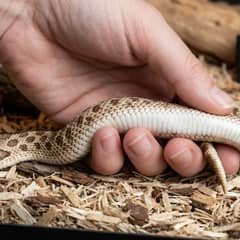
Make sure your snake is actually awake first, a gentle tap with a paper-towel roll or snake hook prevents it from mistaking your hand for food. Approach from the side, never straight down from above, which reads as predatory. Support as much of the body as you can with both hands, and let the snake move freely through them rather than trying to hold it still. Never grab or restrain the head or tail, and keep it close to your body instead of out at arm's length.
Signs It's Stressed
- Rapid tongue-flicking
- Tight coiling
- Musking, a foul-smelling defensive secretion
- Striking
- Tail rattling or vibrating
- Fast, erratic movement
A corn snake vibrating its tail against dry leaves or substrate can sound remarkably like a rattlesnake, a defensive bluff that works surprisingly well on would-be predators despite corn snakes having no rattle at all.
Stay calm if you see these. It's usually better to let a brief tantrum settle before returning your snake to its enclosure. Putting it back mid-thrash can end up reinforcing the defensive behavior.
A Few Things Worth Knowing
Bites are rare and minor. When they happen, it's typically a startled or defensive reaction rather than genuine aggression, and the bite itself is small and easily treated with soap and water.
Corn snakes are skilled escape artists. This isn't really a handling note, but it becomes relevant fast: always use a secure, locking enclosure, our tank setup guide covers what holds one in.
They can carry Salmonella, like virtually all reptiles. The CDC attributes roughly 7% of all US Salmonella cases, about 93,000 a year, to contact with reptiles and amphibians. Wash your hands before and after every handling session and any enclosure contact, and supervise handling for children, ideally once they're around 8 to 10 years old or older.
The calm that makes a corn snake easy to handle is the same trait Ball Python vs. Corn Snake weighs against the ball python's, the other beginner snake with a reputation for tolerating hands.
Sources & Further Reading
Last reviewed 11 Jul 2026 · 2 sources
❓ Frequently Asked Questions
How soon can I handle a new corn snake?
Give it time to acclimate and eat successfully 3 to 4 times first, roughly one to two weeks at minimum. For hatchlings, start with sessions as short as 1 to 2 minutes once they've settled in.
How often can a corn snake be handled?
A couple of times a week at first, 5 or 10 minutes a session. Build from there as the snake tolerates more.
How long should I wait to handle after feeding?
48 to 72 hours. Picking a snake up on a full stomach is a leading cause of regurgitation, and the calendar is all it takes to avoid it.
Is it normal for a corn snake to bite or musk when handled?
Bites are rare and minor, typically a startled or defensive reaction rather than genuine aggression, and easily treated with soap and water. Musking, a foul-smelling defensive secretion, is a stress signal, if you see it along with tight coiling or striking, it's time to end the session calmly.
📰 More on the Corn Snake
📘 Corn Snake care guide
🐍 How Much Does a Corn Snake Really Cost?
🐍 Common Corn Snake Health Issues and What Causes Them
🐍 Corn Snake Tank Setup: Floor Space, a Mandatory Thermostat, and a Humidity Debate
🐍 Corn Snake Feeding: Schedule, Diet, and Why They Stop Eating
🐍 Corn Snake Enrichment: The Species With the Most Research Behind It
Written by Michael Ryan
Mike keeps two rescued bearded dragons, Dex and Cera, and writes the care guides on BeastlyFacts from his own research and mistakes. He is not a veterinarian.
More about Michael Ryan →Comments
No comments yet - be the first!