Savannah Monitor Enrichment: The Species That Gets Bored Fastest
On This Page▾

Few animals lose more to a bare enclosure than a savannah monitor does, measured against what it is capable of.
The monitor problem-solving research was done on Varanus albigularis. Savannah monitors are Varanus exanthematicus, the same genus, which makes this the shortest evidence borrow in this whole series. Eight of eight test animals opened a puzzle tube within ten minutes on their first attempt.
What the Research Says
No study on V. exanthematicus directly. The genus-level evidence is worth repeating: eight juvenile black-throated monitors, a transparent tube with food inside, all eight solved it within ten minutes on the first trial. Follow-up work across varanids and helodermatids found solving latencies dropping across repeated trials, which is learning rather than luck.
A zoo study in Thailand separately looked at enrichment effects on the activity and spatial distribution of captive monitor lizards.
The literature notes that stimulus enrichment is accepted practice for mammals but has barely been explored for non-avian reptiles as an aid to cognitive development, despite monitors having a long-standing reputation for curiosity and intelligence. The gap is in the research, not in the animals.
Substrate Deep Enough to Disappear Into
Savannah monitors burrow, both to escape heat and to rest. For an adult that means a serious volume of burrowing substrate, mixed so it holds a tunnel instead of collapsing. Filling an eight-foot floor to burrowing depth takes many bags of anything sold in a bag, so price that line into the build.

Keep the lower layer damp. Wild savannahs shelter in humid burrows even in arid regions, and chronic dehydration is one of the commonest problems in captive animals.
Puzzle Feeding, With a Warning Attached
This is the item the genus-level evidence points at, and it comes with a caveat this species specifically needs.
Savannah monitors become obese very easily in captivity. Food-based enrichment has to deliver the ration you were already feeding, in a harder form, not extra food made interesting. A transparent container the animal has to open, an extraction puzzle board with sliders and lift-out plugs, food buried at a new spot, prey that has to be found, not handed over: same calories, more work.
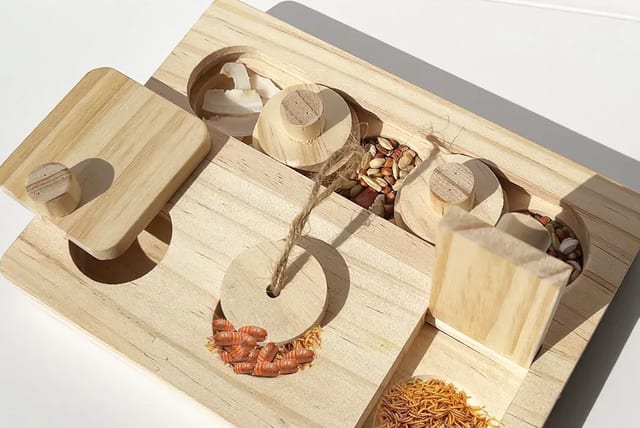
A board like that is sized for a lizard, which is the right starting point, though for a full-grown adult it is still on the small side. Treat it as one station among several, never the whole answer.
Floor Space and Terrain
These are wide-ranging foragers and adults are large animals. Floor area is what makes foraging possible at all, and rock stacks, logs and varied terrain turn a big box into somewhere with places in it.
Target and Station Training
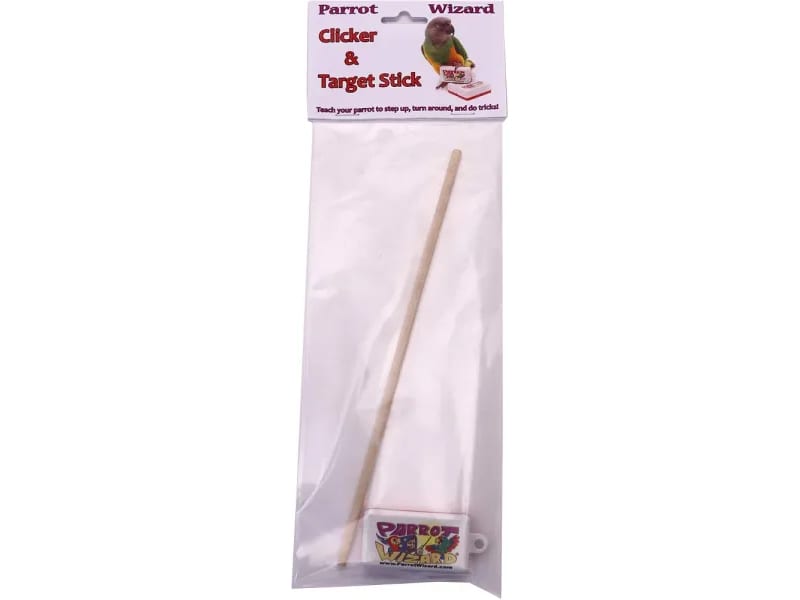
Routine in zoo collections for large varanids, and for an animal with this bite it is a safety measure as much as an enrichment one. A clicker and target stick is the entire equipment list. Station training makes weighing and health checks something the animal participates in rather than something done to it.
Priority Order
- Substrate deep enough for a real burrow, with a damp lower layer
- Enclosure floor area
- Puzzle and extraction feeding, delivering the existing ration
- A humid retreat
- Target and station training
- Scent novelty and varied food placement
- Rearrangement, last
What Not to Do
Do not add calories in the name of enrichment, because obesity is the defining welfare problem in captive savannah monitors. Do not keep a burrowing species on a shallow layer. Do not treat this as an arid animal that needs no humidity. Do not buy one expecting a placid pet, since size and strength make this an advanced species. And do not present genus-level evidence as species-specific, which is the distinction this guide is built around.
Sources & Further Reading
4 sources
- Genus-level evidence. No study exists on Varanus exanthematicus. The findings below are from other Varanus species and are covered in full in our Ackie Monitor enrichment guide.
- Manrod JD, Hartdegen R and Burghardt GM. Rapid solving of a problem apparatus by juvenile black-throated monitor lizards. Animal Cognition
- Latency in problem solving as evidence for learning in varanid and helodermatid lizards. Copeia
- A preliminary study of the effects of enrichment on captive monitor lizards
- Burghardt GM (2013). Environmental enrichment and cognitive complexity in reptiles and amphibians
❓ Frequently Asked Questions
How close is the research to this species?
Closer than for most animals. The problem-solving study was on Varanus albigularis, the black-throated monitor, and savannah monitors are Varanus exanthematicus, the same genus. That is genus-level rather than species-specific evidence, which is a real distinction but a much shorter borrow than the one tegus need.
What did the monitor study show?
Eight juvenile black-throated monitors were given a transparent tube containing food, and all eight opened it within ten minutes on the first trial. Later longitudinal testing with puzzle-feeder devices found solving latencies decreasing over time, interpreted as learning rather than repetition.
Why is obesity relevant to an enrichment guide?
Because most enrichment for this species is food based, and savannah monitors become obese very easily in captivity on rich diets and limited space. Puzzle feeding has to deliver the existing ration in a harder form rather than adding calories on top of it.
How deep does the substrate need to be?
Deep enough to construct a burrow, which for an adult is a serious volume of material. Savannah monitors burrow to escape heat and to rest, and a shallow layer removes the behavior entirely. This is the biggest single housing decision for the species.
Do savannah monitors need humidity?
More than the arid reputation suggests. They shelter in humid burrows in the wild even in dry regions, so a damp lower substrate layer or a dedicated humid retreat matters, and chronic dehydration is a common problem in captive animals.
Can savannah monitors be target trained?
Yes, and monitors are routinely target-trained in zoo collections. For an animal this size, station training makes weighing and health checks dramatically safer for both parties.
📰 More on the Savannah Monitor
📘 Savannah Monitor care guide
🦎 How Much Does a Savannah Monitor Really Cost?
🦎 How to Handle a Savannah Monitor (This Isn't the Ackie Monitor)
🦎 Common Savannah Monitor Health Issues (Obesity Is the Defining One)
🦎 Savannah Monitor Enclosure Setup: The 8x4x4 Foot Reality
🦎 Savannah Monitor Feeding: Insects as the Staple, Rodents as the Exception, and the Liver That Pays for the Difference
🛒 Recommended Gear
As an Amazon Associate, we earn from qualifying purchases through the links above - at no extra cost to you.
Written by Michael Ryan
Mike keeps two rescued bearded dragons, Dex and Cera, and writes the care guides on BeastlyFacts from his own research and mistakes. He is not a veterinarian.
More about Michael Ryan →Comments
No comments yet - be the first!