Jumping Spider Enrichment: They Can Recognize Individuals
On This Page▾

Almost nothing kept as an invertebrate has cognition research behind it. The jumping spider has a whole literature, and it is stranger than anything a care sheet will tell you.
A 2024 paper in eLife documents individual recognition in Phidippus regius. The same species has published work on visual discrimination learning, and another salticid has demonstrated place avoidance learning and memory. Enrichment for these animals is a visual question, not a decorating one.
What the Research Says
Salticids are, in the words of a 2020 review in Learning and Behavior, an exceptional group for comparative cognition studies. They provide excellent models for visually mediated behaviors including associative learning and navigation of complex environments, and produce what the literature describes as a wide spectrum of intelligent behavior with evidence of flexible learning and recognition memory.
On Phidippus regius specifically there is work on visual discrimination learning, a replication study on shape discrimination in a conditioning procedure, and the 2024 individual recognition paper. In another salticid, researchers used a conditioned passive place avoidance paradigm and found spiders learned to associate a stimulus with visual background cues, with the extent of learning depending on which visual stimulus was present and the interval between trials.
Comparisons between lab-reared and field-collected Phidippus audax found differences in color preferences, aggression, courtship and exploratory behavior. Captivity changes these animals measurably, which is a more honest thing to tell a keeper than pretending it does not.
Visual Complexity, Because That Is Their Channel
A jumping spider navigates by sight in a way almost no other invertebrate does. A bare acrylic cube gives those eyes nothing.
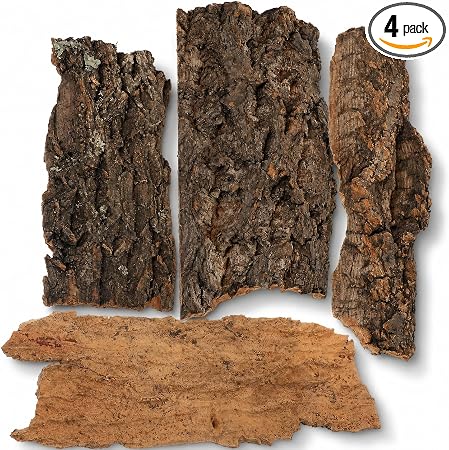
Vary the surfaces, depths and textures inside the enclosure. Cork bark mini flats, small branches, and artificial or live foliage create the layered, three-dimensional space a salticid actually reads. Height matters, since they build silk retreats in elevated corners.
Live Prey, Pursued
Jumping spiders stalk and pounce. They do not build capture webs, so the hunt is the behavior, and prey that has to be located and chased is the closest thing to a natural outlet available.
A flightless fruit fly culture keeps appropriately sized live prey on hand. Vary the prey type and where it is released.

Climbing and Retreat Space
The literature describes behavioral enrichment for salticids in terms of climbing and nesting structures such as natural wood branches. They need somewhere high and enclosed to build a silk retreat, and they will pick a top corner if you give them nothing better.
Vertical space with real structure in it is the whole enclosure design brief for this animal.
Interaction, With Care
Unusually for an invertebrate, interaction with human caretakers during handling and maintenance is mentioned in the salticid literature as a form of behavioral enrichment. These spiders track movement and will watch you.
Keep it brief, low to a soft surface, and never over a hard floor.
Priority Order
- Vertical space with layered climbing structure
- Live prey that has to be located and pursued
- Visual and textural complexity across the enclosure
- A high, enclosed spot suitable for a silk retreat
- Brief low interaction, over something soft
- Rearrangement, occasionally
What Not to Do
Do not keep a jumping spider in a bare cube. Do not handle over a hard surface or at height, since a fall is often fatal. Do not house two together, as they are not social and will treat each other as prey. Do not disturb a spider that has sealed itself into a retreat, because it is likely molting, and the invertebrate molting guide covers why interrupting that is dangerous. And do not offer prey larger than the spider's body, with the abdomen as the working size limit.
Sources & Further Reading
4 sources
- Individual recognition in a jumping spider (Phidippus regius). eLife (2024)
- Visual discrimination learning in the jumping spider Phidippus regius. Animal Behavior and Cognition
- Jumping spiders: an exceptional group for comparative cognition studies. Learning and Behavior
- Place avoidance learning and memory in a jumping spider. Animal Cognition
❓ Frequently Asked Questions
Is there real cognition research on jumping spiders?
A surprising amount. There is published work on visual discrimination learning in Phidippus regius, a replication study on shape discrimination conditioning in the same species, a 2024 eLife paper documenting individual recognition in P. regius, and place avoidance learning and memory in another salticid. A 2020 review in Learning and Behavior argues jumping spiders are an exceptional group for comparative cognition.
What does that mean for how I keep one?
That the enrichment axis is visual. Salticids have exceptional vision for their size and navigate complex environments by sight, so structural and visual complexity does more than anything scent or texture based would.
Does captivity change their behavior?
It appears to. Comparisons between lab-reared and field-collected Phidippus audax found differences in color preferences, aggression, courtship and exploratory behavior. That is a captivity effect worth naming honestly in a care guide rather than assuming a captive-bred spider behaves like a wild one.
Should I feed live prey?
Yes, and it is the closest thing to a hunting outlet these animals get. Jumping spiders stalk and pounce rather than building capture webs, so live prey that has to be located and pursued engages the behavior the animal is built around.
Do jumping spiders need climbing structure?
Yes. Behavioral enrichment for salticids in the literature is described in terms of climbing and nesting structures such as natural wood branches. They build silk retreats in elevated corners and use vertical surfaces constantly.
Is handling enrichment for a jumping spider?
Interaction with human caretakers during handling and maintenance is mentioned in the literature as a form of behavioral enrichment for salticids, which is unusual for an invertebrate. It should still be brief, low and over a soft surface, because a fall can be fatal.
📰 More on the Jumping Spider
📘 Jumping Spider care guide
🕷️ How Much Does a Jumping Spider Really Cost?
🕷️ How to Handle a Jumping Spider (And Why Its Eyesight Matters)
🕷️ Common Jumping Spider Health Issues
🕷️ Jumping Spider Enclosure Setup: Small, Simple, and All About Humidity
🕷️ Jumping Spider Feeding: Schedule, Diet, and Why They Stop Eating
🛒 Recommended Gear
As an Amazon Associate, we earn from qualifying purchases through the links above - at no extra cost to you.
Written by Michael Ryan
Mike keeps two rescued bearded dragons, Dex and Cera, and writes the care guides on BeastlyFacts from his own research and mistakes. He is not a veterinarian.
More about Michael Ryan →Comments
No comments yet - be the first!