Flying Squirrel Enrichment: Winter Nests, Glides, and a Cache to Hide
On This Page▾

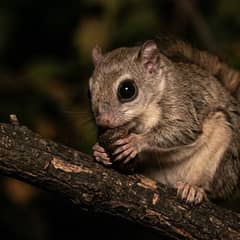
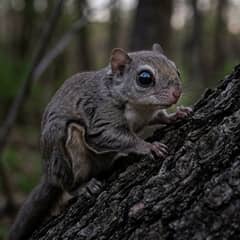
The southern flying squirrel is a small, strictly nocturnal rodent of the hardwood forests of eastern North America. It spends the day asleep in a tree cavity or an old woodpecker hole high off the ground, often packed in with relatives through the winter for warmth. At night it glides from tree to tree, landing head-up on the trunk and running straight up. It eats nuts, seeds, fungi, buds, insects and bird eggs, and from late summer on it hides nuts in its nest and around its trees to live on through the winter.
Give a pet flying squirrel what that life is built around: company, a high nest, trunks to land on, food to search for and hide, and something to gnaw. It will use all of it at night.
Company
Keep at least two. A same-sex pair is the baseline, and siblings raised together suit an animal that, in the wild, prefers relatives as nest mates. Two females are the pairing most likely to squabble, so give them more than one nest box.
A High Nest, and Spares
Wild nests sit high in a tree and are stuffed with soft material.
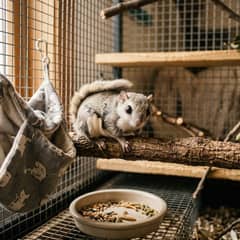
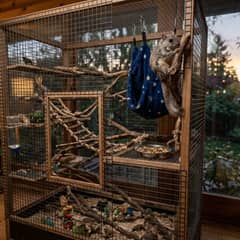
- Hang a wooden nest box near the cage roof, big enough for the whole group to sleep in contact.
- Add a hanging fleece sleeper or two, so there are more nests than squirrels.
- Put shredded paper or fleece strips on the cage floor and let the squirrels carry it up and build their own lining.
Trunks to Land On
A flying squirrel lands head-up on a vertical surface, grips with its claws and runs upward. Build the cage around that:
- Fix a few branches upright, like small tree trunks, at different spots.
- Leave open space between them so the squirrels can leap and make short glides.
- Add horizontal branches, ropes, rope bridges, shelves and hammocks at mixed heights for climbing routes.
- Move a few pieces every couple of weeks so the routes stay new.
Food to Find and Hide
A bowl of food skips the night's work. Put the search back:
- Scatter part of the evening food around the cage instead of filling one dish.
- Offer a nut in the shell now and then, so getting at it takes effort.
- Wrap a few insects or treats in paper parcels, or tuck them into a foraging toy.
- Leave corners and boxes where the squirrels can stash food, and check the nest each morning and remove perishable stashes.
- Fill a small box or a shallow tray with shredded paper and bury a few nuts in the shell for the squirrels to dig out.
- Put mealworms in a small cup or a feeder clipped high in the cage, so the squirrels climb to hunt them.
- Stuff a cardboard tube or a small paper bag with paper and a treat, and fold the ends closed.
Keep nuts and treats to a small, occasional portion, since a nut-heavy diet is what weakens a captive squirrel's bones.
Something to Gnaw
A flying squirrel's front teeth never stop growing, so chewing is a daily need. Keep untreated hardwood branches and hard wooden chews in the cage at all times. Branches with the bark on give them something to strip, and plain cardboard boxes and tubes give them something to shred. Swap in a fresh branch once the old one is chewed down. A squirrel that keeps chewing the bars is short on something, whether company, space or things to do.
A Wheel and Room Time
A cage cannot hold a night of travel, so add a solid, axle-free exercise wheel. For longer glides, give a bonded squirrel supervised time in a squirrel-proofed room:
- Close the doors and windows and block any gap behind furniture.
- Put the toilet lid down and empty sinks and buckets, since flying squirrels swim poorly.
- Switch off ceiling fans.
- Shut cats and dogs away from the room.
- Stand still and let the squirrel glide to you or to a tall perch.
Time With You
A bonded flying squirrel treats its keeper as part of the evening.
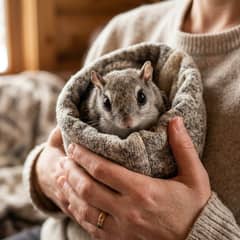
- Carry it in a bonding pouch against your body while you sit and read or watch TV.
- Offer a treat from your hand once it climbs out to investigate.
- Wear a shirt with a pocket, and let it climb in and out and up to your shoulder.
Toys and Rotation
Bird toys, wooden blocks, hanging toys and small rope pieces all suit flying squirrels. Keep a box of toys and rotate a few in and out each week instead of filling the cage at once. A toy that comes back after a few weeks away gets explored all over again.
Quiet by Day
Flying squirrels sleep through the day in their nest. Keep the cage in a quiet room, away from loud TVs, barking dogs and household traffic, so they sleep undisturbed and come out ready to use the cage at night.
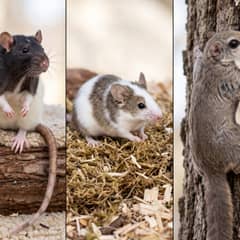
Just before landing, a flying squirrel jerks its tail up so it lands head-up on the trunk, and its fleshy foot pads and sharp claws absorb the impact and grip the bark.
A Forest Night in a Tall Cage
A flying squirrel's day is a shared nest and its night is travel, food and gnawing. Give it companions, a nest near the roof, trunks to land on and a reason to search, and most of its enrichment runs itself after dark.
Sources & Further Reading
Last reviewed 15 Nov 2026 · 6 sources
- Animal Diversity Web: Glaucomys volans (southern flying squirrel)
- SUNY College of Environmental Science and Forestry: Southern Flying Squirrel
- Virginia Department of Wildlife Resources: Southern Flying Squirrel
- Journal of Mammalogy: Genetic relatedness in winter populations of seasonally gregarious southern flying squirrels (2010); Kohler et al., Ultraviolet fluorescence discovered in New World flying squirrels (2019)
- COSEWIC Status Report on the Southern Flying Squirrel, Government of Canada: Biology
- Merck Veterinary Manual: Overview of Rodents; Mice and Rats as Pets
Frequently Asked Questions
Do flying squirrels need a companion?
Yes. Wild southern flying squirrels spend the winter packed into shared nests, and they prefer relatives as nest mates. A same-sex pair, ideally siblings, is the baseline for a pet.
How far can a flying squirrel glide?
Most wild glides cover 20 to 30 feet. Indoors, that means short glides between fixed landing points in a tall cage, plus supervised time in a squirrel-proofed room.
Do flying squirrels need things to chew?
Yes, constantly. Like all rodents, they have rootless incisors that never stop growing. Untreated branches and hard chews need to be available at all times.
Are flying squirrels nocturnal?
Strictly. They are the most nocturnal of the tree squirrels, and most enrichment gets used while you sleep.
Why does my flying squirrel hide its food?
Caching is wild behavior. Southern flying squirrels store nuts from late summer on and depend on those stores to survive the winter. Give a pet places to hide food, and check the nest each morning to remove perishable stashes.
More on the Flying Squirrel
Recommended Gear
As an Amazon Associate I earn from qualifying purchases through the links above, at no extra cost to you.

Written by Michael Ryan
Mike keeps two rescued bearded dragons, Dex and Cera, and writes the care guides on BeastlyFacts from his own research and mistakes. He is not a veterinarian.
More about Michael Ryan →You May Also Like
Subscribe - it's free
An occasional email when something new is worth your time. No spam.
Deep Dive
Health and More