Goldfish
Carassius auratus
On This Page▾
🌍 Overview
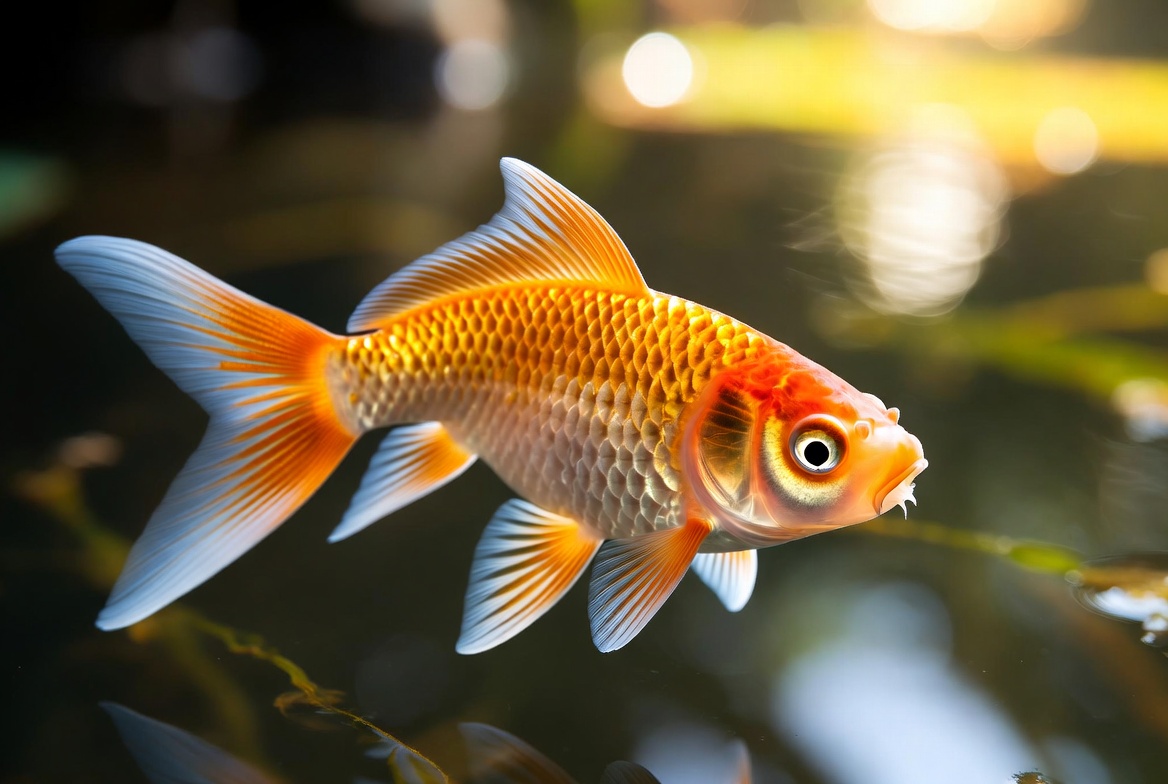
The goldfish is one of the earliest domesticated fish, bred in China over a thousand years ago from a wild silver-gray carp relative for its color mutations. Selective breeding over centuries produced dozens of ornamental varieties, from the streamlined common and comet goldfish to elaborately finned fancy types like the oranda and ranchu. Goldfish grow to the size of their environment, and contrary to popular myth, they retain memories for months and can be trained to respond to cues and simple tasks.
📋 Quick Facts
Native Range
China (domesticated from a wild carp relative)
Natural Habitat
Slow-moving rivers, ponds, and lakes; entirely domesticated as a pet
Adult Size
4-12+ inches (10-30+ cm) depending on variety and space
Wild Diet
Omnivorous - plant matter, insects, crustaceans, and detritus
Wild Lifespan
10-15 years typical; 20-30+ years in spacious, well-kept ponds
Conservation Status
Domesticated (not evaluated; wild ancestor Least Concern)
📜 History
Chinese sources put dates on each stage of the domestication. Color mutations in pond carp were noted as early as the Jin dynasty, between 266 and 420, and in 1162 a Song empress ordered a pond built to hold the red and gold fish, while yellow specimens were restricted because yellow was the imperial color. Moving the fish indoors during the Ming dynasty is what let breeders keep the fragile fancy-tailed mutations that would not have survived an outdoor pond. Goldfish reached Japan in 1603 and Portugal in 1611, spreading through Europe as a status object, and arrived in North America around 1850, where Henry Bishop of Baltimore built what was reckoned the largest goldfish operation in the world.
⚖️ Compare
Goldfish
Human
Adult Size
4-12+ inches (10-30+ cm) depending on variety and space
5-6 feet (150-185 cm); ~135-200 lbs
Wild Lifespan
10-15 years typical; 20-30+ years in spacious, well-kept ponds
~73 years (global average)
Wild Diet
Omnivorous - plant matter, insects, crustaceans, and detritus
Omnivorous - eats just about anything
Native Range
China (domesticated from a wild carp relative)
Global - originated in Africa roughly 300,000 years ago
Natural Habitat
Slow-moving rivers, ponds, and lakes; entirely domesticated as a pet
Everywhere from arctic tundra to tropical megacities
Conservation Status
Domesticated (not evaluated; wild ancestor Least Concern)
Least Concern (8+ billion and counting)
🧠 Test Yourself
What's the Goldfish's native range?
📖 Care Guide
Goldfish Care Guide
The pond classic that outgrows the bowl, the myth, and your expectations!
Subscribe - it's free
New animal facts and care guides straight to your inbox. No spam. 🐾
📰 Deep Dive
🐟 How Much Does a Goldfish Really Cost?
🐟 How to "Handle" a Goldfish (Net and Cup, Not Hands)
🐟 Common Goldfish Health Issues (And What Actually Prevents Them)
🐟 Goldfish Tank Setup: Bigger Than You Think, Filtered More Than You'd Guess
🐠 Goldfish Feeding: Schedule, Diet, and Why They Stop Eating
🐠 Goldfish Enrichment: Space, Plants, and Foraging Done Right
🩺 Health and More
🐠 Aquarium Power Outages, Transport, and Moving Your Fish: The Complete Plan
🦠 How to Cycle a Fish Tank, Start to Finish: Fishless and Fish-In
🧽 Aquarium Filtration: How It Actually Works and How to Maintain It
🪣 Aquarium Water Changes: How Much, How Often, and What the Number Is For
🐟 Aquarium Stocking and Tankmates: How Many Fish, and Which Ones Go Together
🧪 Freshwater pH, GH, and KH: Why Chasing a Number Backfires
🩺 Fish Quarantine and Treatment: The Hospital Tank Guide
🩹 Treating Ich: Heat, Salt or Medication, and the Temperature Ceiling That Decides
🩺 How to Tell If Your Fish Is Sick: Waste, Behavior, and Body Signs
🧊 Cooling an Aquarium Without a Chiller
🐾 Four Pets That Break the Usual Mold
🐠 Betta Fish vs. Goldfish: Which Beginner Fish Fits You Better
🐠 Koi vs. Goldfish: Which Pond Fish Actually Fits Your Space
🤓 Did You Know?
Goldfish have real, months-long memories and can be trained to push levers, navigate mazes, and recognize shapes and colors - directly contradicting the popular '3-second memory' myth. They also grow to the size of their environment: a goldfish kept in a tiny bowl doesn't stay small because it's content, it's stunted, which is a sign of poor welfare rather than a convenient feature.
Explore More