Koi
Cyprinus rubrofuscus
On This Page▾
🌍 Overview
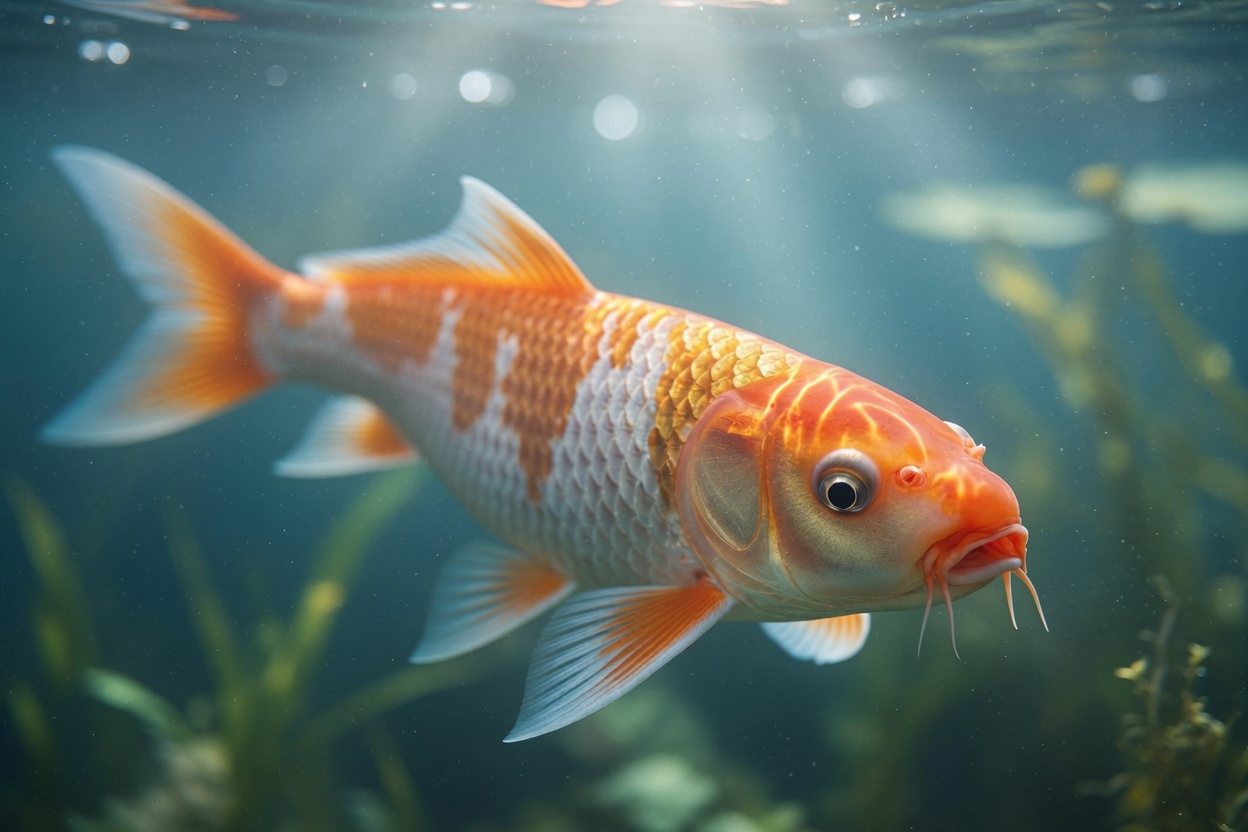
Koi are ornamental varieties of the Amur carp, developed in Japan starting in the early 19th century from food carp that displayed unusual color mutations. Breeders selectively refined these mutations into today's dozens of recognized color patterns - kohaku, showa, and sanke among the most prized - which are still judged competitively at shows in Japan. Koi are exceptionally long-lived and develop genuine recognition of individual keepers, often gathering at a pond's edge when a familiar person approaches.
📋 Quick Facts
Native Range
Japan (developed from Amur carp of East Asia)
Natural Habitat
Outdoor ponds and slow-moving freshwater systems; entirely domesticated as a pet
Adult Size
12-36 inches (30-90 cm) depending on pond size and variety
Wild Diet
Omnivorous bottom feeder - aquatic plants, insects, and crustaceans
Wild Lifespan
25-50 years with good care; koi are fully domesticated, so there is no separate wild figure, and some documented individuals run far longer
Conservation Status
Domesticated (not evaluated; wild ancestor Least Concern)
📜 History
The founding mutations turned up in an unlikely place: the snowbound villages of Nijuumura, in what is now Nagaoka and Ojiya in Niigata Prefecture, where farmers kept carp through the winter as a food supply. The fish stayed a local curiosity until the Tokyo Taisho Exposition of 1914, where about twenty of them were shown under the older name kawarigoi, won a silver medal, and were seen by some of the roughly 7.5 million people who attended. Crown Prince Hirohito, later Emperor Showa, had them brought to the Imperial Palace, which is what turned a regional farm product into a national art form. Japan set a formal agricultural standard for nishikigoi only in 2022.
⚖️ Compare
Koi
Human
Adult Size
12-36 inches (30-90 cm) depending on pond size and variety
5-6 feet (150-185 cm); ~135-200 lbs
Wild Lifespan
25-50 years with good care; koi are fully domesticated, so there is no separate wild figure, and some documented individuals run far longer
~73 years (global average)
Wild Diet
Omnivorous bottom feeder - aquatic plants, insects, and crustaceans
Omnivorous - eats just about anything
Native Range
Japan (developed from Amur carp of East Asia)
Global - originated in Africa roughly 300,000 years ago
Natural Habitat
Outdoor ponds and slow-moving freshwater systems; entirely domesticated as a pet
Everywhere from arctic tundra to tropical megacities
Conservation Status
Domesticated (not evaluated; wild ancestor Least Concern)
Least Concern (8+ billion and counting)
🧠 Test Yourself
What's the Koi's native range?
📖 Care Guide
Koi Care Guide
The living jewels of the pond world that can genuinely outlive their keepers!
Subscribe - it's free
New animal facts and care guides straight to your inbox. No spam. 🐾
📰 Deep Dive
🎏 How Much Does Koi Fish Ownership Really Cost?
🎏 How to "Handle" Koi (Mostly, You Don't)
🎏 Common Koi Health Issues (Water Quality Is the Root of Almost Everything)
🎏 Koi Pond Setup: Built for Waste Volume, Not Just Water Volume
🎏 Koi Feeding: Schedule, Diet, and Why They Stop Eating
🐟 Koi Enrichment: Volume, Depth, and Somewhere to Overwinter
🩺 Health and More
🐠 Aquarium Power Outages, Transport, and Moving Your Fish: The Complete Plan
🦠 How to Cycle a Fish Tank, Start to Finish: Fishless and Fish-In
🧽 Aquarium Filtration: How It Actually Works and How to Maintain It
🪣 Aquarium Water Changes: How Much, How Often, and What the Number Is For
🐟 Aquarium Stocking and Tankmates: How Many Fish, and Which Ones Go Together
🧪 Freshwater pH, GH, and KH: Why Chasing a Number Backfires
🩺 Fish Quarantine and Treatment: The Hospital Tank Guide
🩹 Treating Ich: Heat, Salt or Medication, and the Temperature Ceiling That Decides
🩺 How to Tell If Your Fish Is Sick: Waste, Behavior, and Body Signs
🧊 Cooling an Aquarium Without a Chiller
⚖️ Four Pets You Only Really Understand by Comparison
🎭 Four Pets People Get Wrong Before They Even Bring One Home
🐠 Koi vs. Goldfish: Which Pond Fish Actually Fits Your Space
🤓 Did You Know?
Koi recognize individual people and will learn to approach a familiar keeper at the pond's edge for food. Long-term keepers describe fish that surface for one household member and ignore another, which is a considerable amount of animal for something sold as pond decoration.
Explore More